By
Boniface Okanga
London, England, 12 May 2026
Despite a few problems and glitches, most African countries have still made significant economic strides to make Africa a better place for all Africans. In such strides, a lot of new best practices have emerged to define the new ways of how Africa accomplishes most of its macroeconomic activities. Such new best practices are often depicted in most African governments’ initiatives that increased investment in economic diversification, development, growth, revenue generation and self-sufficiency over the past decades. Since independence, the best economic practices of most African governments are discernible in the initiatives that have created peace, stability and employment, while also improving industrialization. Besides efficiency enhancement quests, most African governments have also generated a set of best economic practices exhibited in bold leadership. Bold leadership that encourages operational excellence, investment stimulation, foreign direct investment, energy development and special economic zoning (SEZs) as the stimulant of sustainable economic growth. Even as infrastructure development takes centre stage of most economic transformation initiatives, the other best practices are easily gleanable from the initiatives that improved urban transformation, agriculturalization, innovation as the pillar of growth, tech-investment, financial stability, human capital development and regional economic integration. It is such best practices that have created socio-economic values that constitute Africa’s current socio-economic foundation.
During the recent “Africa We Build Summit 2026” in Nairobi-Kenya, it is from such best economic practices that the key African leaders like Kenya’s President Ruto, Uganda’s President Museveni and Aliko Dangote-the renowned African business leader have started to have the right conversations about the importance of an integrated huge African market of 1.4 billion people. From the conversation, improved infrastructure development, industrialization, limiting raw-materials’ exports, Africa’s capital market improvement and economic self-sufficiency emerged as some of the best economic practices that Africa must adopt if it is to thrive. Going forward, it is such best practices that need to be emulated from the likes of Nigeria’s Olusegun Obasanjo, Senegal’s Abdoulaye Wade, Zambia’s Frederick Chiluba, Uganda’s President Yoweri Museveni, South Africa’s Thabo Mbeki and Rwanda’s Paul Kagame as the economic foundation that will drive Africa to the desired economic heights. At least for the next fifty years, it is such best economic practices that will catalyze the local investment conditions to spur economic growth. If well preserved, it is such best practices that will spawn Africa’s productivity to drive increased export earnings and government revenues. It is such best practices that will attract new foreign direct investments. If well preserved, it is such best practices that will spawn Africa to the economic heights that improve the socio-economic living conditions and standards of the African continent. Even if some African countries like Somalia Republic and Burundi are reluctant, it is still such best practices that will need to be emulated to take Africa to new economic heights. It is such best practices that will propel Africa to the desired economic heights that reduce unemployment. Africa is no longer the same as it was in the 1960s, 70s, 80s and even 90s. Significant economic strides have been made.
Of course, even with just minimal government interventions, things often automatically change as a result of the introduction of newer technologies, operational approaches, thinking or societal philosophy. But if one wants to discern the important roles of governments in spearheading economic growth, development, stability, progress, evolution, transformation and betterness, have a look at Sudan. Have a look at DRC. Have a look at Burundi though it is now stable. Have a look at Chad. Have a look at Zimbabwe. And compare with the likes of Equatorial Guinea, Ghana, Egypt, Morocco, Congo Brazzaville, Uganda, Zambia, Rwanda and Tanzania which have been politically stable for a long time. During the early years of the 1970s and 80s, most African countries were just in the bushes. As Jack Ma-the Alibaba.Com Founder pointed out during the University of Nairobi Public Lecture in 2017 that for the uniqueness of Africa, bushes are not bad things. African bushes offer unique tourism, agricultural, recreational and entertainment values that cannot be easily replicated anywhere else in the world. However, if not integrated with the required modern economic development, bushes can reflect underdevelopment that affects the socio-economic attractiveness and values that bushes would have created and delivered to the population. To avert that, a lot of governmental initiatives have been undertaken to drive the required economic change and transformation. Most African leaders have certainly sought to make Africa a better place for all Africans. Following the improved political and economic stability across the continent, a lot of African countries have nonetheless made significant strides.
After the end of the conflicts between Jonas Savimbi’s UNITA and FNLA government, Angola has and still continues to attain significant economic milestones. Angola has transitioned from a very turbulent history into a quiet democratic player in the African continent. Investing in a range of different socio-economic programmes, Angola has emerged as one of the most stable economies in the SADC region. Its GDP (gross domestic product) moved from $50 Billion with a GDP per capita of $3000 in 2006 as the result of the post-war reconstruction boom to a GDP of $152 billion and a GDP per capita of $3750 in 2026. Of course, Google Inc as a private company generated $402.84 billion in 2025. China’s Huawei scooped $127 billion. However, Angola’s exponential GDP growth still insinuates the economic progress that it has attained since the end of the conflict. Angola remains a politically quiet, and economically stable state of the SADC region. As it continues to drive change and transformation in the past twenty years, Angola has avoided incidents that can disrupt the socio-economic foundation that it has created ever since the end of the conflicts.
Angola has been thriving, but Nigeria has instead been leading. With its enormous wealth that its citizens have tried to steal and failed to finish, Nigeria has achieved a lot. Despite protracted political disagreements, Nigeria often avoided direct war. This created the required political stability and relative comfort that influenced its socio-economic transformation for a long time. Nigeria is the leading economy on the African continent. And it is such impressive economic foundation that Africans must aspire to utilize to transform Africa. Yet just like Angola and Nigeria, Kenya has created the economic foundation that it strives to maintain, while also investing in the introduction of the required improvement strategies. Kenya has been very careful not to destroy and misuse the socio-economic infrastructure, assets, values, fortunes, brand image or whatever it may have inherited from the British colonial government. Instead of squandering, Kenya has instead been very careful to continue improving, improving and improving what was bequeathed by the colonial government. Through such initiatives, Kenya has created a very impressive economic foundation that may turn instrumental for its overall economic transformation in the next stage of Africa’s economic growth. Just like Kenya, Uganda under President Yoweri Museveni who was recently sworn in, has created a very impressive economic foundation.
Museveni and Africa’s Economic Foundation
Going forward, Ugandans will need to be very calculative of how they utilize such economic foundations to create and deliver outcomes that catalyze further economic growth of the future. In the 1970s and even throughout the 1980s, Uganda was economically in hell. The government was the biggest employer as the private sector only played minimal roles after the expulsion of the Asian entrepreneurs. Just even basic things like salt, sugar and soap were nowhere to be seen. Given these scarcities, the early Ugandans would use local means of making salt by putting water into ash so as to briefly ferment and produce some salty water. As this unfolded, the acidic roots for some trees were used as the substitute for washing soap. Orange leaves were used as detergents for washing household utensils. That is how far Ugandans have come. However, following the prioritization of political stability over the years, Uganda under President Yoweri Museveni managed to conceptualize and introduce a range of different turnaround strategies. These turnaround strategies have been instrumental for driving change and transformation to create a foundation depicting improved wealth creation and economic empowerment of the population. Of all the regimes, when it comes to the assessment of the Ugandan regime that has created the conducive conditions for Ugandans to make money, all Ugandans would unanimously agree that it is still Museveni. Amin did it, but the Ugandans were at the time a bit sleepy and could not see and take advantage of the presented opportunities. In the Museveni’s era, the newly introduced radical political and economic changes and transformation found most Ugandans awake.
While a lot of entrepreneurs took advantage of the new phase of political stability of the Museveni’s era to introduce and establish new business concepts, others took advantage of the surging population that improved market attractiveness. Political stability accompanied with the increased public healthcare investments and good nutrition drove down mortality rates. In turn, reduced mortality rates increased the overall Ugandan population. This catalyzed the increment of aggregate demand. In turn, the demand for all goods and services surged in all the sectors like real estate, commercial estates, transport, manufacturing, IT, domestic tourism, entertainment services that produced the likes of Bobi Wine the billionaire and other billionaires of the Museveni’s era, retail, banking and agriculture. Even the agricultural products like millet, cassava, sorghum, matoke, simsim and groundnuts which were previously traditional crops grown for just domestic consumption became cash crops. When the British left, they just left Ugandans with cotton, coffee and tea as the major cash crops. But all these have changed. All these changed not because of accident or any error, but because Museveni, a tactical politician and an experienced political economist from Tanzania’s University of Dar-es-Salaam carefully planned and implemented the right political and economic policies. In the end, Uganda for the first time, had several banks coming up. Foreign direct investments surged. New investors came in. Ugandans made money. If there is any region which says it did not make money from Museveni, then that region is certainly not in Uganda. The former Ugandan president Amin-a West Niler, left Arua with just one street. However, today, Arua has blossomed into one of the major northern cities, spanning across several streets and exhibiting a range of different high-end hotels, residential apartments and luxurious entertainment centres and facilities. Stability in Sudan leading to the creation of South Sudan using peace negotiation which Uganda was one of the spearleaders created new markets. For years, South Sudan was at war and therefore no time to build and attain a stable economy.
When it became stable and South Sudanese returned from exile, Arua, Gulu, Lira and Masindi as the most proximate towns, became the sources of different goods and services that the South Sudanese needed and still need. Just like Mbale that had only one street-main street going to Wanale, cities like Lira, Kabale, Mbarara and Jinja were also all one street cities in the 1980s and even up to 1990s. Today, that is not the case. New cities have sprout up and most Ugandans from all regions will certainly agree that they have actually made money from Museveni. New economic insights introduced by the Museveni’s administration have been the critical propellants of Uganda’s success. From Karamoja that now has KAPATU University to Kabale that didn’t have Kabale University in the 1990s, all the regions will say and remember again and again that if it is because of Museveni, they have actually made money. Through such success, Uganda has created the economic foundation that Africa needs. It is such economic foundation that Africa needs to utilize and realize the desired state of new growth. Of course, businesses on their own play instrumental roles of inventing and introducing novel business insights, products, services and concepts that catalyse economic growth even with just minimal government intervention.
However, the government’s deeper immersion in the economic discourse and direction that the country takes is still essential for redirecting private capital investments to the new commanding heights of the economy. When socialism failed to create the desired private capital and wealth because of poor incentives for private capital investments, inefficiencies and low productivity that affected China’s economic growth and development in the 1970s and 80s, the Chinese Communist Party did not hesitate to introduce new economic reforms and liberalization. These reforms repositioned China to pursue different economic growth leveraging paths. Still, it was not easy for China to easily get out of poverty and economic hardships. This prompted the introduction of state capitalism. Advocates of state capitalism argued that even if China still maintained some aspects of socialism, the even distribution of resources and wealth could only be attained if there is wealth to be distributed. If no wealth, then there is also no need for income equality argument. It is the success and the enormous socio-economic values created by such thinking that threw the likes of Xi Jinping into the political limelight and subsequently the Communist Party’s top leadership. Based on the argument that economic equality can only be attained if there is wealth to be redistributed, China introduced state capitalism. State capitalism introduced liberalization and the use of free market forces of demand and supply to create and grow private capital. It uses a system of stronger state control aimed at directing private capital growth in the essential areas of the economy. Mixing elements of command economy with aspects of free market economy, China created its current economic foundation and capital using its own ways of thinking and doing things. It is not only in China where the government intervention has been instrumental, but also in the United States.
When free market forces caused the enormous US private capital movements to China as the low-cost manufacturing destination of the world, the Obama administration introduced a range of incentives for manufacturers relocating back to the United States. To reduce reliance on semiconductors imported from China, the US government allocated $52.7 billion on the programme for domestic semiconductor and chips’ production. Besides the introduction of a lot of funds or green energy subsidies for supporting research and innovation in the development of renewable energy, the US government also created the Small Business Administration Loans, aerospace and defence research and innovation incentives and auto manufacturing incentives. These often created the economic foundations and private capital that the US has often utilized to catalyse growth in the designated new commanding heights of the United States’ economy. Given the current economic foundation, the question of how far Uganda has come will also define how far it will go if it effectively utilizes the created economic foundation. Over the years, the Museveni’s administration has ensured that the investment in the desired commanding heights of the economy creates and delivers the desired new socio-economic values for the Ugandan population.
From inspiring private sector investments and growth to increasing the latitude of energy investments. However, as some African countries have been lucky to inherit a fortune and take the development forward from the colonial governments, others have not been lucky. Zimbabwe squandered all that it had inherited. Though it is now trying to rebuild, it may take a little longer for them to gain the kind of economic foundation that the relatively more stable Tanzania now has. It is from these established economic foundations that the African countries must take advantage of to thrive and thrive without looking back. It is from these economic foundations that the African countries must take advantage of to create and deliver the best socio-economic values never seen before. It is using these established economic foundations that the African governments must take advantage of to drive the desired economic change and transformation. In Uganda, General Muhoozi Kainerugaba’s Patriotic League of Uganda (PLU) has already adopted zero tolerance for corruption as the way of unlocking unique values that utilize the economic foundation created by the Museveni’s administration over the years to take Uganda forward.
While towing the similar economic philosophy of the Museveni’s administration, General Muhoozi, who has recently been viewed by many Ugandans and regional players as the most popular figure to take over from the Museveni’s administration, has prioritized the fight against corruption and radical urban change and transformation as the new catalysts of Uganda’s socio-economic growth and development. Through such initiatives, Muhoozi aims to save a lot of public funds that can be used for financing different new programmes that improve the conditions and standards of living of the poor urban dwellers. Through radical urban change and transformation, the programme aims to attract more investments and create more employment opportunities, while also improving wealth creation for all categories of the urban population. Radical urban change and transformation will aid the identification and mitigation of some aspects of the urban economic systems and arrangements that slow Uganda’s socio-economic progress and transformation.

General Muhoozi Kainerugaba: Uganda’s Chief of Defence Forces and Chairman: Patriotic League of Uganda (PLU)
When the new generation of the emerging new influential African leaders are able to utilize the existing economic foundation to drive further economic growth and development, then Africa has a future. Instead of destroying, Africa has a future if the emerging new crop of more innovative African leaders are able to take advantage of the existing economic foundation to create new values that spur Africa to the desired new growth heights. Just like in the other parts of Africa like Zambia, Senegal and Ghana, over the years, the Museveni’s administration is credited for introducing a series of socio-economic change and transformations. These changes have catalyzed the pace of industrialization, while also reducing illiteracy. It also created peace that inspired the innovativeness of the youth especially in the music, entertainment and IT (information technology) sectors, while also positioning agriculture as the major revenue generator and a growth catalyst. The effect, is that after gaining a lot of wealth under the Museveni’s administration, the likes of Bobi Wine are now masquerading as the opposition because they don’t have new business ideas on how to utilize the huge monies generated from the Museveni’s administration to create new business values.
However, deep down their hearts they are very aware that the Museveni’s administration’s good economic policies and stability were instrumental for creating the billionaires that they have now become. Even if they narrate that they came from the ghetto to billionaires, deep down their hearts, they still know that they did it because of the Museveni’s administration’s enabling economic and political freedom. After Museveni, Ugandans will search for the president that will distribute free money and they will never find him. They will search for the president that forgives you after stealing all the monies for public projects’ implementation and they will never find him. Even when the likes of Bobi Wine made monies from the Museveni’s administration, his political manifesto in recent elections was still largely quiet on how he would help the ordinary Ugandans make money in the same way the Museveni’s administration enabled him do so. This makes it difficult for the common Ugandans to find a common position with him. Instead when Bobi Wine opts to buy houses in Boston and London when he is still in the opposition, it means Ugandans will only find future leaders who will not hesitate to empty the entire national treasury in the purchase of luxurious estates in New York or London. Nonetheless, combined with the increased hydro-energy investment and the introduction of several regional economic zones, all the initiatives of the Museveni’s administration have created the economic values that position Uganda as one of the major future drivers of Africa’s overall economic growth, development, transformation, progress and betterment.
Over the years, Museveni himself as the president has fought to ensure Uganda thrives economically. He introduced radical economic reforms that have created the economic foundation of roads, energy, transport, agriculture, industries, technology development, human capital and national security systems and peace that Ugandans need to preserve and utilize as the springboard for the next decades of Uganda’s radical socio-economic change and transformation. For most civil servants in the government that Museveni leads, corruption and driving big cars, while also living in palatial homes is the indisputable way of life. However, Museveni, a man who grew up among cattle keepers that would rather borrow salt than sell their cows to buy salt, seems allergic to luxury and extravagance. People are making money from the government that he risked his life going to the bush to create, but for him, he decided to remain clean and pure. Not to say that there is laxity in corruption controls. There are controls like the Inspector General of Government (IGG), Public Accounts Committee of Parliament and the State House Anti-Corruption Unit. It is very difficult to control corruption because it is often hidden and disguised in different forms. And that explains why in criminal courts, it is the lower civil standards of the “balance of probabilities”, and not the higher criminal law standard of “beyond reasonable doubt” which is used for proving the crime of corruption. Uganda is in Africa where everyone understands that instead of opening a business or establishing an industry, the government is instead the place or the organisation for making money. However, can we say fortunately or unfortunately, Museveni has often acted to the contrary by avoiding acts, practices and thinking that can cause the loss of public monies. Compared to the other presidents, Museveni is not a typical African president, as he and his family have often kept it easy and simple, while also unknowingly or even by default also avoiding luxury. His presidential motorcade has often consisted of simple cheaper Toyota cars. Though as president he is entitled to a budget for imported designer clothes, furniture and food, he still avoided such wasteful expenditures. In the context of intergenerational equity, he avoided luxury for the sake of keeping the Ugandan money in the national treasury for the current and future generations of Ugandans.
Even if the Speaker of Parliament recently splashed a whopping Shs3.4 Billion of what is purportedly said it is her “own personal money” on a Rolls-Royce, Museveni still avoided luxurious expenditures. He leads by example in the bid to drive public servants and the future leaders that he is grooming to avoid engaging in reckless, fruitless, irregular and wasteful expenditures. It is such economic foundation as anchored on ethical leadership, integrity, behaviour, values, excellence and selflessness that the new generation of African leaders will need to emulate if Africa is to become even a better place for Africans. However, even as the emerging new influential African leaders like the Uganda’s General Muhoozi, Burkina Faso’s Ibrahim Traore, Zambia’s Hakainde Hichilema, Kenya’s William Ruto, ANC’s Fikile Mbalula and Rwanda’s Paul Kagame aspire to deliver the best for Africa, procrastination is still a challenge.
The greater preponderance of Africa to think that its problems will be solved by somebody else is the same preponderance that will cause Africa’s increasing procrastination to easily diagnose and solve its own problems. It is the same preponderance that will make African countries think that the existing unemployment crisis will solve itself and not using their own concerted efforts. It is the same preponderance that will make African countries think that some Angel will just drop from heaven to solve their poverty crisis from nowhere. It is the same preponderance that will drive African immigrants to South Africa thinking that their problems will be solved in South Africa and not at home. It is the same preponderance that will drive Africans to think that the problems of slums, poor roads and infrastructure in their home countries will just solve themselves without any external interventions. It is the same preponderance that makes individual Africans think that Africa’s problems will be solved by another as the other also thinks it is the other who is the solution.
Procrastination and Africa’s Future
The antidote of procrastination is bold actions. It is to take bold actions to do it even if it causes mistakes, and then correct later. Bolder decisions defy the existing logic, norms, practices and thinking to create new opportunities and capabilities that bolster the organisation’s effective performance. Whether in government or in the private business sector, taking bolder decisions that even sometimes everyone disagrees with is key for leveraging organisational sustainability. It enables the organisation see new things, visions and advantages which the world is most of the time not seeing. Because of bold decisions and actions, governments or businesses are able to introduce new services, operational approaches, tactics and products that create and deliver new values surpassing even the expectations of the constantly changing customer demands. When corruption and clientelism affected planning and budgeting to aid the delivery of the required public services, a Brazilian mayor of the newly elected Workers’ Party did not hesitate to introduce the concept of participatory-budgeting (PB). Compared to the previously decentralized systems, the new concept of participatory-budgeting encouraged the higher level of citizens’ participation in public budget formulation and implementation. Even if the concept was not liked by the major political players because it affected the “eating of public money” while also causing delays, the mayor still introduced the use of the PB concept in the Brazilian public service. Due to its popularity among the Brazilian citizens, PB got to be named as the Porto Alegre Model of Participatory-Budgeting. It evolved from Brazil to be adopted across Germany, Korea and the world over.
Whether in government or in the pure business entities, bold thinkers are disrupters. Following a thorough diagnosis of the common customer behaviours of not wanting to leave office or home relaxation to have lunch, dinner or supper, Urban Eats experimented the transition from physical restaurant to a digital one. Founded by Samworth Brothers in Leicester in England in 2010, Urban Eats became an instant success. Its model got replicated across the world. From Urban Eats’ diagnosis, customers were found to cherish convenience and even willing to pay for convenience. One would rather pay the delivery guy to deliver the meals than leave a very important office work or terminate a very good discussion with a friend for the sake of going to have lunch, dinner, supper or breakfast. From such analysis, Urban Eats defied the old logic of a physical restaurant and introduced the digital restaurant integrated with a more effective delivery system. Urban Eats’ success inspired most of the contemporary restaurants, even the physical brick-and-mortar ones to introduce some aspects of digital restaurant operations. In the changing business environment, Netflix also took bold actions just like Urban Eats.
While copying and pasting Blockbuster’s business concept, Netflix introduced the DVDs’ Mail Service Model to outdo Blockbuster’s DVD Rental Service Model. However, when computer advancement introduced the concept of the internet, Netflix took a bolder decision to introduce video streaming services even if DVD Mail service was still very popular with most of its customers. Given the popularity of DVDs at the time and the fact that not so many people at the time had computers and internet, it was quite risky for Netflix to migrate to the online operation. Netflix did not see the risks at the time, but the enormous opportunities presented by the future digital business operations. Existing risks far exceeded future risks. Hence, the bold decision to disrupt its business model which was still creating a lot of values. These successful cases of bold decisions and actions signify that procrastinations affect clarity of thinking, goals and actions. Procrastinations cause doubts that affect the SMARTNESS of what the organisation aspires to achieve or not to achieve. Writing in a seminal paper titled “There is a S.M.A.R.T Way to Write Management Goals and Objectives”, George Doran footnotes the need for stringent adherence to SMART (Specific, Measurable, Achievable, Realistic & Time-Bound) Principles of Goal setting and leadership actions to be essential for leveraging organisational success. However, organisational success cannot be attained if there are procrastinations punctuated with self-doubts, lack of self-belief, fear of the unknown, questions and even double procrastinations about the individual capabilities. Even if there are underlying organisational challenges, thinking and acting boldly often inspire and improve the confidence and trust that the public, customers, market and investors have in the system. In the long run, even unknowingly, the problems that previously appeared impossible to solve often disappear by themselves in the context of the concept of the organisational self-reorganizing.
Apart from inventing the actual solution for the diagnosed problems, confidence itself alone and bold thinking and actions are the antidotes for the other underlying problems that can affect the solutions’ implementation. In that context, Africa needs to understand that it is on her own. Even if the external world wants minerals from Africa, it must still understand that it is alone and on its own. Hence, the earlier Africa starts to think and act for itself, while also doing self-evaluation and correction, the better. Even if an individual African is not a leader or in a leadership position, individual actions are still essential for making Africa a better place. Unless each individual African starts taking bolder individual actions to make Africa a better society, procrastinations as punctuated by finger pointing and blame games will continue to be a major hindrance to the required decisive actions. Blame games that “it is you not me who is the problem or the solution” will continue to be a major hindrance to the required decisive actions.
Yet as Africa continues to procrastinate and play “blame games”, growing economic challenges imply African countries will only thrive if they explore and adopt initiatives that enable them to become economically vibrant and self-sustainable. However, the answer will not be found in soliciting aid from foreign countries. The answer will not be found in the change of governments. The answer will not be found in xenophobic attacks. Instead the answer will be found in taking advantage of the current socio-economic foundation to improve internal revenue generation. The answer will be found in taking advantage of the current socio-economic foundation to improve economic self-sufficiency and sustainability. The answer will be found in taking advantage of the existing economic foundations to increase economic and revenue diversification. Countries like Uganda already have such foundations. Ghana, Namibia, Senegal, South Africa, Nigeria, Kenya and the likes of Tanzania already have such foundations, even if some were inherited from the colonial governments. However, the challenge is now how to move forward. To move forward quickly, systematically, and in the way that creates new socio-economic values and foundations without destroying the existing economic foundations.
When Sudan destroyed its long established economic foundation in recent years, nobody knows when it will start the rebuilding initiative. After dismantling the economic foundation that it spent years building and consolidating, Libya has joined the cheering gallery of the failed African states. When Zimbabwe destroyed its established economic foundation, it took years to rebuild. It is only the African countries that are cautious to prevent the destruction of the current socio-economic conditions that will be successful. It is the African countries that strive to ensure stability in all aspects that will be able to take advantage of the existing socio-economic foundations. Whether it is the socio-economic foundation created by the colonialists or the post- independent African governments, it is still such socio-economic foundations that will provide the levers for African governments to leap into the next desired state of the best development creating outcomes. It is increasingly getting late. Yet as Africa continues to procrastinate, the increasing problems of unemployment, poverty, poor economic growth and illegal migration as well as the recent or the ongoing xenophobic attacks in South Africa signify improving the socio-economic progress and development of Africa is essential for mitigating conflicts that should not have been unfolding in Africa in the first place.
Immigration Crisis: A Concern for South Africa or Africa?
Instead of uniting for the greater socio-economic good of Africa, the Africans are instead getting divided by smaller things like which African must live where and in which part of Africa. It is true that having the uncontrollable influx of immigrants into a single country affects the effectiveness of the host country government. But it is also true that even if the South African government is to agree with the larger African continent that the immigrants must leave, it may still become difficult for South Africa to control the influx of new incoming immigrants. It will still be difficult for South Africa to control immigration in a continent where there is a wider call for the removal of the African borders. In the continent where every leader is calling for the removal of what they say “the colonial borders”, the difficult question that South Africa must be asking itself is not how to remove the existing immigrants. Instead the question should be how to decongest South Africa even after the removal of the existing immigrants? How will South Africa survive disruptions from the immigration that will surge in the new borderless Africa? The existing multitudes of immigrants can easily go or leave South Africa. African governments that have illegal citizens in South Africa can easily order their citizens off South Africa. That is true. However, going forward into an integrated borderless African continent, how will South Africa prevent the further influx of new immigrants? This is the difficult question that not only South Africa must answer. It is instead also a bigger question for the bigger African continent. It is axiomatic that when the African borders are removed, most Africans from Sub-Saharan Africa will certainly migrate to a few regions or countries with enormous financial resources. In the new borderless Africa, which is not far from now, the relatively well-developed African economies like Kenya, Nigeria, South Africa, Senegal, Zambia, Tanzania, Ghana, Uganda and Rwanda must prepare to receive the influx of more African immigrants. African immigrants will leave the forests and bushes and go to African countries that have better infrastructure. It is the African countries that have good roads, flats, beaches, nightclubs, restaurants, bars, casinos, football stadiums, residential apartments, shopping centres, malls, buildings and skyscrapers that will attract more and more Africans. It is the African countries that look like Dubai, Hong Kong or New York that will attract more African immigrants. It is the African countries that have pavements everywhere to prevent dust and cleaner cities that will attract more and more African immigrants. So instead of scanning how to get rid of the existing immigration into South Africa, the fight that Africa should be fighting is the fight to create an integrated development framework that improves the overall socio-economic conditions of the African continent.
African governments will need to join hands to improve the scale of the investments in the desired socio-economic infrastructure. There is need for the improvement of the investment conditions in most of the African cities. There is need for urban reforms reflecting improved investment in the more planned and well-executed urban development plans. There is need for the introduction of new thinking, operational approaches and excellence as the defining value. When it became apparent that Britain could not get rid of bureaucratic tendencies, inefficiencies, resource wastages, delays and even corruption in the British public sector management systems, Margaret Thatcher-the British Prime Minister of the 1980s did not hesitate to introduce the concept of “New Public Management”. The New Public Management concept argues that for governments and public institutions to achieve the best results, the government must operate like a profit-generating business.
The government must integrate all business-like operational excellence principles in all aspects of the governmental operations. Margaret Thatcher footnoted the importance of managing and running government institutions like a business that often requires a higher level of operational excellence, efficiency, waste elimination, cost minimization and lean operation. Through such approach, she believed that the government would be able to achieve the best results. To achieve these, Margaret Thatcher introduced privatization, contracting, outsourcing, outright sale of the underperforming public assets, staff rationalization, retrenchment, deregulation and public-private partnership as the defining operational principles for public managers to achieve the best results. In the wider efforts to improve operational excellence and efficiency to unlock additional resources for public projects’ implementation, some of these principles were adopted by the World Bank and introduced in most of the developing countries under the Structural Adjustment Programmes in the 1980s and early 1990s.
To turn around their performance to achieve the best service delivery results, several African countries are increasingly adopting different game-changing development initiatives. Many African countries are now towing Margaret Thatcher’s ways of thinking. In Uganda, General Muhoozi, the UPDF Chief of Defence Forces, as the widely recognised prospective future Ugandan president has already introduced some of these stringent cost minimization measures. Leading to the significant reduction of wastes and a saving of 2 trillion shillings from corruption in the army establishment, the fight against corruption which was previously misperceived by some as just a mere “window dressing” seems to have instead turned into General Muhoozi’s modus operandi. General Muhoozi’s relentless fight against corruption has endeared him to most of the common Ugandans who are increasingly realizing that without tackling corruption, not much shall be achieved to improve infrastructure quality, create employment, reduce poverty and improve economic growth. Being an influential government figure himself, some government officials had expected General Muhoozi to be playing games in a country where corruption is the way of life. However, as the General has increasingly adopted the no-nonsense approach in the fight against corruption, the country is becoming hopeful that the fight against corruption will turn into actions that convert public resources into results that significantly improve service delivery. In Africa, corruption is the biggest impediment to development. And if African leaders adopt a more stringent approach as Margaret Thatcher had envisioned, then most African countries will be able to achieve the desired developmental outcomes.
In Kenya and Tanzania, a lot of different development initiatives have been undertaken to improve energy infrastructure, roads and rail links as well as the pace of industrialization. Culminating in Dangote’s proposed establishment of the oil refinery that seeks to stabilize oil prices in East Africa and the surrounding regions, it is not questionable that most African governments are taking the right approaches to put Africans to the epoch of new socio-economic development and transformation in Africa. When even the French president-Emmanuel Macron is seen scrambling not to be left out of the development partnerships in Africa, then Africans need to realize that they are certainly on the right track. Africa is certainly on the right track and as Kenya’s president-Dr William Ruto says, Africa must fight for equal positions on the negotiating table in order to get the best from all its major partners across the globe. This will bring development. It will also influence the transformation of most of the African cities in the way that attracts new investments and development to benefit Africa. Most African cities were poorly planned.
African Cities’ Transformation
In some cities, gardens, goats, piggeries and cow kraals are even mixed with the residential apartments that have no proper roads or access routes to the residential apartments. This affects the attractiveness of some cities. However, even with such dynamics, Africa has increasingly become more attractive in terms of the improved purchasing power of the population and the benefits that it offers to the world. Though most Africans and even governments are not aware about this, the European Union (EU), China and Russia are aware of the new potentials of Africa. When the United States started playing games, the increasing importance of Africa explains why the EU has so far committed the largest funding of 120 billion euro as the largest investor. This counters China’s influence that uses its growing infrastructure loan which is predicted to reach $51 billion by 2027, the US’ development aid of $131.6 billion and Russia’s security and trade support that peaked at $27 billion. Following the reintroduction of the Monroe Doctrine in Venezuela and in the way that says Latin America and South America are for the United States, there is a silent reintroduction of the 1885 Berlin Conference insights, and the underlying second phase of colonization, though in a new form. Even if that is so, Africa should reposition itself to ensure that it gets the best from the anticipated second phase of colonization disguised as the increased development assistance. However, the challenge is still the poor conduciveness and attractiveness of the investment conditions and environment of the African markets. For the relatively more sophisticated investors who are used to the cleaner environments of the developed countries, it is often the African countries like Kenya, South Africa, Egypt and Nigeria with more well-developed infrastructure that become the most attractive investment destinations. In some of the underdeveloped African countries, the barriers are usually not the government’s poor investment in the required city infrastructure and investment conditions. Instead the challenges arise from some incompatible land tenure systems, the unwillingness of some people to cooperate with developers and regulatory frameworks that are not very supportive of the government’s quests to improve city infrastructure. Because of the incompatible land tenure systems, some actors are often unwilling to cooperate with government for city economic transformation. They fight government and frustrate city transformation programmes. Others even demand compensation above the market rate for the land that the government needs to acquire for development.
Some go for litigation and even frustrate any alternative dispute resolution for expediting the land acquisition processes. These have often affected city development to cause the emergence of the African cities where the entire city looks like a market. The African cities where people are selling all over on the streets, with no walkways or even parking spaces for different potential investors that could be using some of the surrounding commercial spaces. In the other African cities, commercial trading spaces, shopping arcades and malls have become limited or even nowhere to be found for affordable prices. However, government efforts to intervene and address these problems have often been frustrated by some communities. Efforts to increase investment in the required city commercial infrastructure have often been met with frustrations from some opposition political groups. In Amsterdam and Cape Town, waterfront land is highly cherished for the development of high-end hotel, business and residential infrastructure and establishments that generate a lot of employment opportunities and government revenue to spur improved economic growth. However, in Nigeria, one of the waterfronts which would have been one of the most attractive parts of Lagos, has been taken over by Makoko slums. And the attempt to evict the slum was met with some resistance, though now the slum is demolished perhaps for some other better redevelopment programmes by the Nigerian government.
Even some communities also resist the governments’ efforts to transform the economic vibrancy and attractiveness of some African cities. In effect, the development in most African cities has often undertaken a dualistic nature where there are more developed areas with properly planned and implemented infrastructure plans, modern roads, electricity, water, bridges, sanitation and the other properly planned amenities. In contrast to that, there are also the underdeveloped parts of the African cities consisting of slums, lack of urban water, roads and sanitation. In fact, there are no proper roads in some urban centres. This dualism reflecting the largely underdeveloped parts of the city and the more developed parts of African cities is the thing that puts off some would have been more disruptive foreign investors. Unfortunately, when these investors opt to invest in the other attractive African cities like Kenya, South Africa, Ghana, Uganda, Botswana and Namibia, it is often these same youths that have frustrated the investments in their own countries that are the first to go search for employment in such more successful African cities. Government efforts to change and transform most of the slums into the modern city suburbs are often frustrated. Yet, when the conditions in slums become bad, it is still the same youths from such communities that are the first to leave the country. Before others can leave, they sell their shacks and head southwards in search of better employment opportunities in the most well-planned and managed African cities. Even if the problem is not unemployment, most of the young African people just migrate to the other well-developed African cities just for the sake of wanting to live in nice apartments, drive on cleaner roads, use indoor water systems, better sanitation and even enjoy themselves in better shopping malls, arcades, restaurants and entertainment places.
After frustrating the government’s initiatives to transform the cities in their own original home countries, it becomes disappointing that the ones frustrating development aimed at city modernization are also the same ones migrating with the hope of living in better cities. Some even steal money meant for city development and modernization and then move to the better developed African cities. Of course, for South Africa, community education, counselling and integration programmes should have been implemented immediately after the end of apartheid to educate the ordinary population that the war and fights had ended. Apartheid ended abruptly when the entire country was still in the combat mode against anything non-South African. And that combative thinking against anything non-South African has remained to be passed from one generation to another. But even still, South Africa’s voices and worries about the surging immigration crisis can still be heard. Except DRC, Sudan and South Sudan, Africa has become relatively peaceful. In effect, most African governments including even Zimbabwe which is now recalling white farmers to come back, are trying to introduce new economic reforms. The economic reforms aim to create new opportunities to reduce a surge in economic immigrants searching for different economic opportunities in the other countries. However, in that process, the communities or children of the communities that become immigrants in the other countries are the major impediments to government reforms in some African countries.
African Communities: Frustrators of Development
“Hey we shall not vote for you if you evict us from this slum to establish a mall”. “Hey your government shall fall if you take this land and give it to investors to establish industries”. “Hey you are not pan-African or the poor will never vote for you if you evict street vendors to improve the attractiveness and international competitiveness of our city”. These are some of the incompatible sentiments, thinking, ideology, philosophy or narratives in some African cities. And then boom all of a sudden all of them are selling second-hand clothes on the pavements of Alexandra Township or Umlazi Township in South Africa. “Hey we shall not vote for you if you evict us from this slum to build better housing, apartments and sanitation”, and then boom all of a sudden all of them are in Dubai, London or Boston. Not because Africa is doing badly, but because they want to live in good clean cities. In good clean cities that they did not build or worked for. Because they want to drive on nice roads without improving the roads in their home countries. Because they want to live in good apartments without clearing the slums in the home countries for better apartments to be built. Because they want to dine and invite their families, friends, work colleagues, girlfriends or side chicks/dishes to better restaurants without clearing ways for better malls and restaurants to be built in their home countries. It is not about fuelling xenophobia or racism against Africans in the foreign countries. However, in the foreign countries, people who lived in the forests where those good restaurants, apartments, nightclubs or casinos are now located sacrificed a lot. They did not complicate life. They either committed the required financial resources or voluntarily left in compliance with city by-laws for better development to take place. Today their children are enjoying it. Everything comes at a cost. The citizens of those countries paid for all the good cities that they have. For every good road, infrastructure, apartments, malls, restaurants, nightclubs or entertainment venues and cleanliness that those good countries have, the ordinary citizens paid for them. In all the major cities that Africans admire, there are stringent rules. No littering. No establishing structures just anyhow. The city is treated as a public good which is strongly regulated and controlled by the government because it is the country’s capital city that projects the overall image and picture about that country. It is the cities that are used for marketing a country. And it is the marketability of the city that attracts new investments. That explains why some people even think that Dubai is a country and not a city.
Without even mentioning the United Arab Emirates (UAE) as a country in which Dubai as a city is located, Dubai is often marketed as if it is a country on its own. This has caused the misconception where Dubai is perceived as a country instead of a city. The same also applies to London’s marketing and promotion. Even if someone is living outside London, in Scotland or in a different part of the United Kingdom, village people with relatives in the UK will always say “I am going to London” even if the final destination is Scotland. This is because London City is over-marketed even without mentioning England as a country. Just like Dubai which is over-marketed as a major commercial city of the world, most people think it is Johannesburg or Cape Town which is the capital city of South Africa. Hence, the quality of African cities will influence the decision of the population to move out or not to move out as the immigrants that give headache to the other countries. That quality of the African cities will not be fixed by the government alone, but by every individual citizen in collaboration with the government. Citizens will tell their governments what they want their African cities to look like. And if the individual citizens block city development, they should not cry when beaten by the South Africans in Johannesburg. South Africans also did not build South Africa to its attractive current state. Instead of taking advantage of the situation to make money by building new shopping malls, schools and apartments, some of the protesters were saying schools and shopping malls that were largely built by whites are full. These raise some questions about some lingering thinking in Africa. If Hillbrow is full, build another Hillbrow. If shops in the Johannesburg CBD are full, open another Johannesburg CBD. If the malls are full, build other malls like it was done for the Mall of Africa and Maponya Mall as the disruptive new post-apartheid development of South Africa. If Durban or PE is full, build another Durban. When the streets of London and neighbourhoods started getting full of the original Indians from India, Nigerians and Jamaicans speaking English which is just near the original English language of the English, it did not take long before the original English people explored the establishment of new cities like Bedfordshire, Tempsford, Thamesmead and Milton Keynes. The original English of England quietly moved out of London at their own costs and pace. In response, the UK government has introduced a new comprehensive plan to develop new generational towns.
New generational towns are aimed at decongesting London and addressing the increasing housing shortages in London. In Bedfordshire, the government is planning to build 40,000 new homes and a new town that uses the East-West rail line to seamlessly connect London with Oxford and Cambridge. In Enfield, Chase Park and Crews Hill, the UK government aims to build 21,000 new homes. In Greenwich and Thamesmead that fall in South East London, the government plans to build 15,000 new homes along the waterfront, as new towns in Buckinghamshire and Milton Keynes are being renovated to decongest London. These initiatives are all being undertaken to decongest London which is increasingly getting populated by the immigrant population. And it is because the UK government realizes and recognizes the value of a higher population as the market stimulant of aggregate demand, market attractiveness and economic growth and development. In the context of South Africa, these imply it needs to look beyond the cities and infrastructures created by the previous white governments. Open major new towns and commercial centres.
Northern Cape remains vacant just like Limpopo. Despite the surge in immigrants, South Africa is still very large. If the journey by road from Polokwane to Cape Town or Port Elizabeth takes about four days or even one week, that is not a small country. That is not a small country that can be easily filled by a million immigrants. In East Africa, from Mombasa to Kampala, it takes 24 hours just like it is the case from Dar-es-Salam to Kampala. However, still the original East Africa of Kenya, Tanzania and Uganda is able to hold the total population of 179.46 million people, as South Africa just has a total population of 63.1 million people plus say another 4 million illegal immigrants. The issue is that without arresting anyone, little efforts seem to have been made to assess the number of legal and illegal immigrants who are there. This affects decision making and the elimination of unnecessary fear. Of course, at least South Africans were “lucky” to have been colonized by the Boers and British who focused on building South Africa as their England or Netherlands-like homes. Instead of stealing resources and leaving, the Boers and British focused on economically making South Africa a better place as their home. It is such a foundation that South Africa needs to utilize to create new socio-economic values for the modern South African population. Had it not been for the mistake of brutal racial segregation, it is not questionable that the whites would have still been in the presidency up to now.
However, ever since whites created Johannesburg, Sandton or Lady-Smith (Nambithi), Sun City, the rest of the world is still waiting for another major global city created by the Africans of Africa in South Africa. Attempts to use Mandela’s brand image and Vilakazi Street where Mandela lived to promote and market Soweto as the new city, failed because the “tsotsis” or criminal gangs failed to understand how a white tourist would just walk around with dollars in his pockets when he has spent days without eating “bunny chow”-South African Indian slang for beans put in hollowed bread. Nonetheless, that still does not erode the argument that the surging immigration into South Africa is an issue that needs to be looked at. Africans need to do more to improve the attractiveness of the investment conditions in their own countries. Initiatives are being undertaken by Nigeria to make its cities better. Somalia, Ethiopia, Senegal and Ghana are all doing the same. However, going into the 2030s, the African governments must be talking about the creation of the more integrated conducive investment conditions, environment as well as rail, air and road transport networks of Africa.
Integrated Rail, Air and Road Transport Networks
Instead of talking about the internal railway networks, the African governments will need to utilize the existing socio-economic foundations to start talking about the invention and development of a more integrated African railway network. So far, the East African countries of Kenya, Uganda, South Sudan and Rwanda have gone in the right direction of introducing a regional standard gauge railway. It is the integrated rail, air and road transport networks that will decongest South Africa. It will create new economic values that attract immigrants to go elsewhere apart from South Africa. The development of an integrated air, road and railway network is not necessarily the magic bullet that will propel Africa into the desired economic paradise. But it is still one of the critical levers. The introduction of a more integrated African road, rail and air infrastructure will improve the attractiveness of Africa’s investment conditions. It will improve Africa’s marketability to the rest of the world as one of the big changing markets of the world. In that process, new investments created in the other parts of Africa will create new employment opportunities. This will attract the population from different parts of Africa. Instead of congesting South Africa as it is currently perceived, it will decongest South Africa of the immigrants. It will decongest South Africa.
Currently, Africa is divided into three parts. The first part is the Northern part of Africa which does not know what is happening in the lower Southern part of Africa. The second part is the Central part of Africa which consists of thick forests and a vast desert that separate Central Africa from Northern Africa. And then, the third part is the Southern part of Africa which is separated from North Africa by thick central African forests and the vast Sahara Desert. It is the diagnosis of Africa using that simple geography that will transform Africa. It is the diagnosis of Africa using that simple geography that will create employment for the sub-Saharan Africans. It is the diagnosis of Africa using that simple geography that will solve the problems of the currently unfolding multitudes of illegal immigration into South Africa. When things are economically bad in West, Central and East Africa, the poor Africans often find it easier to slope down into Botswana, Namibia or South Africa. It is easier to slope downwards than upwards into North Africa. Just like the Southern African countries, the North African countries like Morocco, Libya, Algeria, Egypt and Tunisia are the other African countries that the white or Arab forefathers or ancestors of Africa made more economically lucrative. Actually, with the exception of Egypt which is a bit African, the other North African countries like Morocco, Algeria and Tunisia often forget that they are actually part of Africa.
Unless there is a major football tournament, most Africans often also forget that North African countries like Morocco, Libya, Algeria, Egypt and Tunisia are part of Africa. In fact, as compared to the African Union, it seems the North African countries are more comfortable in MENA (Middle East and North Africa) which is a regional economic bloc that integrates North African countries like Morocco, Algeria, Libya, Egypt and Tunisia with the Middle East countries such as the United Arab Emirates, Bahrain, Oman and Kuwait. However, North Africa is barred from Southern Africa. Hence, when it comes to the Great Trek in search of greener pastures, even the journey towards North Africa is often not even imagined or thought of. Instead it is the slope downwards into the South of Africa which is often much thought of and cherished. One of the reasons is that most West, Central and East Africans feel more comfortable in Southern Africa because the Southern Africans are just like them. The Southern Africans are not Arabs as it is in North Africa. Southern Africans are just like the Cameroonians, Nigerians, Tanzanians and Kenyans. Hence, instead of the journey into the unknown northwards, by default, the East, Central and West Africans find it more comfortable to visit, migrate and even settle in the Southern parts of Africa as compared to the north. The comforting similarity is an explanation. Even without any similarity, Africans are known for daring the impossible. Hence, had there been proper road and railway networks linking Central Africa and North Africa, South Africa would have been easily decongested. Some African immigrants would easily go to North African countries like Algeria, Morocco, Egypt and then end up in Europe. Remember, Italy is now becoming very depopulated because the poorly planned birth control has increased the ageing population who are now dying off and leaving Italy underpopulated and with very few young people.
Just like South Africa, the North African countries are also very wealthy to attract the green pasture searching Africans of Central, West and East Africa. However, underdevelopment, vast forests and deserts are still the major impediments and insulators of North Africa against the influx of immigrants from the other parts of Africa. When the Gaddafi government fell and the dissatisfied human traffickers in Libya threatened to revenge by filling Europe with illegal immigrants, most illegal immigrants from Nigeria, Chad, Niger and Burkina Faso dared the deadly Sahara Desert journey in order to cross into Libya. Some crossed and sailed through the Mediterranean Sea to reach Italy and then Europe. Others starved and died in the desert. Others fainted because of heat and lack of water and died. In the desert, others got killed by human traffickers. This implies had there been proper road and rail infrastructure linking Central, West, East and North Africa, South Africa would have rested from the illegal immigration pressure. Africa would have rested from the current headache of xenophobic attacks. Instead of sloping downwards, some would have taken the journey upwards.
Economically, most North African countries have all the good things that the African immigrants go to look for in South Africa. Good nightclubs, clean environment and better living conditions and standards. Given the fact that Morocco even has the much talked about Casablanca from the movies, not so many Africans would have made the downward route had there been proper interlinking road and rail infrastructure. When one comes from Johannesburg by road up to Zambia and then goes a bit inside DRC or even up to Kinshasa, that is where the journey ends. Africa continues to forget the importance of interlinking road and rail infrastructure as well as the improvement of security and safety of Africans in the Sahara Desert. Despite the investment of different regional leaders, General Muhoozi of the Patriotic League of Uganda (PLU) pointed out that it is not only the improved security measures that will enhance the conduciveness of the socio-economic conditions in the East and Central Regions of Africa. Instead, in order to create the desired regional socio-economic values for the African population, he also emphasized the importance of the introduction of different interlinking socio-economic development programmes and infrastructures. General MK reiterated such interlinking programmes to be essential for improving the integral socio-economic living conditions of the people in the region.
Such insights signify that the African leaders are increasingly recognizing that given the increasing integratedness of Africa, the economic or political disturbances in the neighbouring country can also spill over and affect the other African countries. Given the South African situation and the increasing call for a borderless Africa, the fight should not be to prevent the integration of a borderless Africa from taking place. Because, that is however not a winnable fight. Instead, Africa must prepare itself for living in the new integrated Africa. Increasingly, there is a general consensus across Africa for opening borders to permit free movement of goods and services. Preventing the campaign for borderless Africa will certainly cause diplomatic problems for South Africa. And South Africa cannot live in isolation. Even if South Africa isolates itself like Britain did from the European Union using Brexit, it will still not prevent the immigration surge that will be caused by the surging African population going forward into the 2030s. The solution therefore is not restricting movements of people and goods. The lasting solution is the pursuance of an integrated regional economic development.
Using the existing economic foundation, it is the pursuance of the integrated regional development that will catalyze regional economic growth and development. Ever since, the colonial governments built the TAZARA Railway, Africans are still waiting for the day that all the SADC governments will come together to improve the railway line’s upgrade and its efficient performance. TAZARA Railway’s construction was initiated by the Tanzanian and Zambian governments to help the newly independent States of Tanzania and Zambia bypass the colonial rulers in Rhodesia (Zimbabwe) and South Africa. However, after Zambia’s Kenneth Kaunda and Tanzania’s Julius Nyerere engaged the China Civil Engineering Construction Corporation of the People’s Republic of China to complete the construction of TAZARA Railway for a loan of $406 million in 1975, Africans are still waiting for another mega regional project that can catalyze SADC’s socio-economic development and growth. Hence, if the poor Africans sneak into South Africa due to its attractive socio-economic infrastructure as inherited from the disbanded white governments, they will need to be understood.
Though inherited from the disbanded white governments, South Africa and Kenya still have relatively more attractive infrastructure as compared to the rest of the sub-Saharan African countries. Hence, it is “a dream of rain in the Kalahari Desert” for someone to think the immigrants’ influx into South Africa will be stopped and controlled by beating, caning, killing and humiliating immigrants. Instead of controlling and reducing immigration, it will instead instigate some kind of a civil war or even a genocide. If not well controlled, it will put South Africa in a very difficult diplomatic position with the rest of the African countries. Most African countries don’t understand the current South African position or predicament. They don’t see it from South Africa’s optics. Instead most African countries just assume that South Africa is xenophobic and a bad guy that does not want her fellow Africans. However, from South Africa’s perspective, it lives in fear of getting to live in a very populated country, as the rest of Africa remains vacant. It is threatening as Africa’s population continues to increase. Even if that is so, it has become difficult for the rest of Africa to believe South Africa’s immigration concerns because South Africa has been fighting immigrants since the 1990s when there were even just a few Africans across the African continent. So to most Africans, it appears as if this concern about immigration is just the unwanted South African thing. Most African countries believe that it is okay if Africans live in just a few regions after the liberalization in the new borderless Africa. However, as they do that, internal concerns and dynamics in some African countries like South Africa, Kenya, Nigeria and Ghana may tend to be very frustrating. Citizens will strike, fight, riot and go on hunger strikes. Hence, instead of introducing more developmental manifestos, fighting immigrants will unknowingly be integrated as some of the useless contents in the manifestos that some African political parties will introduce. Without doing a bigger diagnosis and the bigger lasting solutions that can be adopted, some political parties like ActionSA are already basing their manifesto on the quest to fight illegal immigration. Placed between the need of having to balance diplomatic pressures with the need to respond to the citizens’ growing concerns against immigrants’ influx, ANC and its government of National Unity has either remained mute or even struggled to justify illegal immigration in situations that seem even unjustifiable. Hence, the introduction of regional development concepts is the antidote to the problems that cause the saturation of Africans in just one region. African countries will need to initiate regional developments that decentralize development across the Sub-Saharan Region.
New major regional cities and development hubs will need to be created and promoted as the most attractive investment destinations. SADC is headquartered in Gaborone, Botswana, with its Plant and Genetic Resource Centre in Zambia and Regional Peace Keeping Training Centre in Zimbabwe. South Africa hosts the African Union Parliament in Midrand. However, if South Africa does not want immigrants, it must influence the creation of another big regional commercial centre like in Zambia. Zambia is relatively peaceful, democratic and stable without any political violence. Hence, if there is need for decongesting South Africa, the SADC governments need to come together to plan and establish headquarters for everything in Lusaka Zambia or even Angola as the other mineral rich country. In the name of decentralizing economic development across Africa, all the major African multinational firms must be encouraged to establish their headquarters in Lusaka, Zambia whereby all administrative activities are managed from Lusaka. Combined with the establishment of the proper interlinking road and railway into DRC and Tanzania in East Africa, this will unlock new economic centres and hubs that spur Africa’s development. In search of opportunities, the concentrated Africans in South Africa will be forced to move in search of opportunities into Zambia.
Compared to the current beating, it is such initiatives that will decongest South Africa. Without such investments, prepare to continue beating foreigners again and again until Jesus comes and goes back again. Today’s major cities like Johannesburg and Sandton were created, promoted and influenced to develop by white governments. But ever since the whites left, Africans are yet to see new major commercial hubs initiated and promoted by Africans. Johannesburg emerged to become Johannesburg because of the discovery of gold mines. In contrast in DRC, there are several gold, coltan and diamond mines, but just like whites, Africans also just go there to mine the minerals and then leave without initiating and creating any major commercial hubs there. Just like the way whites did for the earlier cities, the Africans can also do it. Africans will need to invent and come up with their own solutions. Uganda’s President Yoweri Museveni, once expressed concerns that it is quite concerning that Africans have resigned from diagnosing and inventing the right solutions for their own problems. Instead they have resigned and are always waiting to be helped. When all the SADC governments combine resources, the invention and establishment of such a system may never turn costly. Otherwise, as South Africa gets saturated, also prepare for the more resourceful economies like Botswana and Namibia to be flooded with different species of African immigrants. Lusaka can be converted into the new Africa’s free economic zone where manufacturers and multinational corporations that aim to invest in Africa must be directed to establish their headquarters or head office. While doing that, South Africa must take away the African Parliament from Midrand and give it to Uganda or Ghana. Why? Because some of the people end up in South Africa to work for such multinational organisations. And once there, they invite relatives and friends. This makes South Africa busy and appear as if it is the center of attraction, yet people are there for business. Without that, continue relying on the likes of Johannesburg, Francistown and Kimberley which were created by whites at your own peril.
Creating new vibrant commercial cities northwards in Zambia or even Uganda, while also introducing a road and a rail linking up with North Africa will help decongest Southern Africa. This is not a solution that most African leaders are not aware of. They are aware. However, there is that thinking that things will just solve themselves. Unfortunately, without proper actions, the problems of illegal immigrants flooded in one region or country, are issues that Africa must prepare to deal with going into the future. For an integrated socio-economic development of Africa, it is the initiators of NEPAD (New Partnership for Africa’s Development) like Thabo Mbeki of South Africa, Senegal’s Abdoulaye Wade, Nigeria’s Olusegun Obasanjo, Algeria’s Abdelaziz Bouteflika and Egypt’s Hosni Mubarak that must be called forward for a Gold Medal Award. If their forward-thinkingness had been taken seriously by the African Union, most of the African continent’s current problems including the influx of immigrants into South Africa would have been solved a long time ago. NEPAD was created in 2001 as the development agency of the African Union. It sought to eradicate poverty, enhance sustainable development, prevent marginalization, empower women, improve good governance and improve regional integration. NEPAD’s major target of development was Africa’s infrastructure, technology, innovation, agriculture and human capital development. However, up to today at 8:56pm, Sunday, 10 May 2026, Africans are still waiting for the major infrastructure projects like Africa’s interlinking roads or rails that have been developed and completed by NEPAD. To solve Africa’s most socio-economic problems, NEPAD will need to come on the ground, diagnose problems and mobilize resources for the implementation of the required interlinking new commercial hubs as well as road and rail infrastructures across Africa. One of such projects is the construction of the Greater Sahara Desert Rail and Road.
Greater Sahara Desert Rail/Road
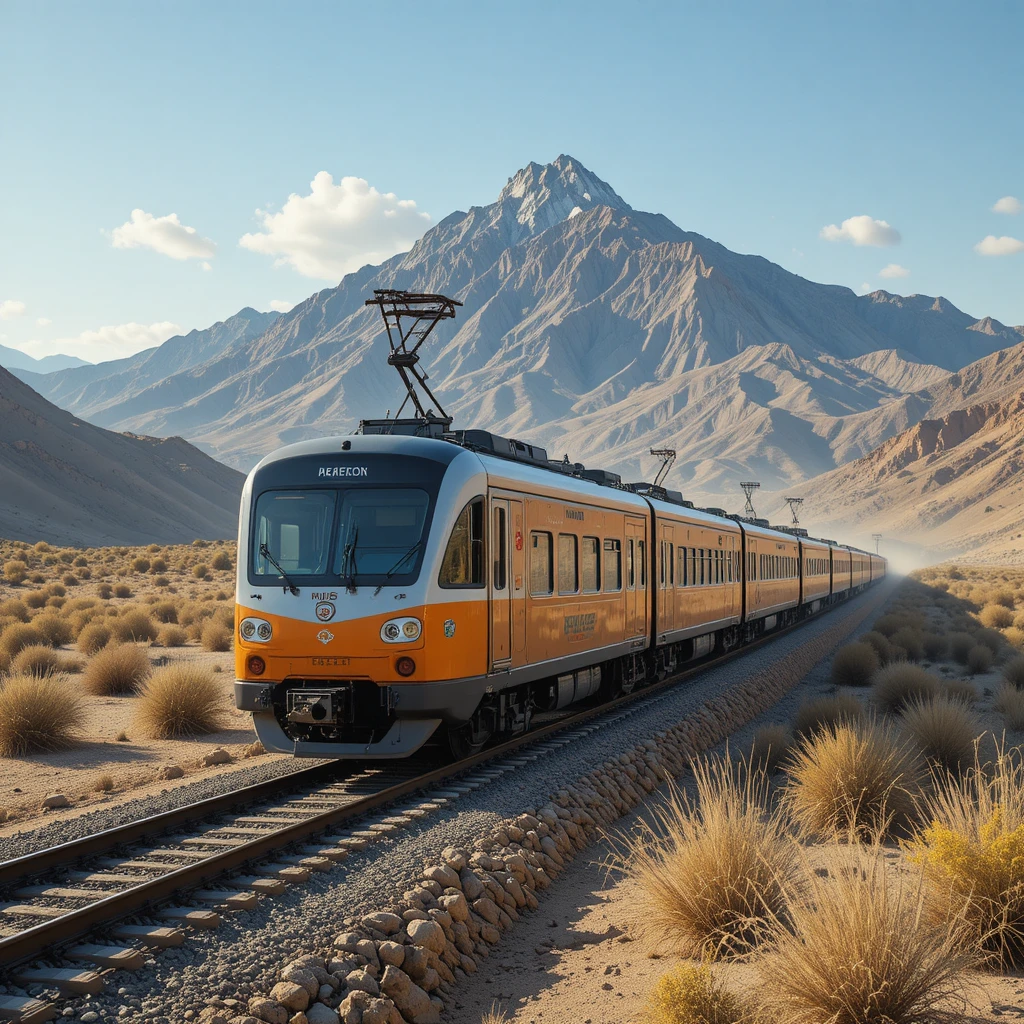
Instead of going Southwards, using the Greater Sahara Desert Rail or Road, African immigrants will instead find themselves in North Africa or even crossing the Mediterranean Sea into Europe. The concept of the Greater Sahara Desert Rail/Road is a more plausible idea that can generate enormous commercial value. It doesn’t need the government. If no government is willing to invest, private equity investors can do that to make a commercial killing by collecting revenues or placing the railway system that can generate revenue. Cases of constructing a rail to help link the population separated by a desert are not unique to the Sahara rail. When movement across the Taklamakan Desert became a problem for those moving from Hotan City in Xinjiang Uyghur region in China to Ruoqiang, the Chinese government invested in the construction of the Hotan-Ruoqiang Rail to ease movements and the seamless integration of the two regions. Construction of the 2,712 kilometers across the Taklamakan Desert which is one of the biggest deserts in the world improved the movement of people and goods, while also decongesting some of the populated Chinese cities.
In the UAE and Oman, the two governments introduced the Etihad rail that passes through the desert and Hajar mountains to link the coastal towns and regions of the UAE and Oman. In Saudi Arabia, the government introduced the Saudi Landbridge rail that runs through the vast rocky mountains, sand and deserts to link the Coast of the Red Sea with the Arabian Gulf. These complex desert rail projects imply that if the required security is provided in the Sahel region, the Sahara Desert Rail can also easily become a success. Construction of the Great Sahara Desert Rail/Road is a public project. It is a public project that may also create enormous values, profits and benefits for the private sector players. Hence, to ensure its success, the implementation of the initiatives for constructing the Great Sahara Desert Rail/Road can easily be accomplished using public-private partnership.
Public-private partnership connotes the strategic development approach where the government collaborates or works with the selected private sector players to execute different complex public sector projects. Public-private partnership is essential for implementing more complex public projects. Sometimes, the government has all the money, but without adequate skills required for the implementation of certain sophisticated public projects. Hence, public-private partnership becomes essential for government to access the required unique skills and talents. In certain cases, as it is usual, the government may not have all the funds and the required sophisticated skills. Through public-private partnerships, the government can easily fill such funding gaps or skills gaps. Public-private partnership improves the success of public project implementation. It leverages the efficiency of public project implementation. If corruption is not an impediment as it is often the case in Africa, it is often the private sector players that have the technical know-how and experience in the execution of the selected projects. This improves the accuracy of decisions and actions undertaken to minimize risks and ensure the success of most sophisticated public sector project executions. However, assuming that the African Union and ECOWAS have already provided security in the Sahel regions to diffuse threats from the Jihadists operating in the Sahara Desert, the implementation of the Great Sahara Desert Rail/Road construction may use any of the different forms of public-private partnerships often used in the implementation of different public projects. The different forms of public-private partnerships that can be used encompass:
- BOT (Build-Operate-Transfer)
- BOO (Build-Own-Operate)
- BOOT (Build-Own-Operate-Transfer)
- DBF (Design-Build-Finance)
- Concession
- LDO (Lease-Develop-Operate)
Using BOT approach, the private sector is engaged to build, finance and operate the public project for at least 25-30 years to recoup its investment costs and profits prior to handing over the project to government. Construction of a rail across the Sahara Desert would certainly generate a lot of revenues for the private equity firms. There are a lot of air-links from West, Central, and East Africa to the north. However, most of the ordinary Africans that Africa aims to help are often the ones that cannot afford to fly. Secondly North Africa is the other well developed and richer part of Africa, if not even better than the southern parts of Africa. Connecting the likes of Nigeria as the most attractive African economy with the most developed northern Africa would certainly unlock novel economic potentials and values that Africa had never seen before. Hence, Sahara Rail could offer the most affordable mode of public transport connecting the rest of Africa with North Africa.
Within a given short time, the investor could have recouped the investment costs plus profits. Chinese investors are often the most out-of-the-box thinkers that dare any form of investments. As the Chinese firm moves passengers to and from North Africa, Elon Musk’s Starlink Internet will also be of significant value as it provides the passengers with constant internet connectivity throughout the desert journey. These are some of the virgin investment opportunities that Africa has not yet seen or even thought of. And once some white investor comes in to take up the idea like they did in the Cape of Good Hope centuries ago, it only becomes disappointing for black Africans to later on turn around and say “this is our land, go this is our land irrespective of development without compensation”. Besides BOT, Africa could also use the BOO Model of Public-Private Partnership.
Using BOO, the private equity firm builds, finances, owns and operates the public project forever while the government only provides security and the regulatory framework for the project’s operation. For the Sahara rail project, this can be the option. The private rail provider can just come in to invest in the construction of the rail and then takes up ownership and operation of the rail forever. However, only a few governments would be willing to accept a situation where the private service provider perpetually owns the rail project. If BOO is not being used, Africa could use BOOT to have the private equity firm build, own, operate and transfer the rail project after the expiry of the designated period. DBF could be used if BOOT is not deemed fit by having the investor finance everything from designing, building and maintaining. BOOT and DBF are similar to concession that permits the investor to build, operate and collect revenues from the project for a certain period of time.
However, for LDO, the private investor leases the project from the government, modifies and manages it for a certain period before relinquishing ownership to the government or negotiating a new term of operation. Across the world, different sophisticated rail projects have been implemented using different forms of public-private partnerships. When it became essential to reduce time and costs while also integrating France and the United Kingdom, the more innovative private developers emerged with the concept of the Channel Tunnel. Channel Tunnel is the underwater rail network that passes under the English Channel water to link Paris with London. Channel Tunnel was constructed using a long-term concession as the UK government and France just offered the regulatory support, without providing any funding. Given the high passenger traffic between London and Paris, this project has so far proved more disruptive in the world of the modern public transport development. Compared with the Sahara Rail that will involve the construction of just rail across the desert, the Channel Tunnel that involved constructing the rail under water seems to have been more complex.
Besides the Channel Tunnel, Øresund rail that links Sweden and Denmark is the other most disruptive rail project that was financed using public-private partnership. Øresund rail that links Malmö in Sweden and Copenhagen in Denmark was funded using user fees as the other form of financing under public-private partnership. It is jointly owned by the Swedish and Danish Governments. Øresund rail does not have only a tunnel, but also an artificial Island and a bridge. In Istanbul, it is Marmaray which was financed using public-private partnership to link Europe and Asia. Passing through the Bosphorus Strait water, the tunnel has improved movements of people living near the border areas of the two continents. In the context of the Sahara Rail, this implies after building the rail across the Sahara Desert, from Egypt, the underwater rail can also be easily constructed to seamlessly improve the connection of Africa with Europe. From the existing economic foundation that has been created by the existing African leaders, these are the strategies that can be used to utilize such economic foundation to propel Africa into new growth heights in the coming decades.
Citation: Okanga, B. (2026). New Africa: Optimizing The Existing Socio-Economic Foundation for New Africa’s Betterment. London: Elicitor.