By
Boniface Okanga and Adri Drotskie
London, 5 April 2026
During the early years in 2002, Iran was among countries like Iraq, North Korea and Syria diagnosed by the former US President George W Bush as the “axis of evil”. Countries in the “axis of evil” were accused of financing terrorism, offering safe haven for terrorists and engaging in the development of weapons of mass destruction (Tanter, 2002). But as the axis of evil’s dismantling unfolded over the years, it has caused a lot of uncertainties that affect the modern global business environment. So far the war in Syria took quite long before Bashar-al-Assad-the former Syrian president, could relinquish power. Now it is the Iran war which is proving to be a little bit complicated for Israel and the United States (Barua, 2026; Shearing, 2026). Compounded by the Strait of Hormuz’s closure that has disrupted energy supplies, global markets and hospitality business configuration, this signifies going forward, contingency planning is the future of the contemporary world. In the midst of the intensity of the war, the US could have predicted risks of the Strait of Hormuz’s closure. And indeed they spotted the risks. However, the world is yet to discern the kind of the contingency plan that they had in place in case of such eventualities. Whether it is in government, business or even the non-governmental organisations like the church, orphanages and old age homes, the future of the world resides in the effectiveness of the adopted contingency plan. It is the determinant of organisational continuity. Whether risks are detected or not, contingency planning must be integrated in all aspects of the organisation’s operations. Even without the closure of the Strait of Hormuz, the contingency plan would have still been reflected in the purchase of more than adequate crude oil reserve even if any disruption was not predicted. Even if the Strait of Hormuz was not closed, the contingency plan would have still been exhibited in the development of more reliable alternative oil shipment routes. Even if the Strait of Hormuz was not closed, the contingency plan would have still been depicted in the creation of the best alternative oil pipelines which Saudi Arabia is now contemplating to develop. Even if the Strait of Hormuz was not closed, the contingency plan would have been exhibited in the investment that increases the quality of the quantity of the renewable energy used by the contemporary world. But all these were not the case.
Even if Iran war subsides and the Strait of Hormuz is opened, the contemporary world is still increasingly becoming unpredictable, uncertain and unstable. And it is no longer just a buzzword or a catchphrase. It is no longer just a cosmetic word or phrase for addressing corporate board meetings, seminars and conferences that the world is constantly changing. Instead it is the reality. It is the reality that the fluidity of the contemporary world is increasingly becoming difficult for not only businesses, but even governments to handle. The contemporary world is unpredictable. It is unpredictable. If it is not some mysterious virus escaping from some R&D laboratory to cause extensive global health havoc, it is instead extensive floods arising from global warming. If it is not a surprise military operation unfolding to frustrate some global business operations, it is instead a terrorist attack or a technological failure somewhere which is causing acute disruptions. The world is uncertain. It is unpredictable. This renders the global business environment unpredictable and uncertain. Surviving and thriving in these unpredictable business terrains require businesses and governments to not only be alert, but even to imagine and respond to even the slightest signals. The microcosmness or distance of the signal of potential trouble should not be the pretext for saying “it is far from me or us” or “that can never happen”. No, it can happen. Impediments of strategic proactive actions aimed at improving adaptation to change are explicated in Edgar Schein’s “Theory of Organisational Culture Change” to reside in three components of “Organisational Culture Change”. Artifacts constitute one of the components of organisational culture change. Artifacts are the observable tangible organisational things like structure, technology and work systems that can be easily changed. Espoused values that comprise the second component of organisational culture connote the justifications for behaviours and different actions and decision that the organisation takes. Espoused values are also relatively easy to change as compared to the basic underlying assumptions. Basic underlying assumptions constitute the third component of the organisational culture. It is often the most difficult to change because it is the kind of philosophy, thinking and way of reasoning that explains why the organisation does things in the way it does. Quite often, other areas are changed, but the basic underlying assumptions of the organisation are not changed and transformed. Because it is the philosophical pillar and logic that explains how and why things are done in the way that they are done.
Quite often, it can be difficult for even the top executives to explain the business’ underlying basic assumptions. But it is often the stronger belief that if a particular something is done in a particular way, the best results would or will not be obtained. It is the tendency to construe that failure will arise if things are done in a particular way. This breeds complacency. It breeds the kind of saying “no, such a thing will never happen. Forget.” That is your Trump-that I ran cannot close the Strait of Hormuz. Or “that is not how we do things in our organisation.” When a business says like that it means it can never try new things. It can never explore new values that can be adopted. Yet in the constantly changing and unpredictable markets, the constantly changing things require new thinking and approaches of doing things. It requires a lot of experimentation and trials in the quests of exploring the best new approaches that can be adopted. Such thinking echoes the reasoning in Barney’s (1991) “Resource-Based Theory” and Teece’s (2006) “Dynamic Capabilities Theory” that highlight proactiveness, flexibility and agility as critical underlying drivers of organisational continuity. Because all firms in a perfect market competition are innovative, Barney’s (1991) “Resource-Based Theory” insinuates that all competitive advantages derived from rareness, irreplicability, inimitability and non-substitutability can easily be eroded over time by the creative actions of firms. Schumpeterian’s notion of “Creative Destruction” further explicates that because of the high level of competition, firms become over creative to render values that were valuable today valueless tomorrow, and those that were valueless today valuable tomorrow. Within the similar context of thinking, Teece’s (2006) “Dynamic Capabilities Theory” advises firms not to wait, but to analyse, track, sense and even sometimes imagine situations to take actions and thwart disruptions before they occur.
When computer technology improved to catalyse the invention of the internet, Kodak refused to accept and acknowledge that digital photography would emerge to distort its film-based photography business. It did not take long before Kodak was displaced from the market. Fujifilm which was Kodak’s main rival, survived by adapting and assimilating the new concept of digital photography. Assimilation of new thinking, approaches, technologies or trying the completely different ideas, actions and thoughts that had never been considered before improves a business’ resilience and ability to evolve and adapt with the new disruptive changes. With such insights, no business or government will say “that can never happen”. Instead it will prompt the adoption of an open mind approach that asks the often difficult what if questions? For years, hitting Iran did not come closer in the minds of several past American presidents. When Israel launched its first “Operation Rising Lion” strikes against Iran in June 2025, very few people around the world detected that the US and Israel were actually testing Iran’s capabilities before launching a major large-scale protracted attack in the near future. And that near future is now. That near future is now. But since many people were still holding the mindset of “that can never happen”, very few anticipated that the Strait of Hormuz would be closed to send energy and commodity prices skyrocketing. Donald Trump detected it and had to do a Venezuela style as a precautionary measure. US did the Venezuela style as part of the contingency plan that in case Iran retaliated by closing the Strait of Hormuz, it would instead be insulated against sudden energy crisis and shortages. However, even as Donald Trump insulated the US with the required oil supplies, the mindset of “that can never happen” was still there. Some key American decision-makers predicted disruptions at the Strait of Hormuz, but the mindset of “that can never happen” is often an impediment. “That cannot happen because America is quite powerful or Iran will be overwhelmed by the US firepower”. But now it has happened as Iran did the oddest thing of blocking the Strait of Hormuz. The world is unpredictable. Anything can happen. This signifies proactive analysis and response using the appropriate contingency plan is essential for leveraging business continuity.
Even if things appear stable and predictable, businesses and governments must still evaluate and ask what if questions. They must ask what if the supply of this important product or technology or this thing that we do is disrupted, what will be the consequences? What will we do and how shall we respond? It is such inquisitiveness that prompts the exploration and creation of a more plausible plan B in the event of sudden disruptions. As the US/Israel-Iran War continues to unfold, no one knows when it will subside to restore some stability to the global business ecosystem. Just like any other war, US and Israeli strikes and strikes against the Islamic Republic of Iran had been expected not to run into weeks. When “Operation Epic Fury” set off at 06:35 UTC on the 28 February 2026, the coordinated US/Israeli strikes against Iran were not expected to span into even weeks and weeks. Leave alone months. Exactly at 06:35 UTC, a plethora of B-2/B-1 and B-52 Bombers as accompanied with an array of Tomahawk missiles and HIMARS did a lot of precision strikes. The hope was that Iran’s military’s capabilities would be significantly decimated, degraded and incapacitated in a matter of days. But the world still awaits such realities.
To ensure that the strikes did not unfold into weeks, the initial stages of the US/Israeli military operations mainly targeted the Iranian ballistic missile factories, nuclear facilities and a range of different drone manufacturing facilities. In these initial quests, the US also ensured that Ayatollah-the Iran’s Supreme Leader- Ali Khamenei and several other key military leaders were eliminated to demoralize Iranians. However, instead of demoralising, it seems the death of Iran’s Supreme Leader has instead emboldened the country where acts of terrorism and suicide bombing have always not only been fashionable, but also its raison d’être. Iran retaliated and exhibited resilience to withstand firestorms from some of the mightiest military powers of the world. A lot was not known about the Iranian military capabilities. The United States and Israel have the best military and espionage systems in the world. However, it seems to have underestimated the strengths and capabilities of Iran to resist and withstand the might of the mightiest military powers of the world. Even if it never underestimated, there is often that approach of diagnosing, identifying and opting to confront the risk instead of avoiding it. In Africa, such an approach is often called “Kama Mbaya-ni-Mbaya”-meaning if it is bad so let it be. Unfortunately, the use of such an approach is now emerging to be more disastrous and frustrating in Iran. From the unfolding situations, it seems the expectations that the US/Israel-Iran skirmishes would soon subside are increasingly turning into myths. It is increasingly turning into frustrations and the uncertainties that the Donald Trump administration must quickly deal with to reshape the American public opinion in his favour. Of course, in terms of American foreign policy, war against terrorism and global security, Donald Trump has so far scored a lot of credit for trying to do what most past American presidents had failed to do.
Trump: The Doer of Previous Impossibilities
Trump will remain echoing in the political history of America as one of the presidents that did what most previous American presidents had been hesitating, contemplating, procrastinating and avoiding to do for decades. He will be remembered as the president that did the oddest thing. With such a record, Donald Trump is certainly a winner. Even without setting foot on the Iranian soil, Donald Trump is still a winner. Even without scoring regime change goals as it had previously been anticipated, Donald Trump and Netanyahu still remain winners that will be remembered again and again in the political history of the world. From the US/Israel strikes, Iran has experienced significant damages and destruction of more valuable nuclear, military and energy assets. Iran can rebuild its capabilities. But it will take years for it to regain its desired military capabilities in the way that threatens the United States. It will take years or even decades for Iran to rebuild its military and non-military infrastructures in the way that threatens Israel and the United States’ security. Iran will recuperate and regain its capabilities. However, in its entire life going into the future, Iran will become more cautious in how it deals with Israel and America. Similarly, the US will also need to become more creative in how it solves the current crisis before it changes public opinion. Partial opening of the Strait of Hormuz is a positive step in the right direction. To gain public support during the initial phases of bombing, the US ensured that it made a lot of significant initial strides. In line with Kotter’s Change Management Theory, such early achievements and wins are often important as the strategy of motivating subordinates and followers to embrace change. Early gains are often important for energizing and motivating subordinates and followers to believe and trust that what seems impossible is actually possible. Riding on this euphoria, Donald Trump and Netanyahu gained higher spirits and even started urging Iranians to surrender and put down their arms or face the worst. Unfortunately, today, it is two months now and 2:29 am on the 4 April 2026, and it seems instead of surrendering, Tehran seems even more prepared to receive more US strikes and fire than before.
Emboldened by the US’ early gains in Iran, the likes of Condoleezza Rice- The former US Secretary of State, did not take long before urging Trump to “take care of Iran for good” (McEntyre, 2026). In response, the Iranians refused and remained defiant. The reasons why Iranians remained defiant are now gradually surfacing. Iranians seem to believe in their military capabilities. The military capabilities that the world wasn’t aware of. The military capabilities which are not yet known. Instead of subsiding, Pete Hegseth, the US Secretary of State for Defence is reported to have insinuated that the Pentagon is asking for an additional $200 billion after just three weeks into the war. This implies the world must brace herself for more confrontations and even deadly strikes and counter strikes from Iran. However, as all these unfold, worries about more business losses are the uncomfortable things that the insurers and the entire global business community will need to learn how to cope with. Leaving alone the Strait of Hormuz closure that has now induced an acute energy crisis, the strikes and counter missile and drone strikes across the Middle East have rendered the Middle East market unsafe and unattractive. The Middle East airspace is no longer safe. And hence the passengers, visitors or tourists no longer feel comfortable flying over the Middle East airspace. Airports have closed or are partially functional. Aircrafts are grounded and counting losses and losses. Nobody knows when all these frightening situations will end. The previously lucrative and attractive Middle East aviation market has all of a sudden turned into the most unattractive aviation markets of the world. This demonstrates the degree of the fluidity of the modern global business terrain. Despite detailed analysis, forecasting and sensing as articulated in Teece’s (1996) “Dynamic Capability Theory”, no business is safe and immune from disruptions.
Even if internally the business is superior, strong and innovative to continuously churn out disruptive innovations, failure to sense, imagine and prepare for even the unexpected can still disrupt the business’ performance. The world is insecure. It is unpredictable. If the disruption is not arising internally like it was in the Enron case, it can emanate externally. Unfortunately, for some of the devastating disruptions like Covid-19, the Russia-Ukraine War and now US/Israel-Iran strikes, even the most effective form of contingency planning may not offer the appropriate solution. Instead, all that the businesses can do is to try to manage and control the scale of the devastation so that it does not become quite devastating to cause the complete failure or obliteration of the business. It is a matter of controlling, mitigating and preventing extensive losses, as the executives wait for the conflict to subside by either the defeat of one of the parties or for the global public opinion to strongly swing in favour of negotiations and dialogue to amicably end the conflict. In such situations, global businesses have no control, but the subjection of their survival to the whims of luck. In the days prior to the US and Israeli strikes against Iran, the UAE as one of the world’s major tourism hubs received about 19.6 million international tourists in just 2025. This represented an increment of 5% from the 2024 financial year. Tourism earnings from these translated into a whopping $60 billion or AED 220 billion. Just like the UAE, Qatar which is the other attractive tourism and business destination for most international visitors received 49 million visitors in 2024, before the increment to 51 million visitors in 2025. In terms of revenue, Qatar generated $20 billion from tourism. However, as strikes against Iran commenced and drones started hovering over the Middle East airspace, tourism revenues started shrinking. It became quite frightening and unsafe to visit, live, work or do business in the Middle East.
In the normal business operations, theories imply the use of an effective contingency plan can enable the business mitigate the devastating economic effects of the unfolding disruptions.
Contingency Plan
Contingency plan connotes an alternative plan exhibiting the alternative budget, technology, resources, structures and management systems that can be used to respond to a crisis. In the event of a crisis, a contingent plan mitigates, reduces, prevents or controls the undesirable effects of the crisis on the business’ performance. Quite often, high performing businesses like Toyota and Unilever use the major contingency planning theories or models like Fiedler’s (1964) Contingency Model that emphasizes the importance of reading the situation, so as to apply the appropriate leadership styles. It shares similar views with Hersey-Blanchard’s Situational Leadership Model that encourages the understanding of the nature of the situation and the behaviours of followers so as to discern the leadership approach that can be used (Del Pino-Marchito et al., 2025). During a crisis, Robert House’s Path-Goal Theory explicates the importance of clear thinking, vision, calmness and supportiveness as essential for leaders to ensure that the business moves out of the unfolding undesirable business situations. Instead of using just the appropriate leadership approach, Burns and Stalker’s Structural Contingency Theory as supported by Lawrence and Lorsch’s Thinking, explicates the use of the appropriate organisational design and structure to also leverage effective crisis management (Sibindi & Samuel, 2019). Quite often, a crisis like frequent rains of bombs landing in the middle of Dubai and Qatar can disrupt the existing organisational structures. It may necessitate usage of the working-from-home method. This calls for the introduction of new technology and management structure. Hence without the appropriate organisational design and new structures, it can become difficult for the business to effectively respond to a crisis.
Even if this would improve the effectiveness of contingency planning, the world is yet to see the invention of the contingency plan model that aids the management of a series of different disrupting crises that the modern world is experiencing. Most contingency plan frameworks are based on the assumption that a big crisis will occur once and the business will be required to respond using that contingency plan. It is often modelled on the assumption that a major disruption or a crisis would occur once and the management would be required to respond with an appropriate contingency plan. The contingency plan prepares management to respond to just a single major crisis. However, the world is increasingly experiencing a series of major disruptions that frustrate the business for months and years. Given such dynamics, the world is yet to see the introduction of the contingency plan that manages a series of protracted crises that unfold from one crisis to another. In different parts of the world, there are different disruptions. However, when the business world was still just emerging and re-organising itself to recover from Covid-19 in 2022, it did not take long before Russia-Ukraine War broke out on 24 February 2022. Russia-Ukraine War unfolded and the world struggled with how to respond to the escalating energy shortages and prices. Subsequently, it did not take long before the full-scale US/Israel-Iran war broke out in 2025 and again in 2026 (Branson, 2026). Even for the more effective and competent crisis management managers, it is not easy to develop and use a series of different contingency plans. For the global insurance business operators, the insurance business is no longer attractive. Today, the insurance company pays billions of US Dollars for the damages caused by Covid-19. And just a few months later, the same insurance companies are required to pay damages for failure of semiconductors to arrive from Russia as a result of the outbreak of the Russia-Ukraine War. In the matter of just days, the same insurance companies are required to compensate for damages caused by the disrupted global fuel flow from the US/Israel-Iran War and subsequently the Strait of Hormuz’s closure. This is unsustainable. It is untenable. No business can thrive in such environments.
Quite often, the global business ecosystem is dubbed as unpredictable and uncertain due to its higher level of fluidity. Combined with the unrelenting disruptions from very creative innovators and the uncertainties created by Trump’s tariffs’ increments against most of its major global trading partners, it seems the global business executives will need to find alternative words for describing the precarity and fluidity of the modern global business environment. It seems going into the 2030s, the world must be more prepared to respond and deal with a series of disruptions. Going into the 2030s, the world must be prepared to deal with more unpredictability. And that will require good contingency planning. Initially, the world was quiet even as it struggled with the recovery from Covid-19. But when Russia made a bold move to invade Ukraine, it changed the thinking and approaches in most global political circles. Dealing and responding to Russia’s aggression were difficult tasks that if not well managed, it could have easily caused a Third World War. In effect, the use of sanctions, proxies and machineries as well as financing instead of direct participation in the Ukraine war were considered by the US and NATO as more soft approaches. Such soft approaches were predicted not to provoke Putin to retaliate in the way that would flare-up into the full scale Third World War. The use of these soft approaches like sanctions, war funding and machineries without direct US and NATO participation was meant to make Putin believe that he could win the war with time (Boot, 2026; Person, 2026; Hamdach, 2026). US and NATO did and are still doing all that they can to keep Putin at bay. But even as they do that, US and NATO including even Putin himself deny that the Third World War is taking place. They say they are preventing risks of the Third World War when actually they are already engaged in the Third World War.
Even as Russia is now intervening in favour of Iran, all the parties and the major global political powers still deny that the Third World War is taking place. They say they are trying to avoid the Third World War when they are actually already involved in the Third World War. Most people think the Third World War will be fought in the same way that the First and Second World Wars were fought. The Third World War will be or is already being fought in its own different ways. It is being fought in the civilized manner where NATO denies that the Third World War is taking place, but tells Trump that they cannot join in the Iran War because they are already taking care of Putin in Ukraine. Except NATO which has not directly moved to the Iran war, Russia and China have been the major sponsors and direct participants in the Iran war against the US and Israel. On the other hand, Ukraine which was previously a beneficiary of aid has turned into a donor of drones against Iran’s Shahed drones. Iran’s Shahed drones were sold or donated to Putin for use in Ukraine. Due to its massive usage in the Ukraine war, the Ukrainian military got to know it very well. And hence, the invention and development of the technology for drone interception that has become quite useful in the Middle East War. With such insights, is the world already engaged in the Third World War or not yet?
The Third World War will be fought in the way where powerful states deny it, but while at the same time also having US, NATO and Israel ganging up against the rebellious states like Iran, Russia, China, North Korea and Syria, which George W Bush once called the “Axis of Evil”.
“Axis of Evil”
At the height of the 9/11 War against terror and weapons of mass destruction, the phrase the “Axis of Evil” was introduced by George W Bush in his 2002 State of the Union Address (Tanter, 2002). The phrase referred to the nexus between states like Iraq, Iran, North Korea, Syria, Libya and Cuba that engaged in terrorism financing and the development of weapons of mass destruction. To the US, these states were or are still the axis of evil. However, to these states and the more objective world, the new axis of evil could also easily be the US itself, NATO and Israel. From George W Bush’s articulation, it is in these states known as the “Axis of Evil” that the Third World War is being fought or will be fought. The “Axis of Evil” states like Iran, Syria and Libya constitute some of the very resourceful states of the world, of which if Russia’s control is disrupted and reshaped in favour of the US and NATO, it can provide the Western powers with significant leverage over Russia and global wealth. In effect, unlike the First and Second World Wars, the Third World War will not have direct confrontations between superpowers-the US, NATO and Russia or China. Forget the situation where the US or NATO will directly confront Russia. Forget. Instead the Third World War will be fought using proxies in the third countries and territories like Ukraine, Iran, North Korea and the next place perhaps Greenland, Latin America or somewhere else in Africa or even again in the Middle East. In these third countries or the so-called axis of evil states, the Third World War is being fought or will be fought using proxies. The Third World War is not about political might. Instead it is about the control of the global resources.
Following the collapse of the USSR, Putin, a former KGB agent had for years been rebuilding the Russian capabilities to retake back the defiant former Soviet Union states like Georgia, Crimea and Ukraine. However, as Russia did this with profound nostalgia of the Soviet Union’s glorious days, the US, UK and NATO thought that in the 21st Century, Russia would try to wield significant power and control, but without using uncivilised methods like the direct invasion of some former Soviet Union states. When it happened in Georgia and Crimea, the US, NATO and the EU thought it would stop there. Remember the mentality of saying “it is far from me or us, hence that can never happen”, a thing that breeds complacency. When Russia’s direct military attack subsequently extended to Ukraine on the 24 February 2022, the US, just like NATO and the UK, were taken by surprise. For decades, the US and NATO had engaged in less serious wars like those in Iraq, Syria and Libya. However, the Ukraine one was a major war that had to be fought like it is not a Third World War. It had to be fought in the way that does not appear to be the Third World War, even if it is. Above all, the US and NATO had not prepared for a major large scale war with a major superpower like Russia. Russia was and is still prepared for the war, but the US and NATO had by then not prepared in terms of the required military superiority, resources, funds and even psychological mindset. This explains the use of several diplomatic engagements as well as the other methods like providing funding and training to Ukrainian troops, machineries, sanctions and other forms of indirect interventions.
The US and NATO were threatening to do so. But still direct confrontation with Russia was not an option. Though the US and NATO were not prepared, having a Ukraine which is occupied by Russia is what the US and NATO cannot accept without intervening and preventing. Hence, from the days Russia invaded Ukraine, the US and NATO have been preparing to counter Russia. Military incapabilities were the impediments. This explains why Elon Musk once reckoned that in terms of military technology’s replenishment, America was at its lowest and would hardly win any war if it initiated one. Today the US is in Iran and the world does not know whether it is now prepared. To respond to Russian threats, and the likes of North Korea’s intercontinental, ballistic and hypersonic missiles, the US had to consider investing $175 billion to $3 trillion in the development of the “Golden Dome”. Golden Dome is the modified version of Israel’s famous “Iron Dome”. Using an array of modern technologies like artificial intelligence and sensors, the US’ Golden Dome aims to improve the efficiency of its air defence systems to easily sense, detect and intercept all forms of ballistic, cruise and hypersonic missiles from far before they reach the US airspace. This has been accompanied by the allocation of a budget of $310.7 billion on the development of a range of different AI, autonomous drones and C4I military technologies.
As the US develops and improves its military technology, strikes against Iran are not only a war for resources. Instead it is also a testing ground. The Iran war is also a war against the Russian ally. Syria and Libya are now out of the picture as part of the “Axis of Evil”. It remains Iran and North Korea. China is not a reliable partner or ally of Russia that can easily show up at the frontline or the battlefield when Russia is attacked. Instead China is more of a commercial partner or just a “money maker” who is willing to support Russia by just selling some of its technologies. In contrast, Iran is not only a potential logistics supplier, but the actual battlefield player in case Russia is attacked. Hence, before direct confrontation with Russia in Ukraine, Iran had to be weakened. As Iran is weakened, the war is also used as a testing ground for the new US’ weapons. However, the assumptions that Iran was also not that sophisticatedly powerful have backfired. The first Israeli strikes in June 2025 followed by the US’ brief support, were actually the physical testing of Iran’s military capabilities as well as what Iran would do when attacked. When Iran retaliated by attacking the US military base in Qatar, it sent a clear signal as to what Iran would do. In response, most Middle East countries received the upgrade of their air defence systems. Compared to the first attack against the US Middle East allies, this explains why despite being hit, most of the affected Middle East countries are not complaining much like it was during the first strike. After the first attack, most Middle East countries have been prepared psychologically and with the required air defence systems. With these preparations, Donald Trump was thumbing his chest with the assumption that America was beyond ready to take on Iran. Unlike in the first war where he stayed away from saying regime change in Tehran was the motive of the Israeli attack, he was now directly doing so during the early stages of the war. Which is a signal that America had done its thorough underground research to establish Iran’s military capabilities vis-à-vis the United States’ capabilities.
The Iran war is about the Iranian oil. But it is also about Russia. After Iran, North Korea could be the next target for the US before turning to completely finish Putin in Ukraine. That is on the assumption that the Iran campaign is a success. If not a success, something else may play out in Ukraine. Either Putin will be forced to accept Trump’s proposal to accept part of its Ukraine controlled territories or the US and NATO will hold on to the war for as long as possible until the impact becomes quite devastating for the Russian economy to crumble. Once the Russian economy crumbles, it will become difficult for Russia to continue clinging to Ukraine. Had it not been for the closure of the Strait of Hormuz which is now forcing the world to buy even sanctioned oil, Russia was already in a precarious situation. The Iran war is therefore a blessing in disguise for Russia because it not only created a gap, but also a gap for crude oil to be sold at relatively higher prices than before. Nonetheless, to improve its military capabilities, America is so far undergoing significant upgrades of its military capabilities and technology, which are scheduled for completion by 2029, a time that if God of Heaven hears the US prayers, North Korea will be off the radar, for America to only remain with the Russian threats in Ukraine. Unless the incoming US president after Trump introduces another foreign policy. Donald Trump has set a very high battlefield standard that will be required for the next US president. The next US president must be prepared to continue with Trump’s aggressive foreign policy in order to get America from its increasingly precarious position against threats from Russia and China. But if the next US president adopts the Obama policy of smiling and treating the often deadly Putin with gloves, while also giving funds to Iran instead of attacking and demonstrating a strong signal, then it will be disastrous for the war in Ukraine. Donald Trump just like Israel is tactical, he considers Putin and Russia as friends, but the extent to which they are genuine friends will only be tested before 2030. However, as the US and Israel strive to clear off Iran and North Korea, they must first solve the Strait of Hormuz dilemma which is increasingly becoming a nightmare for the world.
US/Israel’s Diplomatic Exit from Iran War
For now, Iranians may appear belligerent and unapologetic. However, deep down in their hearts, Iranians are aware and have learnt a lot from the existing conflict. It will take years and years again for Iran to become a threat. If degrading or the obliteration of the Iranian military and nuclear capabilities was the goal of the ‘Operation Epic Fury”, then, it has certainly been achieved. If America and Israel wanted to discipline Iran and mitigate future security threats, then, they have achieved that goal. However, the complete obliteration of the current Iranian regime will be almost impossible. And the US is aware. This explains the recent concessions leading to the partial opening of the Strait of Hormuz. Iranians are very tactical and it is difficult to predict their capabilities and how they will respond to different situations. When Israel launched the first attacks just to test Iran’s capabilities and reactions, the US and Israel thought they had discovered a lot about Iran’s military capabilities. Yes, in terms of precision strikes, they have scored one hundred percent. During the short periods, the US and Israel were able to assess and profile all the Iran’s military inventories as well as their locations. However, it is still emerging that little is known about Iran’s military capabilities and tactics. When the US and Israel launched the second strikes, it is emerging that there are certain things that were not known about Iran. The war is becoming sophisticated, complicated, difficult and unwinnable from all the sides. With these surprises, it is probable that if the US troops are put on the Iranian soil, several other new dynamics and surprises will still emerge to complicate the overall success and progress of the war. Combined with Russia’s direct and indirect military intervention in Iran, this will complicate and slow the progress of the war. In the end, the US will end up with a situation similar to the ones in Iraq, Afghanistan and Syria prior to the resignation of Bashar-al-Assad. Hence, the earlier exit the better.
America and Israel need to recognize that they are winners already even without scoring regime change targets. They have instilled discipline that will make Iran less threatening going into the future. Taking bolder actions to negotiate and end the war would mutually respond to the interests of all the parties. The current Iranian regime as led by Ayatollah does not want to lose power. Likewise, the US and Israel have all realized that despite exhibiting their military superiority, winning the war to score regime change like it was the cases for Libya and Iraq is impossible. But still with these feelings, they are also aware that Iran’s military capabilities have been significantly degraded to pose any immediate future threats. With this pride, America would not lose much even if it walked away from the war in the same way that Joe Biden did in Afghanistan. America is powerful and has achieved a lot of successes in Iran. At the same time, it is also the most paranoid state in the world. After 9/11 terror attack, George W Bush pursued Osama Bin Laden- the global chief terrorist, leader and sponsor of Al-Qaeda to the Afghanistan caves and mountains. Lamenting that “You are either with us or with the Terrorists”, the US engineered the end of the Taliban regime. The Taliban regime was kicked out of power for providing safe haven to Osama-bin-Laden as well as for Islamic radicalism and providing breeding grounds for terrorists.
While further expressing anger that “The US would make no distinction between terrorists and those who harbour them”, and that “ If terrorists cannot be brought to justice, justice would be brought to them”, George W Bush ensured that the Taliban stayed in the Afghanistan mountains and caves. Due to paranoia and constant fear that the return of the Taliban government would pose threats to the United States, all incoming US governments did all they could to ensure the Taliban continued residing in the Afghanistan mountains and caves. Had it not been for Joe Biden’s bold decision to suddenly withdraw the US troops from Afghanistan, the Taliban would have still been in the caves up to now. But the biggest question that the US can ask itself, following the withdrawal of US troops from Afghanistan is how has the new Taliban regime caused threats to the United States? Apart from the relaxed refusal of the Taliban government to return the $7.12 billion worth of military equipment that the Biden administration abandoned in Afghanistan, the answer is so far a big NO. No threats. Just paranoia from the US for nothing. The Taliban learnt a lot from the US invasion. And for that reason, it seems they have even become more disciplined and if not the most willing partners of the United States in the Middle and Far East. Just like in Afghanistan, the US has achieved a lot to the extent that even if it walks away from the war, Iran will not rebuild the capabilities to pose threats soon. It is not only in Afghanistan where the US abandoned the war, but also in Vietnam. Vietnam reflects the model that the US has often used to tactically withdraw from a complicated war.
In Vietnam, when the war became complicated, costly and prolonged to attract a lot of domestic criticisms, the US adopted the Vietnamization initiative. Vietnamization entailed the training and utilization of the ordinary South Vietnamese to fight and complete the war against the largely communist North Vietnamese forces. However, when the US withdrew after signing the Paris Accord, the popular communist North Vietnamese troops overwhelmed the South to capture Saigon in April 1975 (Vassar, 2026; US Department of State-Office of the Historian, 2026). This marked the end of the Vietnam war and the beginning of Vietnam’s reunification. In Iran, the US is trying to apply the same Vietnam model, but it has so far failed. When it came to putting troops on the ground, part of the contingency plan was to incite ordinary Iranians to riot, so that the US would take the role of financing rather than direct participation in the war. However, all these failed as ordinary Iranians failed to come on the streets. Just like Syria and Libya during the Gaddaffi era, Iran is one of the most developed countries with the best condition and standard of living. Hence, even if the US was trying to incite the ordinary Iranians to come on the streets, it has not been quite easy to convince most of them to do so. They don’t have any proper animosity against the Ayatollah regime. To his dismay, Donald Trump noted that it has now emerged that the arms that were shipped to reinforce rioters in Iran were diverted to unknown destinations.
Instead of clinging to a war that may turn costly and unwinnable with a lot of future diplomatic embarrassment, the US and Israel must just negotiate the opening of the Strait of Hormuz and withdraw from the war. It has so far done well by securing the partial opening of the Strait of Hormuz. At this stage, the US and Israel have achieved a lot in terms of degrading Iran’s nuclear capabilities and threats against Israel and the United States. Compared to continuous engagement where it will become more embarrassing to leave the war at the later stages when the damages are enormous, the Iranian war is still in the phase where Trump and Netanyahu have the highest ratings for daring to do what most of their past leaders had been procrastinating to do. Instead of continuing with the war, withdrawal at this stage is the best decision that Trump can make. The US and Israel have sent a strong signal to Iran. For now, Iran may try to act with pride by bringing in conditions here and there, but deep down in their hearts, they have learnt a lesson that will make them more cautious in how they deal with the US and Israel going into the future. Just like the Taliban, the current Ayatollah regime has also learnt a lot from the current war. Despite the usage of several political and war rhetoric to posture as if very brave and ready to continue countering America and Israeli power, deep down their hearts, they are bleeding. They are praying for the most opportune chance for the war to end. With all these insights, it is only a matter of time for a more tactical negotiator to come up with a more plausible proposal that can get Iran to the negotiation table and end the war. But that will only happen if the Iranian war is a genuine denuclearization war. If it is a genuine denuclearization war, then the goal is achieved. If it is an oil war disguised as a denuclearization war, the end results will be a little bit complicated and frustrating. The United States and Israel will need to rethink their strategies. Oil war means regime change so that the US can access the required quantities of oil. That will be difficult. It is already emerging that no matter what, Iran is not prepared to let go. And Iran seems to have the military capabilities not to let go. And that will be disastrous for America and even the entire world. The war may take longer than it took in Syria for Bashar-al-Assad to relinquish power. During that longer period, negative public perceptions will have set in, as new regimes will have emerged in the US to undo what Donald Trump has done. Even without taking years, just the failure of the world to resolve the Strait of Hormuz crisis for just the next five months, will send the entire world wailing for the Iranian war to be immediately resolved (Shamim, 2026).
Strait of Hormuz’s Dilemma
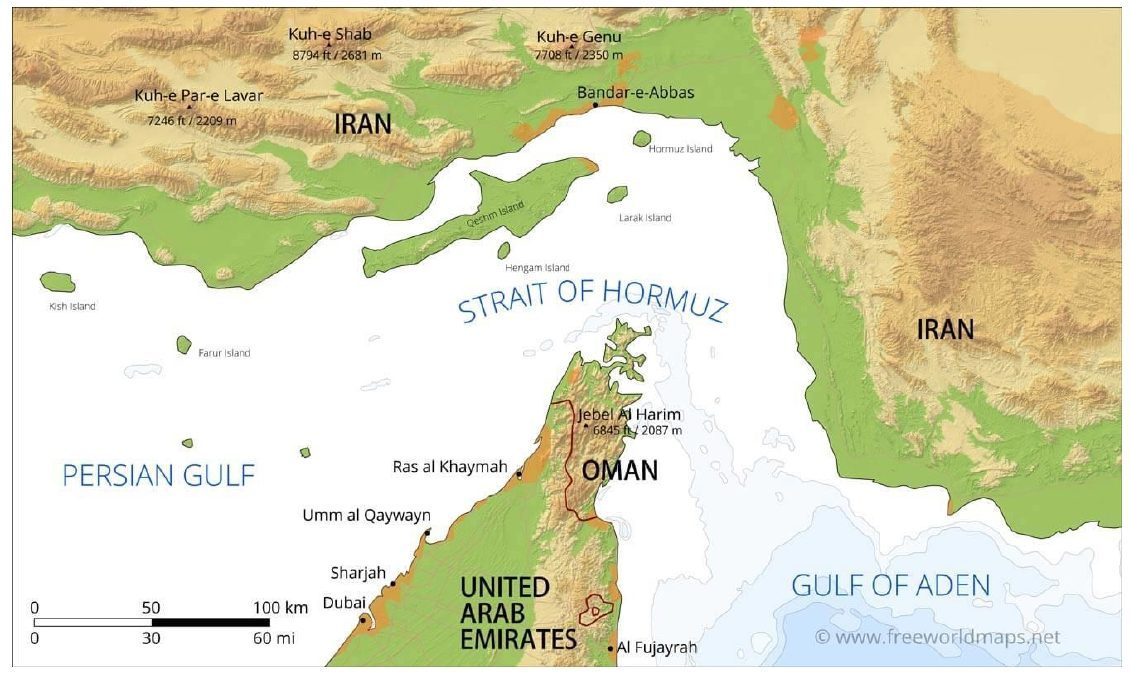
So far, the sudden Strait of Hormuz closure has skyrocketed crude oil price per barrel from the usually normal price of $70 per barrel to $150 per barrel. If the crisis persists, global economists predict that the oil price will shoot up again to even $200 or $300 per barrel (Shankar, 2026). That will definitely throw the world into a recession and quagmire. And that is not what the entire world including the US, Iran and Israel themselves desire. In all these, it is Putin and Africa who are the lucky guys. In the past, not so many people around the world knew about the Strait of Hormuz. But in recent times, almost everyone around the world now knows about the Strait of Hormuz and its significance for global oil supplies and global economic stability. Unlike the ordinary folks around the world, major world economies were aware about the significance of the Strait of Hormuz as a critical determinant of global oil supplies (Butler, Mann & Jackson, 2026). Even as Iran behaved otherwise, it is perhaps Iran’s control of this narrow global oil chokepoint that prevented its invasion by the US as the likes of Syria and Libya were being attacked. However, even while aware of the potential risks of Iran blocking the Strait of Hormuz if things got quite bad, the US still went ahead with the war anyway. Most analysts argue that the Donald Trump administration detected such risks, but still assumed that the United States with its might would easily take control of the situation. It was assumed that the war would not take long. It was part of the plan to begin the military campaigns with the assassination of Ayatollah and most other senior military officers. This was presumed to deprive the Iranians of the required leadership, so as to create confusion, lack of direction and disorganization. With such chaos, it was assumed that the United States and Israel would take advantage of the confusion to easily finish the war.
Unfortunately, it seems that the plan didn’t work out. Instead it is the early assassination of the Iranian supreme leader which is now operating against the United States. Having eliminated most of the senior leaders, Iran is left with the less experienced guys. With inexperience, risks of making some disastrous haste decisions become quite imminent. Because of inexperience, the Iranian leaders have panicked earlier and rushed to close the Strait of Hormuz even if it was not necessary during that early stage of the war. With a lot of experience of dealing with the United States, it is probable that had the late Ayatollah been around, it is unlikely that he would have hurried to close the Strait of Hormuz. He was an experienced leader and had interfaced with America on several occasions during conflicts. Perhaps, instead of closing, the late Ayatollah could have used the threats of closing the Strait of Hormuz as a bargaining tool to get the US and Israelis to agree on certain points. Even when Israel threw in the actual missiles during the first strikes in May 2025, the late Ayatollah responded using expired missiles or the missiles that could not cause extensive harm. This demonstrates how the US and Israel may easily start to miss the late Iran’s Supreme Leader. The remaining leaders are scared, afraid, panicking and therefore using any lethal tool that they have at their disposal to survive. Unfortunately, in that process, they have realized that it is the closure of the Strait of Hormuz that they can use to get the whole world to hear and respond to their cries. As they do that and America struggles to forcefully open the Strait of Hormuz, the impact on the global economy is becoming lethal day after day. Immediately it became difficult for oil tankers to easily move through the Strait of Hormuz, crude oil prices per barrel shot up to $120 (Farley et al., 2026). Though it has now stabilized at $111 per barrel, the Strait of Hormuz closure has also instigated the increment of prices for jet fuel, gasoline, diesel, natural gas, power, fertilizers and petrochemicals. Unless immediate interventions are undertaken, the closure of the Strait of Hormuz will certainly affect global prices, with the risks of inducing even a global economic recession. Even if it is now partially opened, it may still have less impact on oil prices until the Strait of Hormuz is fully operational. So far within less than 24 hours after signing the ceasefire agreement, Iran is said to have again closed the Strait of Hormuz as a result of Israel’s strike against Hezbollah in Lebanon.
This indicates how the Strait of Hormuz issue still remains fragile, uncertain and unpredictable for improving the stability of the global oil supplies and prices. To mitigate these risks, Donald Trump has three options. One is to agree to any accord that involves reopening the Strait of Hormuz and exit the war completely since the Iranian military and nuclear capabilities have been significantly degraded. At this point, Donald Trump still has a higher rating as compared to the later stages if the US continues with the war. Secondly, the US can reach an accord as a temporary relief, so as to re-organise and re-capacitate their capabilities to resume the war in the future. If Iranians detect that trick, they may however be unwilling to accept such an accord. Such an accord is also not tenable for Trump who will come under pressure later next year in 2027 as the US starts preparing for the 2028 presidential election in November 2028. America keeps grudges for a long time, but it is unlikely that the next incoming US president will adopt the current foreign policy of direct military confrontation in Iran without first resolving the Russia/Ukraine crisis. The third option is the direct increase of the scale of force. That option will work if the US and Israel and just a few allies are able to increase more military pressure and force to forcefully open and control the Strait of Hormuz. Such a strategy may open the Strait of Hormuz, without Iran regime change that may turn out to be more complex if Russia intervenes. Force will also work if Iran continues to prevent oil shipments from most European countries and other allies of the United States which are not participating in the war. Iran got it right to close the Strait of Hormuz as a bargaining tool. However, if it becomes a global crisis, all the European countries will be forced to come in by force not because they support Trump. Instead because they are trying to avert a global energy crisis and a recession. So far the tones of the conversation in Europe are changing even in the states that previously told Trump that the Iran war is not their war. Hence, Iran would be tactical to allow some US allies that have refused to participate in the war to pass through the Strait of Hormuz.
Iran will win the war if it allows the war to be fought in the way that does not induce risks of a global energy crisis and recession. Using that approach, most of the countries will remain unaffected and they will not see the reason to intervene in the war which is not theirs as they had said before. Using that option, Iran may not be defeated. It will hold the US and Israel for some time. It will not offer the opportunities for Trump to find the reasons to convince the US allies in Europe to join the war. Trump’s actions in Venezuela and pronouncements on Greenland were miscalculated moves that disentangled the US from its usually very willing European allies. And that is the advantage that Iran and Russia have. On realizing that opening the Strait of Hormuz would be problematic, the US requested most of the EU countries to intervene. But in return, the US received very lukewarm responses. Prior to the Iran strikes, the US’ actions in Venezuela and Greenland had disappointed most of the EU countries. While going into Iran, Donald Trump was certainly aware of the impacts of such a rift on the success of the Iranian campaigns. The US nonetheless trusted its power. However, with the closure of the Strait of Hormuz, the US expected the Iran war to attract the attention of the other major global players. Unfortunately, Britain which is usually on the side of the United States responded that the Iran war is not the British war. No matter the level of bullying, Keir Starmer- the British Prime Minister reckoned that he will not be bullied into “sending British kids to die in Donald Trump’s war”.
Except for Ukraine that attempted to offer its missile and drone interception expertise in the UAE, Qatar and Bahrain, Germany, Norway and France also responded that they are already taking care of Russia in Ukraine and therefore could not get involved in another war. This lack of cooperation and support from most European countries operates in favour of Iran if it opens the Strait of Hormuz for all the European countries. It will deprive the US of the combined effort that the US and Israel need to forcefully have the Strait of Hormuz opened and even later defeat Iran and win the war. But as the US and Israel grapple with how to open the Strait of Hormuz, different countries around the world are also adopting different measures for mitigating the existing energy shortages. Following the blockage of the Strait of Hormuz, the other oil exporters in the Middle East are already using the Strait of Malacca which is located near Singapore and between Indonesia and Malaysia (Pacheco, 2026). Though it is very narrow to get the required quantity of oil exports to South Korea, China and Japan, it has still been essential for reducing the crisis of global oil shortages. The Strait of Malacca handles about 25%-30% of the world’s oil inflows. In Egypt, about 10%-12% of the world’s crude oil going to Europe and Asia is passing through the SUMED Pipeline and the Suez Canal. Some Middle East oil exports have been diverted to pass through the Bab el-Mandeb Strait which is situated between Yemen, Eritrea and Djibouti. This Strait handles about 9%-10% of the world’s crude oil inflows. In that process, about 3% of the world’s crude oil exports are handled by the Turkish Straits of Dardanelles and Bosporus in Turkey (Pacheco, 2026). However, despite the existence of these alternative oil export routes, the supply of global crude oil is still quite low to drive down prices. Compared to the Strait of Hormuz, these alternative routes are often not used because of the distance from the world market that increases costs by the time the crude oil is delivered into the world market. This has caused a surge in energy prices.
However, even if the war is between Iran and the US and Israel, Iran is not permitting the oil tankers from the other European countries like France, Germany and the UK to go through the Strait of Hormuz. Most US allies in Europe have refused to join the Iran war. Hence, it would appear unfair that Iran has introduced a blanket ban that prevents all the European oil ships from going through. In response, the UK and France have called a summit for the discussion of how the Strait of Hormuz can be opened without a war or use of force as Donald Trump is already contemplating. Yet as the European countries anticipate to engage in such initiatives, the others are already increasing their oil imports from the African countries like Nigeria, Libya, Angola and South Sudan. The supplies are nonetheless limited since of recent, Dangote hinted to have so far sold all the oil barrels. Given the constantly surging energy prices, this is the time for African oil producing countries to actually get the best from their oil production. People like Aliko Dangote were actually born during the rain season. Dangote Petroleum Refinery was just launched recently in May 2023 and then boom, an energy crisis is arising in March 2026 to increase oil prices for the Dangote investors to easily recoup their cost of investments. The likes of Keir Starmer- the British Prime Minister and France’s Macron are mooting the ideas of using sanctions or any other forms of negotiations to persuade Iran to open the Strait of Hormuz. However, others are thinking otherwise.
Instead of leaving the economy destroyed by the surging oil prices, the emerging leaders like Kemi Badenoch- the Conservative Party Leader and the UK’s Leader of the Opposition are suggesting that Britain should instead consider drilling its North Sea oil. This would significantly drive down oil prices, while also improving the stability of the UK economy. However, exploring the other options of opening the Strait of Hormuz would be preferable before the drilling option can be evaluated. Even as some of the European countries explore how to increase oil exports from the underexploited areas like Africa, the creation of the desired oil reserve is essential as part of the contingency plan going into the future. Whether it is in the UK, US, EU, Africa, Asia or the Americas, it is evident that some businesses and governments often operate as if things will always remain the same and stable forever. Unfortunately, that is often not the case. The world is becoming increasingly unpredictable, uncertain and unstable. While aware of what was most likely to take place, the United States prepared itself by taking over the Venezuelan oil. After the European allies refused to help open the Strait of Hormuz by force, this explains why Donald Trump is sarcastically advising the countries that need oil to either go get it directly from the Strait of Hormuz or buy from the United States that has surplus.
Apart from the United States, China is the only country in the world with the largest oil reserve that takes in about 900 million barrels. During periods of relative stability, China takes advantage of the declining oil prices to stock and restock. This has led to the accumulation of the required oil reserve. However, to prevent shortages and price increases, it has for now prevented the exporting of its oil. China is one of the countries whose oil tankers are allowed by Iran through the Strait of Hormuz. However, it has still prevented the export of its oil. It is a precautionary initiative because it is not sure about the dimension that the currently unfolding Iran war may take. While China applies such a strategy, other major airlines and global transport operators are using fuel hedging strategies as part of the contingency plan of responding to the Strait of Hormuz closure (Sana, 2026). Fuel hedging is an agreement in which the transporter or fuel user agrees with the fuel sellers or crude oil processors not to increase fuel prices for a particular duration, even if shortages arise to increase prices. In the event of shortages, this insulates the airline or the transport operator from experiencing the impacts of the escalating fuel prices. Some countries or businesses could have a contingency plan of purchasing oil from countries permitted through the Strait of Hormuz. However, in all these, whether or not the country is participating in the war, contingency planning is still the future of the world.
Citation: Okanga, B., & Drotskie, A. (2026). Strait of Hormuz’s Dilemma: Disrupted Global Markets and The Future of Contingency Planning. London: Elicitor.
Further readings
Barney, J. (1991). Resource-based theory. Newcastle University. https://open.ncl.ac.uk/theories/4/resource-based-theory/
Barua, A. (2026). The Middle East conflict begins to cast a shadow on the global economy. Deloitte. https://www.deloitte.com/us/en/insights/topics/economy/iran-middle-east-conflict-impacts-global-economy.html
Boot, M. (2026). The Iran conflict is becoming a Russia-Ukraine proxy war. Council on Foreign Relations. https://www.cfr.org/articles/the-iran-conflict-is-becoming-a-russia-ukraine-proxy-war
Branson, R. (2026). Rubble without a cause: What’s America’s Iran endgame? Virgin. https://www.virgin.com/branson-family/richard-branson/rubble-without-a-cause-whats-americas-iran-endgame
Butler, G., Mann, T., & Jackson, P. (2026). Why the Strait of Hormuz matters so much in the Iran war. BBC News. https://www.bbc.com/news/articles/c78n6p09pzno
Del Pino-Marchito, A., Galán-García, A., & Plaza-Mejía, M. d. l. Á. (2025). The Hersey and Blanchard’s situational leadership model revisited: Its role in sustainable organizational development. World, 6(2), 63. https://doi.org/10.3390/world6020063
Farley, C., Funakoshi, M., Kongkunakornkul, P., Jayaram, K., Sen, S., & Webb, S. (2026). How the Strait of Hormuz closure affects global oil supply. Reuters. https://www.reuters.com/graphics/IRAN-CRISIS/OIL-LNG/mopaokxlypa/
Fiedler, F. E. (1964). Contingency theory: Leadership model & LPC. Asana. https://asana.com/resources/fiedlers-contingency-theory
Hafsa, K., & Wheeler, R. (2026). UK and allies discuss sanctions to stop Iran blocking Strait of Hormuz. BBC News. https://www.bbc.com/news/articles/cx2d0md89v2o
Hamdach, W. (2026). The war against Iran and global risks: “Tell me how this ends”. Georgetown Journal of International Affairs. https://gjia.georgetown.edu/conflict-security/the-war-against-iran-and-global-risks-tell-me-how-this-ends/
Harvey, F. (2026). Would more North Sea drilling mean lower energy prices for UK consumers? The Guardian. https://www.theguardian.com/business/2026/apr/01/would-more-north-sea-drilling-mean-lower-energy-prices-uk-consumers-explainer
House, R. J. (1971). A path–goal theory of leadership effectiveness. Administrative Science Quarterly, 16, 321–338. https://study.sagepub.com/sites/default/files/reference7.2.pdf
McEntyre, N. (2026). Ex-Secretary of State Condoleezza Rice urges Trump admin to ‘take care’ of Iran for good. New York Post. https://nypost.com/2026/03/04/us-news/ex-secretary-of-state-condoleezza-rice-says-trump-needs-to-take-care-of-iran-for-good/
Pacheco, M. (2026). What are Europe’s oil route alternatives to the Strait of Hormuz? Euronews. https://www.euronews.com/my-europe/2026/03/04/what-are-europes-oil-route-alternatives-to-the-strait-of-hormuz
Person, R. (2026). From Tehran to Donbas: What the Iran war means for Russia and Ukraine. Foreign Policy Research Institute. https://www.fpri.org/article/2026/03/from-tehran-to-donbas-what-the-iran-war-means-for-russia-and-ukraine/
Sana, K. (2026). Jet fuel shock grounds airline hedging strategies. Modern Diplomacy. https://moderndiplomacy.eu/2026/03/12/jet-fuel-shock-grounds-airline-hedging-strategies/
Schein, E. H. (n.d.). Theory of organisational culture change. https://link.springer.com/chapter/10.1007/978-1-349-11255-5_4
Shamim, S. (2026). Strait of Hormuz: Which countries’ ships has Iran allowed safe passage to? Al Jazeera. https://www.aljazeera.com/economy/2026/3/16/strait-of-hormuz-which-countriess-ships-has-iran-allowed-safe-passage-to
Shankar, P. (2026). How badly has the Iran war hit the global economy? The tell-tale signs. Al Jazeera. https://www.aljazeera.com/news/2026/3/16/the-tell-tale-signs-how-bad-has-the-iran-war-hit-the-global-economy
Shearing, N. (2026). How will the Iran war affect the global economy? Chatham House. https://www.chathamhouse.org/2026/03/how-will-iran-war-affect-global-economy
Sibindi, N., & Samuel, O. M. (2019). Structure and an unstable business operating environment: Revisiting Burns and Stalker’s organisation-environment theory in Zimbabwe’s manufacturing sector. South African Journal of Economic and Management Sciences, 22(1), a2113. https://doi.org/10.4102/sajems.v22i1.2113
Tanter, R. (2002). How much of an axis, and how evil? Washington Institute for Near East Policy. https://www.washingtoninstitute.org/policy-analysis/how-much-axis-and-how-evil
Teece, D. J. (2018). Business models and dynamic capabilities. Long Range Planning, 51, 40–49. https://doi.org/10.1016/j.lrp.2017.06.007
U.S. Department of State, Office of the Historian. (2026). U.S. involvement in the Vietnam War: The Gulf of Tonkin and escalation, 1964. https://history.state.gov/milestones/1961-1968/gulf-of-tonkin
Vassar College. (2026). The Vietnam War: An overview. https://www.vassar.edu/the-wars-for-vietnam/vietnam-war-overview