By
Boniface Okanga, Adri Drotskie and Jennifer Davis Adesegha
Johannesburg, South Africa, 25 March 2026
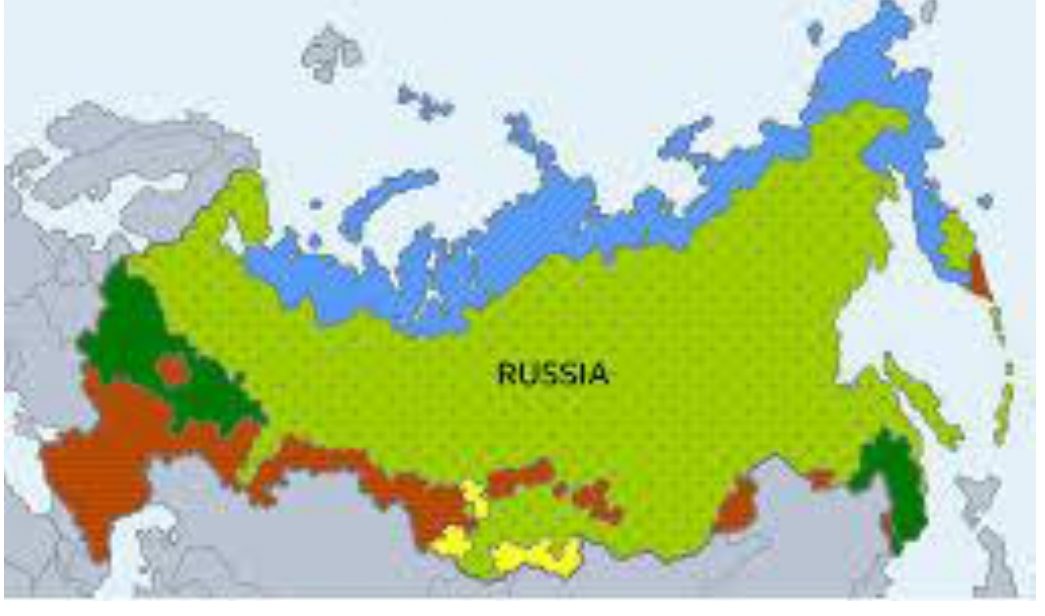
Regarded as the bridge between the continents of Europe and Asia, Russia is located in the north of Europe and Asia. Geographically, Russia is the biggest country in the world with 17,075,400 square kilometres. Despite the fact that it shares marine borders with the United States of America and Japan, Russia also shares boundaries with fourteen other countries like Norway, Finland, China, and North Korea. This strategic geographical location renders Russia a key strategic political as well as economic centre of the world. Russia, a country that also borders the Pacific and Arctic Oceans, has since the 12th century evolved through different regimes of politics that not only shaped its contemporary political features but also economic policies. From the epoch of the Russian imperial era to the days of the Soviet Union, post-Soviet democratic era, and to Putin’s today’s Federation of Russia, Russia has undergone a combination of political and economic policies that both leveraged and constrained its economic growth. Its political and economic policies of the Soviet era not only placed Russia at loggerheads with several countries around the world but also constrained its internal economic growth and development.
However, since the dawn of the post-Soviet era democratic dispensation, incremental political and economic policies have been adopted to steer and place the Russian economy on a path of economic growth and prosperity. Imbued by the volatilities of the economic depression and recess of the Soviet era, some of these changes in Russia’s policies have been reflected in the adoption of the increasingly outward-looking economic policies that not only encourage trade with countries such as the United Kingdom and Japan that were previously considered enemy states. Instead it also encouraged foreign direct investment and economic diversification to reduce Russia’s significant reliance on oil and gas exports as the major stimulant of economic growth and development. With a market size of 1.15 billion consumers, the introduction of these positive incremental political and economic policies is certainly causing significant positive impacts for turning around Russia’s economic performance. The implications are latent in the fact that Russia has not only grown to be the world’s ninth-largest economy, but also that in terms of the ease of doing business, the International Monetary Fund’s (IMF) (2014) ease of doing business ranking found Russia to have improved to 62nd position in the world. Since all these significant changes and economic progress are increasingly positioning Russia as a target investment destination for most businesses, the analysis of the opportunities as well as risks prevailing in Russia’s political, economic, social, technological, ecological, and legal business landscapes is critical for executives to make the appropriate investment decisions.
Political Trends
Following the great economic depression and recession of the Soviet era, Russia has been implementing incremental political policies that seek to turn around its overall domestic and international economic performance. At the domestic level, the political policies have been directed towards creating attractive investment conditions for local as well as foreign businesses. These domestic policies are mainly aimed at improving the diversification of the Russian economy away from the heavy dependence on oil and gas. In effect, significant emphasis is being placed on increasing government support for the development of hi-tech industries, localisation of advanced processing technologies, and on transferring R&D activities and knowledge. Other efforts and commitments being demonstrated by the Russian government have been reflected in the investment of $5 billion by Rusnano Corporation in nanotechnologies as well as the creation of Russian Venture Corporation, the Russian Silicon Valley project in Skolkovo, and the establishment of the Russian Pharmaceutical 2020 Programme. Efforts are also being directed towards developing policies that facilitate the growth of the previously less-developed Russian service sectors such as banking and finance, tourism, insurance, entertainment, IT outsourcing, restaurants, and hotels.
Ease of doing business in Russia is further improved by Russia’s accession to the World Trade Organisation (WTO). The other initiatives have been reflected in the development of free trade agreements between Russia, Kazakhstan, and Belarus into a Customs Union in 2011. This Union evolved into the Eurasian Economic Union (EAEU) in 2015, thereby luring Armenia and Kyrgyzstan to join as part of the quest to facilitate free movement of goods, services, capital, and labour in the area. This move not only opens Russian markets for different businesses but also would cause significant reductions in red tape and bureaucratic processes that most of the businesses previously had to undergo. In other words, there is a significant campaign by Russia to improve its trade relationships with other countries. With the effect that by 2009, Russia had not only about 191 treaties, but had also developed official relationships with about 144 embassies. In these international quests, Russia not only aims to open up its markets for foreign businesses but also foreign markets for its products. Although Russia’s interventions in Ukraine and illegal annexation of Crimea significantly affected its relationship with the European Union, the Russian government has still gone ahead to initiate and form bilateral cooperations and trade support with individual European countries such as the United Kingdom and Finland.
As a result of this bilateral trade agreement, Russia is emerging as the largest market for UK exports of goods and services such as engineering, pharmaceutical, chemical, consumer, and education products and services that grew to about 75% in the period between 2012 and 2016. Most of these trade promotion initiatives are derived from the fact that as Russia undertakes major investments and economic modernisation programmes, a lot of foreign investments, expertise, technology, and resources are required to fuel such initiatives. Such initiatives have also instigated the need for stronger government support for the development and promotion of special economic zones that mainly seek to lure and attract foreign direct investments. In effect, the Russian government has established about 20 special economic zones, of which four are dedicated as innovation zones, two are manufacturing zones, seven are tourism zones, three are port zones, and two are old zones of the 1990s that include Kaliningrad SEZ and Magadan SEZ. The innovation zones that mainly specialise in analytical instruments, information and nuclear technologies, micro and nano-electronics are located in St. Petersburg, Tomsk, Dubna, and Zelenograd. The manufacturing zones that focus on manufacturing domestic and industrial appliances, automobile components, and chemical products are situated in Lipetsk Region and in the Republic of Tatarstan. The tourism zones are located in Kaliningrad, Krasnodar, Stavropol, Buryatiya, Irkutsk, and Altay.
However, apart from the Kaliningrad SEZ and Magadan SEZ that are already operational, the effects of the other special economic zones on stimulating Russia’s economic growth and development are not yet easily evident. This is attributable to the low rate of attraction of foreign direct investments into the designated special economic zones. Besides the fact that the benefits attached to investments in the designated special economic zones are not attractive enough to attract enormous foreign direct investments, the other limitations are linked to poor reputation on immaterial rights, stagnant innovation systems, low-tech image of the country, lack of R&D-related finance, and administrative inertia that downplay the advantages offered by the special economic zones. The other deterring factors are related to the emerging growing roles of the military-industrial complex innovation buildings that distract both the local Russian private companies and foreign investors. The negative effects of these constraints are further exacerbated by the fact that despite the widely publicized need to promote foreign direct investments, the actual application of Russian policies remains less supportive of such campaigns. The Russian government’s strong involvement and control of public and private companies in various industries tend to discourage potential investors. As the state intervenes substantially in most sectors, there are only a few strong private companies such as dairy products manufacturer Wimm-Bill-Dann and cellular services provider VimpelCom.
Combined with corruption and poor infrastructure, this affects the ease of doing business in Russia. Besides the fact that the State Chamber of Registration is the major registering authority for businesses operating in Russia, there are also a number of other bureaucratic government bodies that are responsible for foreign trade regulations. The implications are reflected in the fact that certain business activities can only be carried out in Russia after authorisation by the appropriate licensing bodies. This complicates the overall licensing system, which is also carried out at the federal and regional levels. In terms of federal laws, foreign companies are prohibited from controlling or getting substantial stakes in strategic Russian industries such as oil and gas extraction and the defence sector. However, in response to the low rate of foreign investment attraction into the designated special economic zones, Putin’s administration has, through its United Russian policy, introduced reforms that offer tax cuts in regions such as the Kaluga region. These tax cuts are offered to investors based on a sliding scale of the total invested amount. Besides breaks on property taxes for up to four years, new policies and legislation have also been introduced that offer subsidies to strategic investors to render them eligible to get back profit taxes for up to nine years. Such reforms are also evident in the fact that federal laws protect investors against unfavourable changes in tax, customs, and other business legislation for a period of up to seven years. To also provide stability and legal protection for businesses, Russian federal laws agitate for the recovery of damages arising from illegal actions or inactivity of government authorities. They also protect the property of foreign businesses from seizure, nationalisation, or requisition. Other federal legislation permits the unimpeded transfer of profits, income, and other monetary sums resulting from the undertaken investments. In other words, the opportunities and risks presented by these Russian government policies are also fuelled by the risks and opportunities evident in the unfolding Russia’s economic trends.
Economic Trends
Even before the outbreak of Russia-Ukraine War, Russia’s economy is largely volatile and unpredictable due to the frequent changes in economic policies that tend to emerge and change with every regime. This renders the predictability and certainty of its markets and industries difficult for executives to easily read and apply the appropriate strategies. In effect, the adoption of a more flexible business approach is critical for leveraging a business’s sustainability in the Russian markets. However, despite such unpredictability, Russia’s economy still offers enormous opportunities across different sectors. As the Russian government emphasised stronger dependence on the oil and gas sector as the major stimulant for economic growth and development, less emphasis on the other sectors such as agro-processing, restaurants and hotels, finance and banking, insurance, IT development, and tourism led to major setbacks. These underdeveloped sectors still offer enormous opportunities for well-developed businesses that aim to invest in such sectors. Such opportunities have been catalysed by the development of economic policies that seek to diversify the Russian economy and reduce strong dependence on oil and gas sectors. In effect, as a result of the enormous funds that are being committed to economic diversification, enormous opportunities are emerging across sectors such as advanced engineering, mining, biotechnology and pharmaceuticals, consumer goods, education, and tourism.
In the advanced engineering sectors, opportunities are emerging from the fact that, as about 70% of the existing capital assets are estimated to be outdated, opportunities are arising from the heavy investments that are being committed by the government and the Russian government to upgrade and replenish such assets. In effect, there is a significantly increasing demand for management and accounting consultants that would aid the upgrade and improvement of the management practices and production processes in the advanced engineering sectors. This demand is accompanied by high demand for the modern manufacturing equipment and machinery, to the extent that the annual demand for manufacturing equipment and machinery is reaching about $1.5 billion. This increasing demand for manufacturing equipment and machinery is characterised by the rising demand for energy-efficient manufacturing technologies, industrial automation technologies, and advanced technologies for component manufacturing and assembly.
In the mining sector, opportunities are arising from the fact that since Russia has one of the largest reserves of ferrous and non-ferrous metals in the world, enormous business opportunities are emerging in ferrous and non-ferrous extraction, processing, and export. To boost the growth of this sector, the Russian government introduced policies to not only advance state financial support to businesses engaged in ferrous and non-ferrous extraction and processing but also to scrap certain export duties. These increasing activities in the ferrous and non-ferrous extraction and processing sectors are also instigating the need for using advanced machinery. Meanwhile, with a network of $29 billion and an annual growth of 13.5%, the Russian biotechnology and pharmaceutical sectors are exhibiting high opportunities for investment in R&D to generate as wide an array of generic medicines as possible. This is accompanied by the increasing demand for modern biotechnology research equipment and technologies, as well as the advanced manufacturing equipment for medical drug manufacturing. This boom in the Russian biotechnology and pharmaceutical sectors is attributable to the higher Russian demographic figure of 1.15 billion that are increasingly demanding different healthcare services from both the state and the private sector. Yet, as the demand for different healthcare services skyrockets, the other positive effects of the increasingly extensive Russian population have also been reflected in the rise in demand for different consumer goods.
With a network of $597 billion, the Russian consumer goods market is not only offering high demand for fashionable houses, cars, and other luxury brands, but also enormous markets for consumer goods such as spirits, beer, high-quality confectionery, fashionable clothes and shoes, and kids’ products and toys. Russian education sector is also offering enormous opportunities for new management and engineering practices. The tourism sector is exhibiting enormous business opportunities in the sectors of restaurants and hotels, and tourism site development. Besides strong dependence on oil and gas, the Russian economy is also strongly dependent on the military arms manufacturing industry to the extent that arms production and export constitute some of the major sources of Russia’s foreign exchange earnings.
Yet, as Moscow has a plan to develop an International Financial Centre, opportunities are also emerging for the development of more efficient banking practices, lending, risk management, and data processing. Such developments offer opportunities in sectors such as mergers and acquisitions. However, despite such opportunities, the Russian economy is still affected by the effects of the 2008 global financial crisis as well as the recent decline in global commodity prices. This is affecting the growth of the Russian economy, unemployment remains low to imply that disposable incomes may not be affected to impact negatively on consumer expenditures.
Yet, as Russia continues to implement policies that would cause a shift from the Soviet economic policies, the slow pace at which it is being undertaken is affecting the liberalisation of its economy. This is attributable to the fact that despite economic liberalisation, the frequently stronger intervention of the state to control different business sectors affects the satisfaction of most businesses with the level of economic liberalisation that Russia has so far undertaken. These weaknesses and lack of structural reforms are accentuated in the World Bank’s (2017) report on “Country Systematic Diagnostic for the Russian Federation: Pathways to Inclusive Growth”, which reiterates that Russia needs to address key constraints to productivity growth that include a weak investment climate and lack of sufficient competition. It also agitates for the need for Russia to address physical and non-physical barriers to infrastructure connectivity, the relatively low innovation capacity of firms, and the mismatch between the available skills and those required by the labour market. The World Bank’s (2016) report noted significant barriers to trade that are linked to tariffs and non-tariff barriers, burdensome import procedures and domestic requirements, domestic and international transportation delays and costs, corruption at borders, as well as policy instabilities and inefficient government bureaucracy. Though the Russian government strongly agitates for an increment in the rate of foreign direct investments, it still strongly supports domestic local businesses as compared to foreign businesses. This is affecting the exploitation of the enormous opportunities that the Russian market offers. However, despite the economic opportunities and risks emerging from such trends, enormous business opportunities are also emerging from the unfolding Russian social trends.
Social Trends
Social life in Russia is mainly influenced by its weather. Russia is mainly cold throughout the year, though it is often dramatically hot in the desert of the South. However, most parts of Russia are relatively cold throughout the year. This has influenced social lifestyle and the consumption habits of the population. In terms of clothes and shoes, this implies that, as contrasted to the businesses investing in Brazil and India, most of the consumers are most likely to prefer clothes and shoes that protect them from the scorching Russian cold. However, this contrasts with the southern part of Russia where, during summer, the consumers may tend to prefer summer clothes and shoes. This weather pattern has also influenced the consumption patterns as well as the types of food and drinks consumed by most of the Russian consumers. Due to very cold weather, most Russian drink consumers tend to prefer and consume a high amount of spirits and beer, as the non-alcohol drinkers tend to mainly consume tea or coffee.
The existence of highly cold weather has influenced the preference of the population for mainly indoor entertainment facilities. It is also critical to note that Russia has very attractive cultures and a people-friendly population. This has made it one of the most attractive tourism destinations in the world. Besides attractive cultures, Russia’s tourism potentials are also bolstered by the attractive museums and heritage sites that it holds. In terms of museums, Russia has about 2,631 state-owned and private museums that attract over 80 million visitors every year. Russian Ministry of Culture aims to increase visits to museums by 143 million in the period between 2016 and 2020. From these trends, it is quite evident that enormous business opportunities will emerge for museum developers and curators to accomplish a combination of activities like developing and preparing funding applications for site developments and business planning. The other activities that will also attract businesses encompass procurement of innovative exhibition equipment and their installations in relevant tourism sites. These are also instigating the emergence of business opportunities for site designers, exhibition organisers, and branding and marketing.
Besides the attractive sites and locations that bolster Russia’s tourism potential, the factors influencing Russia’s social life are also attributable to a combination of demographical factors such as lifestyle changes, population growth rate, and differences in the population in terms of income levels, age, health, and education profiles. In terms of population density, most of Russia’s population is concentrated in the southern and western parts of the country, as the rest of the other areas have very low population density. However, due to the overall size of Russia, the interconnectivity of the population scattered across different areas is hindered by the poor state of roads, rails, and airports, as well as poor postal and telecommunication services. This is largely attributable to the fact that corruption and lack of modernisation have affected the improvement of the quality of these infrastructures. Such a view is accentuated in the fact that, according to the Global Competitiveness Index (2015), Russia ranked 35th out of 139 countries in terms of the quality of infrastructure. This poor state of Russia’s infrastructure not only affects the interconnectivity of the population in different regions, but also the exploitation of different opportunities, economic growth, labour mobility, and the overall standard and conditions of living of the population. It also poses challenges for businesses investing in the Russian market.
Besides the fact that the average life expectancy of the population is relatively low at 70.9 years, Russia’s population growth rate has also slowed down quite significantly. In effect, the World Bank (2017) predicts that it will continue to remain as low as 0.193. The implications are latent in the fact that Russia’s population composition is changing and ageing, decreasing the overall population segment and class in the working-class domains. For businesses aiming to invest in Russia in the next ten years, that implies they will certainly rely on migrant labour from the other parts of the world.
As Russia’s population ages, the health conditions of the population have also been changing. Especially among 50–79-year-olds, risks of deteriorating health conditions are emerging from diseases, depression arising from unemployment and hard economic conditions, heavy smoking and drinking, lack of exercise, and unhealthy drinking habits. All these are causing reduced working life and productivity of the population. Besides boosting the demand for different healthcare services and pharmaceutical products, these deteriorating health conditions of the population are also affecting public expenditure. The effect is that about 3.2% of Russia’s GDP is spent on public health. In the next 20 years, this increasingly ageing population of about 19 million people will also affect consumption patterns. The consumption of products for the old will increase. The demand for products for the young will instead decrease.
For businesses aiming to invest in Russia, this suggests it is not only the production of the products for the old that must be the focus of businesses, but also research and innovation of goods and services that delight the old. Changes in these trends in Russia’s demographics are also characterised by the fact that there are also very many poor Russians that are living on a monthly income of $140. This affects the consumption rate of the Russian population as well as the attractiveness of the Russian market. To counter such social evils, the Russian government has maintained some of its socialist policies by offering free healthcare and education services. These social services are accompanied by the establishment of the Russian Social Security System that offers cash grants to the poor. However, the efficiency of such a system has been affected by corruption and the growing level of inefficiencies. However, even in the midst of such likely future changes and risks, Russia is an emerging and a growing middle-income country with high demand for sophisticated products and services such as fashionable houses, cars, clothes, shoes and entertainment. In other words, despite a few challenges, Russia’s social trends still offer enormous opportunities for the contemporary local Russian businesses and foreign investors. Such opportunities are further fuelled by the opportunities that are emanating from the changes in Russia’s technological trends.
Technological Trends
Some of the evolutions and the unfolding trends in Russia’s technological evolutions are reflected in innovations and the development of its superior military hardware. Besides the United States of America and Israel, Russia is one of the countries in the world that commits significant resources to research and development of more superior military hardware. Due to the production of an array of superior and sophisticated military hardware, Russia significantly depends on the export earnings from military hardware, especially to the developing countries. This has contributed to leveraging foreign exchange earnings as well as its economic growth and development. However, critics from some of the countries have also affected the international reputation of Russia as the perpetrators of war rather than the promoters of peace. Since the dawn of Putin’s regime, Russia has been increasingly trying to rebuild its good international relationships by initiating and maintaining good relations with the other countries. Despite frosty relationships with the European Union as a result of its illegal intervention in Ukraine and annexation of Crimea, Russia has also been increasing its involvement and roles in different international peace-building initiatives. In these initiatives, it was in Syria that Russia demonstrated its military superiority to intervene and quell threats from ISIS states. This superiority of Russia’s military technology is mainly derived from the strong foundation created by the tradition built on science and research in different fields such as mathematics, chemistry, structural engineering, earth science, and aerospace engineering.
This science and research tradition not only created a strong foundation for the contemporary superior Russian military hardware, but also the basis that propelled the research and advancement of the superiority of its aerospace technology. Russia has not only managed to create a strong aerospace engineering industry. Instead due to the superiority of its aerospace technology, Russia was also one of the first countries in the world to send its people to space. As the aerospace industry remains one of Russia’s export revenue-generating sectors, the other source of Russia’s modern technological evolution and advancement was built during Medvedev’s era. Realising the significant roles that technology plays in fuelling economic growth and development, Medvedev committed more resources towards the development, modernisation, and advancement of technologies such as Rosnano and nanotechnology. This government’s recognition of technology as critical for stimulating economic growth has also continued to occupy most of today’s government programmes.
However, as compared to the past approaches that emphasised a stronger role of the state, the contemporary Russian innovation policies are more directed towards encouraging the involvement of the private sector entities in research and innovation. To accomplish this, Russia is committing more resources towards science education as well as incentives to businesses involved in different forms of research and innovations. It is also reforming the state science sector in conjunction with strengthening laws and policies on intellectual property rights. These quests to build and improve the innovation capabilities of the Russian private sector are attributable to the fact that Russia still possesses a very weak private sector. In terms of technological readiness, Global Competitiveness Report (2016) placed Russia in the 62nd position out of 138 countries and 56th in terms of innovation. In effect, it is the Chinese cars that dominate the Russian car-making market.
The poor innovation performance of the Russian private sector is mainly linked to strong state-owned enterprises that dominate most sectors to block competition and productivity necessary for stimulating research and innovation. This is also further exacerbated by the fact that most of the private sector businesses lack the required skills and financial resources for innovation and growth. Poor skillfulness is explained by the poor quality of R&D education and the migration of a number of highly skilled Russian scientists and engineers to Europe, Australia and North America. To fill this gap, the Russian government is not only committing enormous resources to R&D education, but also using strategies and programmes such as “Innovative Russia 2020”. These are integrated with the development of innovation technology centres, foundations, and other government initiatives like the Russian Venture Company to attract diaspora Russians and foreign scientists.
Yet, as the Russian government undertakes such initiatives, the digitalization of the Russian population and businesses reflects the other technological trends that are shaping business opportunities in the Russian markets. As about 70 million Russians go online, the implications have been reflected in the increasing boom of the online trade which is reaching approximately 920 billion rubles (Association of Online Retail Companies, 2016). Besides such opportunities, the other business opportunities are emerging from the increasing demand for advanced technologies, equipment and machinery for sectors such as mining, agro-processing, biotechnology and medical products. However, as businesses prepare to maximize such opportunities, it is also critical that they should be able to deal with risks of non-compliance as well as the costs and burden of compliance that arise from having to comply with different Russian environmental legislations.
Ecological Trends
Russia’s oil and gas have been its main stimulants of economic growth and development. However, the activities in the oil and gas sector are also increasingly emerging as the major sources of ecological degradation. Combined with the negative effects of the emissions and wastes from the other industries, Russia faces significant ecological challenges that are linked to the high level of pollution that is affecting the overall air quality as well as pollution of water and land. This high level of pollution and ecological damages is mainly attributable to poor agricultural practices, radioactive contamination, large carbon emissions from oil and gas extraction and processing, as well as other industries. These challenges are exacerbated by poor environmental management that affects the control of wastes and pollution. Yet, as Russia faces these challenges, the other drastic effects of over-exploitation of the available natural resources are also increasingly getting reflected in the continuous reduction of Russia’s natural resources. To therefore mitigate this increasing level of ecological damage emerging from different industries, Russia has adopted different policies as well as a combination of legislations that seek to control and regulate industrial practices. Among some of these legislations are Federal Law No. 7-FZ on Environmental Protection of 2002, Federal Law No. 7-FZ on Protection of the Atmospheric Air of 1999, Water Code of the Russian Federation No. 74-FZ of 2006, and Land Code of the Russian Federation No. 136-FZ of 2001. The other legislations include the Forestry Code of the Russian Federation No. 200-FZ of 2006, Federal Law No. 89-FZ on the Production and Consumption of Waste of 1998, Federal Law No. 52-FZ on Sanitary-Epidemiological Welfare of the Population of 1999, and Federal Law No. 174-FZ on Ecological Expertise of 1995.
To enhance monitoring and enforcement of the level of business’ compliance with these legislations, some of the enforcement bodies that have been established by the government include: Natural Resources and the Environment (MNR), Federal Service for the Supervision of Natural Resources (Rosprirodnadzor), Federal Agency for Subsoil, Water Resources and Forestry, Federal Service for Hydrometeorology and Environmental Monitoring (Rosgidromet), Environmental Public Prosecutor’s Department under the Prosecutor General’s Office, and Federal Supervisory Service for the Environment, Technology and Nuclear Management (Rostekhnadzor). Whereas MNR is responsible for the development of relevant environmental policies and legislations, Rosprirodnadzor is responsible for monitoring compliance with such environmental policy and regulations. The Federal Agency for Subsoil, Water Resources and Forestry regulates and controls the process for the utilization of Russia’s natural resources to mitigate damage to subsoil, water resources, and forests.
Rosgidromet offers hydrometeorology-related services; the Environmental Public Prosecutor’s Department under the Prosecutor General’s Office enforces compliance with all relevant environmental legislations. Rostekhnadzor acts in consultation with MNR to facilitate the identification of new areas that must be regulated through drafting and promulgation of new environmental regulations and laws. Failure to comply with relevant environmental legislations attracts civil, administrative and criminal liability. In effect, permits are required for businesses that aim to engage in activities that may cause water and air pollution. Activities that may affect surface and underground water as well as the quality of air are regulated by Rosprirodnadzor. In case of non-compliance, penalties, clean-up and compensations are the other forms of the processes for the reparation of the ecological damages that could have been caused. The enforcement of these regulations is accompanied by the development and application of the regulations that facilitate the enforcement of the United Nations Framework Convention on Climate Change and Kyoto Protocol on Climate Change. International legal instruments are part of the national legal system. However, the ratification of the Kyoto Protocol and the United Nations Framework Convention on Climate Change has been effected through the promulgation of Federal Law No. 128-FZ of 2004. As part of the proactive environmental damage mitigating strategies, businesses are required to undertake environmental impact assessment. Environmental tax and insurance have also been introduced into the Russian environmental legal system. As businesses seek to comply with such provisions, it is most likely that it will also significantly affect their cost variables to impact negatively on the overall operational costs and profitability.
Legal Trends
In a bid to facilitate the transformation of its economy from a communist-led approach to a more liberal economic approach, Russia has been reviewing and changing its laws. In these changes, there are certainly several legislations that facilitate foreign direct investments. Among some of these changes are the provisions that do not distinguish between foreign and local businesses. Besides the need to comply with the other laws such as immigration policies and regulations as well as business registrations, there is a uniform regulatory regime that governs taxes. In these provisions, foreign and local businesses pay the same types of taxes. Certainly, this would bolster the increment of the rate of foreign businesses’ attractions into the Russian market. However, a high level of corruption is still a major impediment, with the effect that Transparency International (2016) rated Russia as a country which is very corrupt. This high rate of corruption has also affected the independence of the Russian judiciary. In cases of disputes, such a high level of corruption affects the fair discharge of justice. To some extent, this renders operation in Russia somehow difficult for certain businesses.
As the rate of corruption in the judiciary remains high, the other forms of interference in the judiciary have been emerging from the state. In effect, about a third of the pending cases lodged at the European Court of Human Rights are from Russia. In terms of the World Economic Forum’s Global Competitiveness Index (2017), Russia ranked poorly in terms of judicial independence, irregular payments and bribes, burden of government regulations, property rights, and protection of minority rights. The other areas where Russia ranked poorly were in regard to auditing and reporting, reliability of the police service, and the efficiency of the legal frameworks for settling disputes. In other words, in addition to these challenges, there are also challenges of governance at the business level. Corruption has also infiltrated businesses. It is often difficult for foreign businesses involved in joint ventures to guarantee that their interests will be protected. Besides high taxes and complex tax regulations, the other challenges are also linked to the fact that as Russia engages in confrontational foreign policies, sanctions and tensions resulting from acts of aggression such as illegal intervention in Ukraine and illegal annexation of Crimea often affect the movement of businesses as well as the flow of the required capital and finished goods. There are also frequent policy and regulatory changes introducing new requirements for business operations or new import bans that aim to encourage the establishment of import substitution industries. Through such changes, Russia aims to reduce dependence on foreign goods and services as well as to boost the level of its industrialization to stimulate economic growth and development. In other words, all these tend to render the nature of business operations in Russia difficult for most executives to easily manage.
Excerpt from a Book Titled “Business Environment and Opportunities in Emerging Markets: Trends from Brazil, Russia, India, China, South Africa & Africa” authored by Boniface Okanga, Adri Drotskie and Jennifer Davis Adesegha, and as a Postdoctoral Study Sponsored by the University of Johannesburg in 2016 on the Analysis of the Political Economy of the BRICS’ nations.
Citation: Okanga, B., Drotskie, A., & Adesegha, J.D. (2026). Russia: Its Political Economy, Markets and Future of Investments. London: Elicitor.