By
Boniface Okanga
London, England, 27 July 2026
In the era of Gen Z governance system, people are not looking at the quantity of handouts and government jobs created by the government. Instead, the African Gen Zs are looking at the quality of the quantity of socio-economic infrastructure projects and networks implemented and delivered by their governments. Hence, in the era of Gen Z governance system, the winners are not the African governments that will strive to do the impossible thing of promising multitudes of government jobs that they cannot even deliver. Not the African governments that strive to do the impossible thing of attempting to create and load everyone into different government jobs. In the context of the surging Gen Zs demographics, that is an impossible thing. It is the impossible thing and promise that will leave the majority who cannot access such opportunities disappointed and even lamenting for the Gods of Heavens to come down. Instead, the winners are the African governments that will prioritize the successful implementation of different socio-economic infrastructure programmes. This will create the conducive economic environments for the Gen Zs who are increasingly opting to do their own things to continue doing their own things in a new economically thriving environment. Instead of searching for government jobs, the new thriving socio-economic environments will motivate the Gen Zs to continue doing their own things with much relative ease and success. This will take away the headache of posturing the government as the creator of employment and not the creator of the enabling socio-economic environment that in turn stimulates job creation in different sectors of the economy.
Winning governments are the ones that will make it clear to Gen Zs and their relatively younger parents and even grandparents that the government is not the direct creator of employment, but the creator of the enabling economic environments for employment creation. Achievement of such positive socio-economic outcomes will however require the application of stringent control of government expenditure. It will require higher levels of public resource optimization for the government to implement all the required socio-economic service delivery programmes and projects. Though stringent public expenditure management is a multidimensional construct explained by so many other variables, in such quests, improved public accountability is still essential for African governments to eliminate waste. Even if it was previously ignored, public accountability is increasingly evolving as Africa’s new public resource optimization strategy. Given the surging demand for the best public services, most African governments are increasingly realizing that if they are to realize the successful implementation of different service delivery programmes, initiatives and projects, then improved public accountability is the key. Improved public accountability is essential for unlocking the desired extra public resources. Improved public accountability mitigates the risks of irregular, fruitless and wasteful expenditures that often characterise the operational culture of the contemporary public service systems. In this changing era of the Gen Z governance system, this saves and unlocks the extra public resources that can be used for implementing an array of different service delivery programmes.
In the medium and long term, this improves the capability of the government to stay on top of the game of responding to the continuously changing dichotomous needs and preferences of the modern ordinary African citizens. Public accountability is the process of utilizing a framework of policies, rules, laws and regulations that require government officials and government agencies to report, disclose, provide information, explain and justify the reasons for the undertaken governmental actions or decisions (UK Open Government Network, 2026). Public accountability applies not only in situations where public expenditures must be explained, but also in the other non-financial situations like breach of legislation, policy formulation and ultra-vires decisions/actions. In the public financial management sphere, public accountability requires government officials to report, disclose, explain, provide information and justify the decisions for spending public funds in the ways that they are spent.
Even if the funds are utilized in the rightful ways, public accountability still requires government officials to report, disclose, explain and justify all the ways that the public finances have been utilized in the implementation of different service delivery programmes. This enables public administration managers, directors, policy-makers and regulators discern the success or failure of the implementation of different service delivery projects. Even if there are no problems, periodic reporting still enables policy-makers discern the new areas where additional resources must be directed to respond to the unfilled needs of the population. Public accountability is the essential part of public development planning. It enables public administrators and policy-makers compare the budgets for the past successful service delivery projects with the new service delivery projects that are to be introduced. This eliminates risks of over-budgeting that often cause resource wastage or underbudgeting that causes resource shortages to undermine the successful implementation of different service delivery programmes. Quite often, problems tend not to arise if the funds have been well-utilized rather than if not. Besides financial-related accountability or fiscal accountability, public accountability can also take the form of process, policy and programme accountability.
- Fiscal Accountability measures the effectiveness of the reports, information, disclosures, explanations and justification on how different public funds have been allocated and spent.
- Process Accountability questions the compliance with all the relevant laws, rules, procedures and policies that have been observed or complied with during the allocation and management of different public expenditures.
- Policy Accountability offers information on why, how and the expected values of why the government has adopted the designated policies.
- Programme Accountability assesses whether the best results or value for money has been realized from the amount of public funds spent by the government.
Such insights corroborate Dalton-Brits and Van Niekerk’s (2016) explanations that the mechanisms for improving public accountability often include SCOPA (parliament’s standing committees of public accounts), municipal oversight committees, government inspectors, internal and external audits, legal mechanisms, elections, ordinary citizens’ monitoring and evaluation, research agencies and media. There is no government official who is not aware of these public accountability mechanisms. However, the entrenched culture of poor public accountability has affected the efficacy of some of these public accountability mechanisms. Yet, in Africa, given the surging demands for different services that cannot be supported by the often limited public funds, improved public accountability is becoming an important governance instrument for improving public resources’ optimization. In the past, the lower population growth posed no risks. The meagre government resources were still enough for responding to all the dichotomous needs and preferences of the population.
Most of the African economies were still in the subsistence state and therefore agriculture and traditional farming employed a significant segment of the population. Government jobs and the jobs from the private sector were still enough for the population. However, as most African economies have started drifting towards the pure money economy, most African governments are also facing increasing pressure to not only create jobs, but also improve the investment conditions and environment that enable the ordinary African population to create their own jobs or do their own things. In the modern era of Gen Zs’ governance system, there is significant change and transformation. Because of population explosion, not all the Gen Zs are able to get government jobs. Not all are able to get benefits from the government. In effect, good roads, hospital medicine, better schools, bridges, recreational facilities, water and energy infrastructures are the only benefits that the Gen Zs can get from their governments. Fortunately, all the African Gen Zs have started to understand that. And once they have understood that, the corrupt that “eat” monies for bridges’ construction or for electricity extension programmes will be in trouble.
The corrupt will be rejected as Gen Zs search for just better investment environments and not government jobs, so that they can do their own things. A Gen Z that earns more money as a tiktoker will not need government jobs but just better roads, recreational facilities and hospitals. A Gen Z who is a tourism marketer will not need government jobs, but just better socio-economic services and infrastructure. A Gen Z who has succeeded to look after his family with the earnings from doing delivery business will not need government jobs, but just good interconnecting roads so that he can make more money. A Gen Z running a small-scale restaurant business or a juice manufacturing business will just need the availability of cheaper electricity and not government jobs. A Gen Z that runs a nightclub or any other forms of entertainment centres will just need security and safety and not a government job. Hence, no government that condones corruption will remain popular. No government that condones the “eating” of monies allocated for constructing roads, hospitals as well as the other energy, water and sanitation systems will be applauded by Gen Zs. In such changes, improvement of the level of public resources’ optimization has become an important antecedent for limiting resource wastages. By limiting resource wastage, governments are able to discover new additional resources that can be utilized for the implementation of the other service delivery programmes or projects. They are able to deal with service delivery budget shortfalls. In Georgia, when the government wanted to reduce the rate of corruption that had become quite rampant, the government removed most of the red-tapes and bureaucratic tendencies in government institutions (Chisom, 2026). In addition to improving digital services to improve transparency and accountability, the Georgian government also introduced hefty penalties for the crimes of corruption.
As most African economies transition into money economies amid the constantly increasing population, even the internally generated government revenues combined with the funding from the development agencies like the World Bank, European Union and United Kingdom International Development Fund are increasingly turning inadequate. That implies that given a surge of the youth population, development agencies must also consider increasing the development funds advanced to different African countries. Unless increased, the current external donor funding and support from the development partners are inadequate for responding to problems that limit employment creation or the generation of adequate government revenues. To respond to such problems, most African governments are increasingly introducing more stringent public accountability measures that limit resource wastages. More stringent public accountability measures are being introduced to limit theft, embezzlement, corruption and fraud that erode public coffers. Through such initiatives, most African governments are converting the fight against corruption into the key rebranding tool.
Most African governments are seeing the improved level of public accountability as the way forward. It is the African governments or political parties that prioritize the fight against corruption, clean governance and operational excellence that are increasingly receiving applause from the majority of the African population. Despite the saboteurs who themselves have clouds of corruption accusations, undertaking an aggressive corruption fight is the future. Increasingly, a majority of the African population are on the side of the fighters of corruption and not the corrupt. In the past, corruption exhibited in the direct theft of public funds had become part of the operational cultures in most of the government institutions. Employment or even just deployment in different government institutions was perceived as the way for making money.
Corruption was perceived as the normal practice and acceptable activity in the normal governmental operations. In fact, any attempt to fight corruption was met with fierce resistance. However, that is changing. Most African governments are increasingly realizing that laxity in the corruption fight disentangles them from the larger population whose needs remain unmet if the larger chunks of government budgets end up in the pockets of a few private government officials. Given the surging African population, most families across Africa have seamlessly come to understand that doing their own things is the way to survive and thrive. Most African people are increasingly recognising that even without government jobs or the direct employment in the private sector, one can still create their own employment. With this new form of thinking, it is the good roads taking the population to different corners of the country that matter. It is the good healthcare centres that matter for taking care of the health of the relatives in villages. It is the functional railway system, airport and seaport that matter. It is no longer about government jobs, but the governmental system which is able to provide all the required socio-economic infrastructure and amenities for the population to thrive. These changes have made the fight against corruption the easiest thing.
There is a general consensus amongst the African population that corruption and theft of government resources must end. This strong public support has made the fight against corruption quite easy. In the past, most African governments were afraid to fight corruption for fear that the few political mobilizers would turn to be problematic. In effect, the few in government with access to the enormous government resources often shared the allocated government monies. It had even become a practice that during each fiscal year, different African planners, committees, councils or whatever would sit to deliberate and identify different government roads, bridges, dams, railway networks, agricultural support programmes, tourism boosting programmes, health centres and schools that must be funded. When funds are released by the national treasury, only a smaller percentage or even nothing was utilized for the implementation of the listed service delivery programmes. In effect, road projects and some government service delivery programmes introduced years and years ago remained unimplemented each fiscal year after fiscal year.
While all these unfolded, the top leadership in most of the governing political parties failed to introduce more aggressive public accountability measures. Why? It is because the top corrupt players in most of the key government positions appeared threatening to the stability of the governance system. Not because they were very popular, but because they often used the looted public resources to purchase support from a few local populations. They also appeared powerful and untouchable because they tend to create informal networks that talk and support each other. However, as the African population increased amid the increasing unemployment and the local people have started to demand better conditions for them to do their own things and improve their livelihoods, difficult questions are beginning to arise. Difficult questions are beginning to arise as to why some roads or rail systems are not being completed despite being on the plan and yearly budgets for years. Difficult questions are beginning to arise as to why some industrialization programmes, agricultural support programmes or airports cannot pickup despite being on the budget for years. Despite the blackmail, the majority of the African voters are becoming less empathetic about the plight of the corrupt. People are asking difficult questions as to when some projects for bridge, road or healthcare projects will be completed after years and years of unrelenting waiting. Given such questions, the winners are the African governments that will ensure that all the allocated public resources are used for the designated programmes. In the US government, Donald Trump’s administration introduced DOGE (Department of Government Efficiency) to analyse, identify and eliminate wastes so as to redirect resources to other new areas. In South Africa, the ANC (African National Congress) to the applause of most ordinary South Africans, introduced its “Step-aside Rule” that did not spare even some of its senior comrades accused of corruption.
Even as the corrupt attempt to use the stolen public resources to bribe and buy off some of the local people, most people are still asking difficult questions. They are asking difficult questions that most of the corrupt government officials cannot respond to, even in their own constituencies. In Uganda, of recent, this explains why General Muhoozi Kainerugaba’s PLU (Patriotic League of Uganda) received wider applause from the population after declaring that corruption is the most undesirable thing that would attract the worst punishment during the 2026-2031 term of government. After declaring to supervise and root out corruption from all the government ministries, it did not take long before road construction projects that had taken years were completed in just a few months or even weeks. Even the Uganda railway that had taken years without the railway line’s rehabilitation appeared after a few months of testing its rail in Lira, a city in Northern Uganda. In other words, General Muhoozi Kainerugaba—the Uganda’s current Chief of Defence Forces-an increasingly influential political figure, oscillating as Uganda’s president sometimes, has so far been able to achieve the implementation of some service delivery milestones that had taken years or even decades to be achieved. Uganda Railway failed in the late 1980s. But instead of the railway line remaining maintained as the government reconfigured how to re-introduce a more well-functioning railway system, it instead became the cash-cow for some government officials.

General Muhoozi Kainerugaba: Uganda’s CDF (Chief of Defence Forces): A New Influential Political Figure Oscillating as Uganda’s President Sometimes to Improve Public Accountability and Respond to Gen Zs’ Service Delivery Needs
Leave alone even dismantling and selling off some of the land on the railway line, others kept formulating, submitting and eating off the budgets for the revamp of the Uganda railway. For decades and decades, this went on as the railway decayed and became unusable. The unfortunate thing is when even the corrupt are asked, they also often point fingers at the top leadership. Even if the funds are released and the top leadership does them a favour by not asking for accountability, they are often still heartless to say that it is the top leadership. In Uganda, as the corruption whip was cracked and the local government leaders failed to account, it was not uncommon to hear the majority of people lamenting that “kumbe, you mean all along Museveni has been innocent.” This is because even if the funds were released by the central government, the local leaders often deceived the local people that the funds have not been released. However, of recent, when General Muhoozi Kainerugaba, whose position on the anti-corruption fight is well known as a corruption hater, coughed that no one will be left out of the corruption fight, it did not take long before the locals were excited to see a moving train for the first time in decades. Some road projects and other essential service delivery projects that had stalled for years or even decades were completed within a few months or even just days. The revamp of the Uganda Railway is part of the turnaround economic strategies that Muhoozi’s PLU and its NRM allies view as instrumental for Uganda to attain the 2040 Target of a 500 Billion Dollar Economy.
Uganda’s 500 Billion Dollar Economy Target
Besides security and political stability, Muhoozi’s PLU believes that it is through significant reduction of corruption that the government will start to effectively optimize the limited internal financial resources before even looking outside for additional funding. If the internal resources can be best used to get the best service delivery outcomes, it can even influence the attraction of the required additional external resources. Leave alone development agencies and partners that often demand accountability and clean governance as part of the pre-conditions for additional funding, effective optimization of the existing government funding enhances the successful implementation of different critical infrastructure projects. In turn, this creates and improves the investment conditions that attract new investments. Better infrastructure improves the attractiveness of the investment environment. This spurs productivity, economic growth and increment of government revenues that can be used for financing additional new development programmes.
Hence, from the PLU’s perspective, it seems the fight against corruption is not just a face-saving or window dressing initiative, but a deeply evaluated new governance approach aimed at conserving and saving government resources for the implementation of different transformational economic policies. The new fight against corruption is a deeply thought-out reform programme that seeks to unlock the best out of the Ugandan economy. It is a new strategic reform programme that aims to create new socio-economic values that not only meet, but even surpass the needs of the increasingly more sophisticated Gen Z population. The new public accountability enhancement programme is a strategic reform programme aimed at unlocking extra financial resources for the implementation of an array of socio-economic service delivery programmes that can bolster the speedy attainment of Uganda’s 2040 Target of a 500 Billion Dollar Economy.
Improved public accountability reduces the rate of corruption. In turn, this also reduces public resources’ theft, embezzlement and squandering by government officials. Higher levels of public accountability come with the required higher levels of responsibility. Because of this, most government officials and those in the service delivery partner implementation organisations are also most likely to ensure the best optimization of the allocated government resources. Due to the required higher levels of responsibility, those in government and development partner organisations may do the best to ensure the successful implementation of different service delivery programmes. In that process, government officials may take the initiatives of ensuring that the allocated government resources are put to the best use to enhance the successful implementation of different service delivery programmes. In the event of the set service delivery targets, this aids the faster implementation of different service delivery programmes. Improved public accountability leverages the level of integrity and respect for public resources. Because government officials know that they are being watched and that failure to account can induce legal troubles and even job loss, they are most likely to act with integrity and respect. This improves honesty and the tendency of government key decision-makers to make decisions and act in the way that improves the optimization of the often meagre government resources. Such a view echoes Mchopa et al.,’s (2024) insights that public accountability leverages the integrity and professionalism of government officials, ordinary citizens’ trust and confidence in government institutions, while also minimizing resource wastage. In the end, the government often has the required extra financial resources for the implementation of different service delivery programmes.
Because of the fear of being required to account for financial losses, most government officials are forced to put the allocated government financial resources into the best use. This improves the speed of the implementation of different service delivery programmes. As long as the funds are released, the speedy implementation of different service delivery programmes and projects is viewed by Muhoozi’s Patriotic League of Uganda as pivotal for Uganda to achieve its 500 Billion Dollar Economy Target. In the quest to transform Uganda into the 500 Billion Dollar Economy by 2030, Muhoozi’s PLU, as supported by NRM, has come out with the policy directive requiring the complete overhaul and transformation of Kampala City as Uganda’s major commercial capital. The first areas of focus are the transformation of Kampala City roads. After issuing out directives that all the road construction, rehabilitation and upgrades across the country will be guided, supervised and managed by the PLU Presidency and the office of Uganda’s Chief of Defence Forces, General Muhoozi has also announced plans to develop six-lane highways going into and leaving the city. Combined with the development of new additional satellite cities in the outskirts of Kampala, this aims to not only decongest the city, but also improve the commercial attractiveness of the city. As the ordinary street vendors were pushed out of Kampala City, General Muhoozi has still remained sympathetic to the ordinary Kampala city street traders. For that reason, he has directed that all roads that leave the main roads and go into the emerging different small trading centres in the Kampala areas be improved or even tarmacked as a way of improving the commercial attractiveness of the emerging new trading centres. Improving the commercial attractiveness of the emerging new trading centres is the way of decongesting Kampala. In turn, this will create new economic satellite cities and economically catalysing new trading centres.
New Satellite Cities
It is the well-known fact that good roads often catalyse the commercial attractiveness of the emerging small trading centres because of the quality of new residents and shopping malls that come in. Most of the small traders often come to sell along the big roads because of the presumed attractiveness of the commercial activities along big roads. But ever since, the street vendors selling different items like vegetables, fruits, secondhand clothes, food and other items were evicted from most of the Kampala City streets, most of them have taken up the actual small shops in the less busy trading centres and small roads going into different trading centres. Less busy because of poor road conditions. Hence, it is assumed that improving and even tarmacking the smaller roads in the surrounding areas of Kampala will improve the attractiveness of new trading centres to drive small-scale street traders off Kampala streets into the emerging new trading centres. Within just four months, this PLU directive has already caused the completion of Bulindo-Kiira-Najjera-Kiwatule road development that had stalled for years.
While in Kireka, the rehabilitation of the previously dilapidated Kamuli road and other smaller roads in the area has already started at the fastest speed. When Balaam Barugahara—the PLU Local Government Minister as accompanied by Justine Nameera—the state minister for Local Government even became more innovative to start doing spot checks on why some road projects had stalled, the improved speed of the rehabilitation of different main and smaller roads in the surrounding city areas and across the country even became indescribable. Besides the introduction of different economic zones and trading hubs across the country, the completion of the Kawaala Road network and its connecting drainage infrastructure has also gained the desired momentum. Improvement of the smaller roads going into the emerging new trading centres is key for influencing the emergence of new satellite cities that decongest Kampala, while also catalysing the economic productivity of Kampala’s economy.
In the 1980s, when Yoweri Museveni-the current Ugandan President, had just come in, everything was in the Kampala CBD. Not even Ntinda, Bugolobi or even Kansanga that have today transformed into vibrant new satellite cities were there. Everything was centralized in Kampala. Hence, to survive, everyone would wake up in the morning, bathe, take breakfast of sweet potatoes or groundnuts, matooke and milk got directly from the cow, and head direct to the Kampala city centre to make a living. While dressed like Kanda Bongoman or Pepe Kale, one would wake up and then drive Hyundai, Toyota Corolla, Pajero or wait by the roadside for a taxi to head direct to Kampala City centre to make a living. Without going to Kampala City Centre, it was impossible to make a living. Hence, one would wake up, bathe and walk or ride a bicycle to Kampala City to survive and make a living for the family. There were no boda-bodas (motorcycles used as taxis) and cars were not many. And then on Friday evenings, unlike today where satellite cities offer an array of different entertainment activities and events, for the youths and young working professionals, all roads would lead to Ange Noir or Club Silk. Over the years, all these have changed because of the Museveni’s administration’s prolonged political and economic stability that instigated the unannounced emergence of new satellite cities.
These new satellite cities offer almost everything to improve convenience as well as the population’s quality and standard of living. Because of these satellite cities, some traders and Kampala residents can even stay for one year in Kawempe, Bugolobi, Kansanga, Ntinda, Busega, Natete, Makindye or Bweyogere without stepping in the Kampala CBD.
Most of these satellite cities did not develop from a planned structural approach, but spontaneously as a result of the population expansion and the government’s constant response to new changes by developing and improving road, energy, water and ICT infrastructure around Kampala City. However, with the government now having the appropriate plan of overhauling and transforming Kampala City infrastructure as well as the framework for new satellite cities’ development, it is most likely that new satellite cities will sprout up to spur not only the productivity of Kampala’s economy, but also the growth of the overall economy of the country. As Muhoozi strives to improve the living conditions in slums by providing the required modern houses, electricity and water and sanitation services, he also suggests that new potential satellite cities will need to be profiled, identified and developed by providing the required road, energy and water infrastructure for them to evolve as the new commanding economic nodes of the economy.
Satellite cities are not suburbs, but the smaller emerging municipalities that sprout up near the larger cities. They are often separated from the bigger cities (RTF, 2026). To encourage their evolution into the major big satellite cities, autonomous administration and governance systems are often created to manage such emerging new commercial centres. The authorities are also encouraged to develop and apply independent laws, regulations and policies that govern the satellite cities. The development of satellite cities is often encouraged as the framework for developing cities within a city. It is not only a method for developing and expanding the city, but also the strategy for decongesting, decentralizing and controlling the growth and development of the main cities (Varalika, 2026). In India, Noida was first created on the outskirts of New Delhi as the industrial zone in the 1970s. Due to the increased scale of economic activities in the area, it subsequently evolved into the satellite city in the outskirts of New Delhi. During the same period, Gurugram also arose as a major tech-hub satellite city in the outskirts of New Delhi. In Kenya, the government created Tatu City in the outskirts of Nairobi City, after designating the area as an economic zone hosting different factories, schools, residential areas and warehouses holding more reliable and stable water and energy supplies as well as internet and ICT facilities and infrastructure.
However, creation of more successful satellite cities requires the improved public accountability for all the allocated public resources. This enhances the successful implementation of different road, health, education, energy, water and ICT infrastructure projects in the different emerging new satellite cities. Mitigating corruption to improve public accountability requires the government to take actions and changes that change and transform the thinking and behaviours in government. Even if there are initial resistance, Kubler-Ross’(1969) Change Curve Model implies persistence can lead to the stage where every government official begins to embrace and accept changes that improve public accountability and corruption. Kubler-Ross’(1969) Change Curve Model that explicates that in the implementation of all forms of changes, all organisations go through the four stages of denial, resistance, acceptance and embracement.
During the initial stages when changes are introduced, most of the people in the organisation or the society tend to receive the news with shock and disbelief. This is because the old system will have created the culture and thinking where people feel that it is the right thing and way to do things in the way that they are being done. For corruption in public service, the situation where corruption is rampant makes even the emerging new Gen Z graduates think that instead of providing the required services to the population, the government is the place for making deals to get extra money. In effect, all go into government not to help the government do better, but to instead make money. Except for some ethical government ministries, the culture in most government institutions becomes relaxed and less interested in serving the people, but for just looking for where to make money.
In the event of the sudden scaled-up fight against corruption, such changes are received with shock and disbelief because the actual source of livelihood is affected. Unless the appropriate communication is used to iron out inconsistencies and some misunderstandings, the affected culprits often fight it. This leads to the second stage that deals with resistance. In the resistance stage, the people affected by the change often fight and introduce all the reasons to fight and resist the change. In Uganda, this was evident recently when different categories of civil servants came up to invoke all the legal, policy and procedural reasons and arguments when the local government scaled up the fight against corruption.
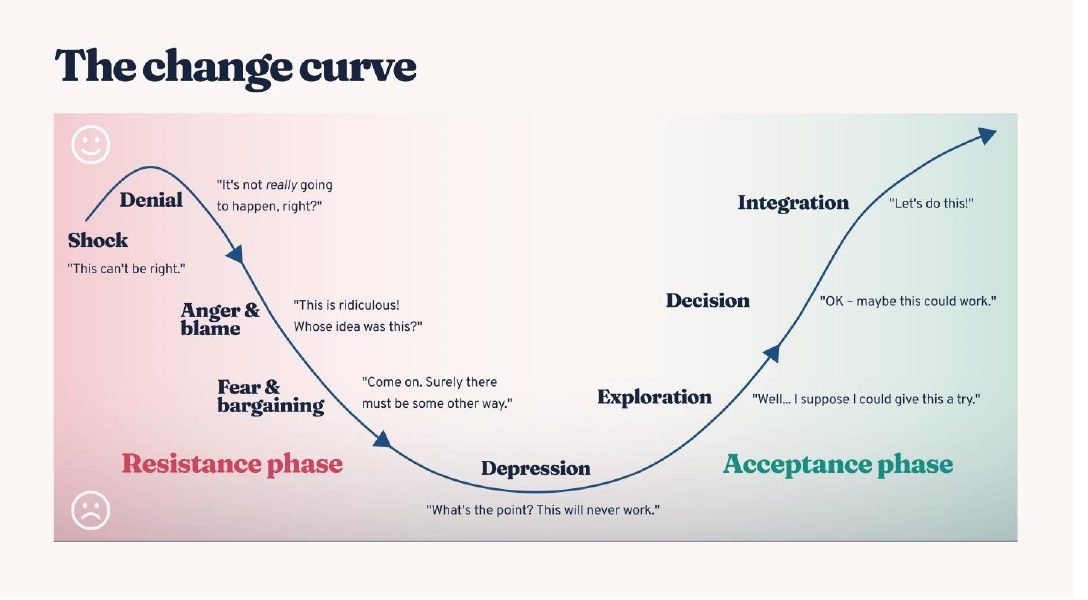
Figure 1: Kubler-Ross’(1969) Change Curve Model
Source: Bitesize Learning. (2026). The change curve, explained. London: BiteSize Learning. https://www.bitesizelearning.co.uk/resources/change-curve-management-model
Those who are profiting from the status quo will try to defend it. They will raise all kinds of legal, policy and procedural arguments in order to survive and defeat the fight against corruption. However, following the persistent major change and transformation, the affected people often embrace change and move forward with their lives. Quite often, different awareness seminars and conferences are held to educate government officials on the dangers of corruption. However, as time went on, several corruption mitigation conferences are often held and the practices, thinking and behaviours in most government institutions remain the same. Despite greater advocacy against corruption, the nature of corruption and poor public accountability has changed form and dimensions in the more dangerous and damaging ways. The implication has been poor or even the complete lack of the implementation of the required service delivery programmes. Realizing that mere education and awareness programmes were not mitigating the rate of corruption, the Uganda government recently introduced the on-spot evaluation and arrest of several local government officials that failed to account for funds allocated for different service delivery programmes. Using Balaam Barugahara—the recently appointed PLU supported Minister of Local Government, as assisted by Justine Nameere, the Ugandan government sought to make it clear in the local government sphere that its quests to tackle and defeat corruption is not a joke, a gimmick or just a political game. Instead, as local government officials were evaluated and arrested there and then from the field for failure to account for the already spent public funds, it sent a clear message. It sent a clear message that the fight against corruption is a foregone conclusion. As the general Ugandan population responded in ululations and jubilations, it sent a message to the local government officials that time had come for the complete embracement of new public resources’ utilization approaches.
In a few days after taking in several local government officials into custody for failure to account, the entire local government scampered to complete all the construction of the roads that had been uncompleted or even abandoned as the allocated funds were squandered. As the public jubilated, ululated and even invited the local government ministers not to forget their areas, local government officials hurried to complete the previously incomplete healthcare facilities or the educational facilities. Amid pressure from the fear of failing to account, shoddy works and incomplete projects or projects that had not been completed well, were all hurriedly finished. Water and sanitation projects and electricity programmes that had been uncompleted or even abandoned as the allocated public funds were eaten year after year, were completed within just days of the commencement of local government ministers’ evaluation. This implies in the event of stringent control of corruption amid the stronger emphasis of public accountability, African cities that had been lagging behind for decades can easily become the rivals of the UAE’s Dubai City. Within days, most of the service delivery programmes across the country had been developed or some local government officials were pretending to be doing so in order to avoid accountability. To improve accountability, the local government minister even adopted the strategy of physical counting of school children and staff to compare with the official local government documents so as to weed out ghost staff and students. The stronger support that the Uganda’s local government minister received suggests that gone are the days that the African governments would fear that tackling corruption would upset some essential political mobilization networks. Majority of the ordinary citizens are increasingly getting interested in just the delivery of the required services.
Hence, government officials or political mobilizers with clouts of corruption accusations for theft or diversion of government funds meant for local water supply, road construction, healthcare facilities, hospital medicines, school materials, and electricity and energy management may find it difficult to gain audience with the voters. Voters are increasingly becoming reluctant and unwilling to listen to people that steal money for their hospital equipment. Voters are increasingly unprepared to listen to leaders that divert the roads for different infrastructure rehabilitation programmes. Voters are increasingly unwilling to pay attention to political mobilizers that steal money from their SACCOs or use deceptive SACCOs created in their names for individual self-enrichment. Voters are increasingly unwilling to listen to leaders that steal money for water and sanitation, thereby leaving them in floods when it rains to destroy most of the slum houses.
Despite earning millions of African currencies, most of the African civil servants have become accustomed to corruption. Government offices have become the money-making arenas. Government offices have become the arenas for doing deals. If the opportunities for corruption or for making unauthorized money are not arising, some government officials even invent corruption. This has changed and transformed the operational culture in local government from the immediate post-independence culture of integrity and professionalism to the culture akin to the operational culture for dangerous criminal syndicates and gangs. Immediately after the independence of most of the African countries in the 1960s, most African civil servants lived comfortably on their salaries. They built houses and paid their children’s school fees using their salaries. However, despite the modern generation of African civil servants earning a lot more, most have made the mistake of inflating their standard of living using corruption to a level that cannot be supported by their salaries. This implies that efforts of fighting corruption may be resisted. So far as the Ugandan Local Government Minister arrested some of the local government officials on the spot, some local government officials have already attempted to resist and retaliate because this is their food which is being threatened.
Even if there are no drugs in the hospital, most government officials accused of corruption are often still quick to invoke all the required relevant laws. Quite often, the corrupt first do all the research to discern the laws that they will invoke when caught. In effect, most government officials are often quick to invoke certain laws or procedures in public service and administration that have loopholes paving the way for corruption to thrive. Of course, public service activities must be guided by some laws and procedures. However, it seems that the over-emphasis of laws and procedures in most African public service settings implies that most African public service systems are still using the Traditional Public Administration System. They are still using the traditional public administration based on the long discarded principles in Max Weber’s “Bureaucratic Theory”. When civil servants in Britain started using stringent laws and procedures as defensive measures even in the situation of glaring inefficiencies, corruption, questionable performance and results, delays and on results, the likes of Margarete Thatcher—the former British Prime-Minister, Ronald Reagan—the former US president and Bill Clinton—also the former US president introduced several new public administration reforms.
Public Administration Reforms
The new public administration reforms discarded the traditional public administration system and introduced the concept of New Public Management. The Traditional Public Administration system was designed in alignment with Max Weber’s “Bureaucratic Theory”. During the early years, it was theories like Max Weber’s (193) “Bureaucratic Theory”, Henri Fayol’s (1916) “Principles of Management” and Taylor’s (1911) “Scientific Management Theory” that were revolutionizing the thinking and practices in most organisations. In a seminal paper titled “Administration Industrielle et Générale – Prévoyance, Organisation, Commandement, Coordination, Contrôle”, Henri Fayol outlined 14 principles of management that include specialization, authority and responsibility, discipline, unity of command, unity of direction, subordination, remuneration, centralization, scalar chain, order, equity, tenure, initiative and esprit-de-corps. Even in the military or the highly technical business entities like aviation or medical equipment manufacturing that require centralized command and stringent regulatory adherence, some of Max Weber’s bureaucratic principles have been modified. Taylor’s Scientific Management Theory introduced the need for scientific analysis and task execution, scientific employee selection, management-employee collaboration and specialization to get the best results. Most of these traditional or fundamental management principles have been retained in most organisations even up to today as the fundamental ways of controlling and managing the organisational activities.
However, most high-performing organisations often still discern how such traditional management principles can be modified in the context of the changing approaches in New Public Management as well as the demands of the contemporary societies. In most governmental organisations, it was the ideologies and philosophies in Max Weber’s “Bureaucratic Theory” that were used as the guide for the development of how and why the government organisations must be designed in the way that they are designed. For organisations to achieve the best results, Max Weber’s “Bureaucratic Theory” developed seven rules agitating for stringent adherence to the created hierarchical chain of command, division of labour, standardized rules ensuring consistency, uniformity and predictability, rule-based decision, merit-based deployment and career development (as cited in Hashimov, 2025). Hence, when the Minister of Local Government goes to evaluate the state of service delivery at the local government level, and you hear civil servants saying—“eeeeh but you must follow procedures”, just know the thinking in the Weberian notion of procedure-based public administration is still thriving.
Even if the money was released for the construction of a road which has not been constructed and you hear civil servants lament—“eeeeeh but it must be the permanent secretary (PS) to interdict and not the local government minister”, just know the thinking being applied is the old thinking in the Weberian hierarchy of command which is still lurking around. It is such practices that turned the traditional public administration system based on the Weberian approach into a burden. Inefficiencies and delays were attributed to the need for compliance with the required policies, rules and procedures. Even if the budgets for the construction of certain healthcare facilities or road construction were inflated above the market rate, the culprits were exonerated for as long as the inflated budget was presented and approved by the designated budget committee.
Even if no results were achieved, but the budget was spent according to the designated procedures, there was no problem. Gradually, these rule- and procedure-based approaches created the public service system that turned out to be unresponsive to the ordinary citizens’ needs. It created the public service system that was inefficient and less results-oriented. It is such problems that instigated the need for public administration reforms introducing the concept of New Public Management and even the efficiency-enhancing measures like good corporate governance for public sector managers. However, poor embracement of Corporate Governance and King III on Good Corporate Governance is often the problem. Lack of an idea or knowledge about King III on Good Corporate Governance affects the development of a culture that mitigates corruption and fraud in government, and even in the private sector.
King III on Good Corporate Governance
King III on Good Corporate Governance requires managers to act in the best interest of the organisation. It requires managers to always take actions that improve the attainment of the greatest good for the best good of the organisation. For that reason, King III on Good Corporate Governance emphasizes the embracement of the highest standards of ethical leadership, accountability, transparency, fairness, equity and good corporate citizenship. It also demands managers in both the public and private sector organisations to report and adopt the sustainable risk management approaches (Institute of Directors of South Africa, 2009). Whether it is in the private sector or governmental organisations, stringent adherence to King III on Good Corporate Governance is the future. In the private sector, good corporate governance will retain and improve brand image, customer satisfaction. In the public sector organisations, good corporate governance will improve resource savings, resource optimization, successful service delivery programmes’ implementation and citizens’ satisfaction that transform into political stability and then enduring economic prosperity.
In line with Edward Deming’s (1986) Management Cycle of “Plan-Do-Check-Act”, this may require CEOs in the private sector and governments to continuously do the required evaluations and improvements. In Britain, using periodic evaluation, Margaret Thatcher recognized the inefficiencies that were gradually affecting the efficiency of the British public service as well as its responsiveness to the ordinary citizens’ dichotomous needs and preferences. Just like it was observable when some African engineers were using manure instead of the required murram for road construction, the inefficiencies in the British Civil Service started to also affect the quality of public infrastructure. In turn, this affected investments, economic productivity and employment creation. To turn around things, Margaret Thatcher discarded the old traditional public administration system and introduced the concept of New Public Management (NPM). New Public Management uses a results-based, and not rules-based approach as well as higher levels of efficiency. It requires the management of public sector organisations as if they are business enterprises that emphasize higher efficiency as prerequisites for achieving the best results.
Even if the government official adhered to all the rules and procedures for public expenditure management, and there were no impressive results, the government official would still be required to account. Even if the government official adhered to all the procurement and public expenditure management rules, but delivered shoddy work, he or she is still required to account. To respond to the changing needs of the contemporary societies, the concept of new public management has still continued to evolve and improve. It has continued to evolve and engage the introduction of newer concepts like performance measurement or management, performance appraisal, as well as service delivery monitoring and evaluation. It has also introduced public expenditure management and evaluation, and even things like results-based management or management-by-objectives. In the new public management system, governments are required to be creative and discern the best ways of ensuring that the civil service delivers the best results. Governments can even identify and abandon some of the older principles that are considered to have lost value and relevance in the context of the changing needs of the modern societies. So, if the Minister of Local Government makes random field visits only to discover shoddy work or undone work yet the money has already been spent, it is still in order in the context of the new public management principles for the minister to directly order the arrest of the suspected government officials.
Spot Checks/Arrests
Some critics argue that spot checks do not work because the minister or the inspector of government cannot be in all places at the same time. In the excuse for the fear of harsh effects of spots checks and arrests, they argue that the fight against corruption should be institutionalized. However, the fact that makes spot checks effective for aiding the speedy institutionalization of corruption fight is that it does not permit excuses. During spot checks, the failure to account for the road construction money used up yet no road has been constructed, raises immediate liability and the need to account or get arrested. This has the desired effects if it becomes part of the larger organisational culture. If civil servants know that they will immediately be arrested for failure to account or do the right thing, they are most likely to do the right thing all the time. And that speeds up the institutionalization of the fight against corruption. Doing the right thing becomes part of the operational culture. Drawing from Ivan Pavlov’s “Classical Conditioning Theory”, organisational psychology has it that employees may tend to indulge in a particular behaviour if they understand that they will be handled with kids’ gloves than if the behaviour is understood to induce harsh punishments. If that is not true, why did some district engineers in the other districts use even their personal monies to construct roads that had stalled after the local government minister’s arrest of just one district engineer and a town clerk? If that is not true, why did the late John Pombe Magufuli get immediate good service delivery results when he introduced spot checks and arrests? The concept of new public management seeks to eliminate rigidities and stringent adherence to laws and procedures even if they are not inducing the achievement of the best results.
If a particular government minister does the field visit and finds ghost workers, nurses or ghost pupils in government-funded schools, the minister can still order the on-spot arrest of the implicated government officials. That is what new public management is about. Even without using the conventional approach, it is about the adoption of the most creative approach to achieve the best results. It requires the use of the most flexible and agile approach if the best service delivery results are to be achieved. The old system of public administration created a lot of rules and procedures. It is in these complex bureaucratic rules and procedures that most civil servants often find solace if cornered for non-delivery. It is in these complex intricacies of rules, regulations and procedures that most civil servants often find comfort to relax and even challenge some of the authorities of the higher authorities if cornered to account for service delivery failure. Hence, the purpose of new public management is to introduce changes that put government officials under pressure to deliver. That explains why even in certain situations, it is the ordinary citizens who are used to evaluate and inform the government about the progress of the implementation of various government service delivery programmes. Hence, when the Ugandan Local Government Minister goes into the classroom of a government-funded school to ask pupils whether or not they are being asked to pay fees, it is still in line with the principles of new public management.
It is still in the context of new public management when the Ugandan local government minister or health minister goes into government clinics or hospitals to ask individual patients if they are getting the best healthcare services and medicines. New public management encourages the introduction of flexibilities that change and introduce new approaches that create the desired immediate positive results. Hence, those things of “is it procedures and rules” are the old things of the Weberian days of bureaucratic approach to public administration. In fact, it is no longer even called public administration. It is instead called public management. Administration and management are two distinct concepts. The concept of administration deals with the basic clerical process of evaluating and controlling the processes for different policy implementation. Management is the complex expert-based process of planning, organising, controlling and leading the processes for the implementation of different government policies. Administration is clerical and does not deal with planning. In the old government system, Wilson’s (1887) “Theory on Political-Administration Dichotomy” assumed that politics differ from administration and must be separated from administration.
As politics deal with policy formulation, it is the administrators constituting of experts and bureaucrats in the administration aspects of government that deal with the implementation of policies introduced by politicians. This theory assumed the top-bottom approach of policy formulation and implementation. However, as the civil service system evolved and improved, it emerged that the civil servants are not just administrators that deal with the implementation of policies introduced by politicians without inputting anything. Instead, the civil service was discovered to constitute some experts that interact with the ordinary population on the daily basis to improve their in-depth understanding of the common pressing issues affecting the common man. From such diagnosis, the concept of “public management” emerged to replace the notion of “public administration” which was largely clerical.
Using the concept of public management, civil servants do not only receive and implement directives from the politicians from the ruling political party. Instead, while guided by the policy directives from the ruling political party, the concept of public management insinuated that the civil service becomes the technical branch of government that uses the fundamental management functions of planning, organising, controlling and leading to enhance the successful implementation of different policy directives. Contrasted with the public administrators that just did clerical work, public management requires civil servants to engage in some detailed form of planning how different government policies would be implemented. With time, the concept of public management got entrenched to instigate the introduction of a bottom-up approach to planning. Using the bottom-up approach, local governments at the municipal and district levels would diagnose the local situation and develop the service delivery plan and budgets as dictated by the policy directives of the governing political party. Thereafter, the plan and the budget for implementing the plan would be submitted for approval at the municipal or district council. Subsequently, the plans and budgets are consolidated as the district or provincial budget and then submitted throughout the upper government echelons and then to the ministry of finance and parliament for approval and funding. All these are consolidated into the government budget for a particular fiscal year which is submitted to parliament for approval. That is how public administration has changed and transformed over the years. In the concept of new public management, it is not the question of rules’ adherence and compliance. Instead, the issue is of what have you done or not done to get the best results for the ordinary citizens? As reflected in Figure 3, spot checks/arrests is part of the wider mechanisms for improving public accountability.
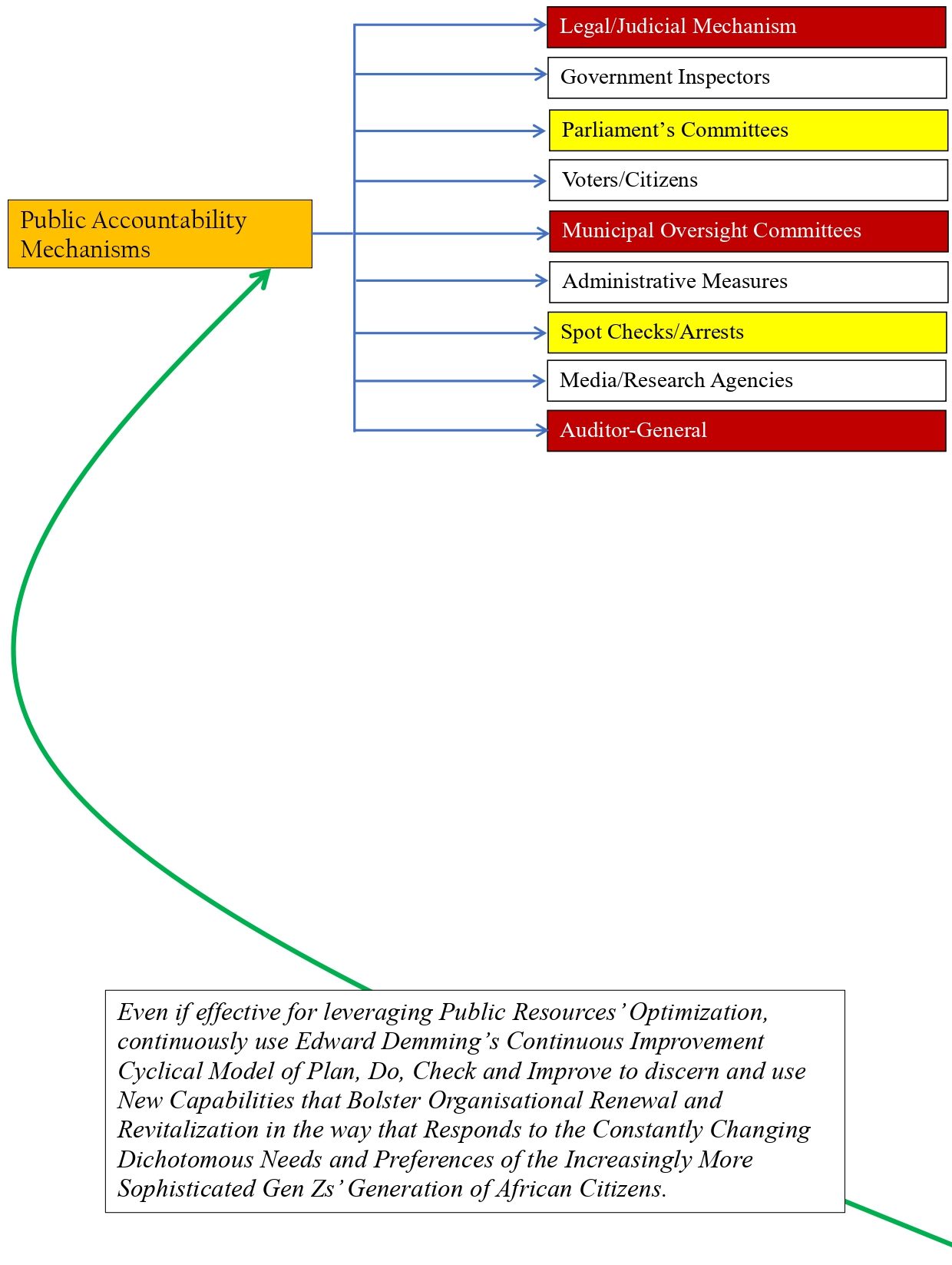
Figure 2: Public Accountability Mechanisms for the Contemporary Gen Zs’ Governance System
Source: Okanga, B. (2026). Public Accountability in Africa: Optimizing Public Resources in the Era of Gen Z Governance System. London: Elicitor.
In Africa, the public service tradition of closer monitoring and evaluation of the progress and failures of the implementation of different service delivery programmes is traceable to Julius Nyerere—the former Tanzanian president’s approach to service delivery evaluation. While seeking to ensure the successful implementation of his socialist Ujamaa service delivery programmes, Julius Nyerere encouraged all senior government officials to closely interact with the ordinary citizens (Ashly, 2020). This improved spot checking and the discovery of the areas of challenges. While the key senior Tanzanian government officials used unannounced spot checking and impromptu visits, Julius Nyerere himself conducted nationwide tours and impromptu visits to different areas where Ujamaa programmes were being implemented. In addition to demanding constant reports about the progress of service delivery implementation, Nyerere also introduced townhall meetings and other open forums. During these townhall meetings and open forums, he discouraged the making of any speeches. Instead, he offered the opportunities to all the local residents to raise any complaints and indicate the areas of dissatisfaction and satisfaction about the different Ujamaa policies that were being implemented in their areas.
Nyerere also demanded that the local residents attending the meeting ask him any questions about any service delivery challenges that they were concerned about. This formal form of interactions offered the opportunities for the president to interface with locals and understand all the dynamics affecting service delivery. Hence, if General Muhoozi—the PLU president and the current Uganda’s co-president authorizes the local government minister to conduct brief Barazas with the local communities, he is actually towing Nyerere’s approach for Ujamaa service delivery evaluation. Nyerere’s townhall meetings are akin to President Museveni’s Barazas which were introduced through the 2009 Presidential Directive. Managed by the Office of the Prime-Minister and Resident District Commissioners, the directive requires local leaders to conduct Barazas and direct face-to-face meetings with the local communities so as to understand their needs. Instead of Barazas, in Nigeria, the Igbo do Ogbako, as the Yoruba called it Apejo and Hausa do Taron gari which are all the different forms of Barazas or village townhall meetings. In South Africa, the similar townhall meetings are called Izimbizo. Through Barazas, the local leaders and key government officials get to understand and respond to the most pressing needs affecting the local communities. Using such an approach, the government gets to respond and transform the progress of the delivery of different service delivery programmes. Usage of Barazas has enabled the Uganda government achieve significant service delivery milestones. However, now that the fight against corruption is gaining the desired momentum, PLU’s introduction of Barazas is essential for discerning the areas requiring intervention for even the Ugandans in the villages to get the best from the introduction of PLU’s new different service delivery policies, programmes and projects. Local leaders often get and instantly eat the money from the central government, only to turn around and blame the central government. The corrupt local leaders are often tactical in making the central government and even the presidency appear as the problems when indeed it is not. Hence, it is Barazas that will expose local leaders’ engagement in corruption as the major saboteurs of government programmes, and not the central government.
In Tanzania, later governments that followed after Julius Nyerere, somehow abandoned the townhall meetings. However, upon taking over as the fifth Tanzanian president on 5 November 2015, the late John Pombe Magufuli, as the over-enthusiastic new president, re-introduced spot checks and impromptu visits as the techniques for service delivery evaluation (Allison, 2015). Magufuli made surprise spot checks and impromptu visits to different hospitals, clinics, road construction projects, agricultural support programmes as well as energy and water development projects. Those who were found absent or could not account for the allocated funds were immediately interdicted, arrested and detained. The end result was the significant change and transformation of service delivery during Magufuli’s era. On-spot checks and firing introduced new operational excellence culture and approaches (Allison, 2015). This reduced corruption, loss of funds and the reduction of wastes. In the end, the Tanzanian government reduced its dependence on foreign funding. In other words, the new spot checks introduced by the Ugandan local government are not just a preserve for the Ugandan government. Instead, it is a wider public service management approach used also in Nigeria, the US and across the world. In Nigeria, Umar Namadi—the Governor of Jigawa State—gained prominence for using impromptu visits and spot checks of different service delivery progress (Abdulyassar, 2026). This enabled him to improve productivity, hold public officials accountable and influence the successful implementation of different service delivery programmes in his state. Unfortunately, when he once made the visits, only to find the offices empty as most of the government staff were absent, it sent a message to him on the importance of reforming the African public service. Most African public service systems are still using the old civil service laws and policies.
Rethink African Civil Service
During the old days, especially a few years after independence, there was an acute shortage of educated people. And due to the low pay and salaries, most of the qualified people were not willing to work for government. Most of the qualified Africans opted to work for the private sector, as others travelled overseas. To counter this and make working for the government more attractive, a lot of flexible and favourable policies had to be introduced. The salaries were not very good, but the government introduced job security. The government also introduced other favourable labour laws like those for annual leave, family responsibility, holidays and well-protected disciplinary systems that did not favour firing anyhowly. Before African professionals discovered that the civil service is actually another good platform for looting public resources, these new benefits attracted and retained some of the talented African professionals in the public service. Unfortunately, even as conditions changed, some of these flexible and favourable civil service laws and policies have remained and even improved. Even as some of the best economists emerged from the improved African education system to start riding boda-bodas/okadas or selling tomatoes in markets, some of these laws have remained or have even been improved. Even as some of the well-qualified medical doctors roam the streets, some of these favourable civil service laws and policies have remained the same or even improved. The effect is that since most African civil servants are sure of not being fired even if absent for six months, it is not uncommon, especially in upcountry areas, to find some of the well-paid civil servants spending more time in their private businesses than in the government offices where they are employed on government salaries to work. Instead of attending to patients with the requisite commitment and dedication, some doctors and medical personnel have instead turned government hospitals, clinics and health centres into the platforms for recruiting patients for their own clinics.
Increasingly, the public and patients have complained of the tendencies to undermine services in government hospitals and healthcare facilities so that the patients can opt for private healthcare services. Even as some doctors go an extra-length of recommending surgeries that should not have been conducted, this invokes questions as to whether the time has not yet come for the government to review its civil service policies. Given the constantly increasing multitudes of unemployed African graduates of all categories, the ordinary Africans have started to ask questions on whether it is not yet time for African governments to introduce new civil service policies dictating for one to choose whether to work for the government or the private sector. Except for the scarce unique areas and specialists, African governments should start asking questions on whether all the medical professionals are not yet required to choose between working for the government for additional remuneration or the private sector. As also questioned by Uganda’s President-Yoweri Museveni, most of the African leaders are also questioning if it is not yet time to reform the African public service? One would have argued that salary and remuneration are the problems. However, the recent spot checks by the Ugandan local government ministers indicated that even the doctors who are paid 20 million Uganda Shillings, still opt to prefer attending their private clinics rather than working full-time in the government hospitals where they are supposed to work full-time. Given the constantly surging population of unemployed African graduates, most African governments are also asking if it is not yet time to start relieving those staying absent or absconding from work for a long time on the basis of fabricated reasons. African governments are asking if it is not yet time for those that undermine public service quality by adopting bad customer approaches, while also engaging in corruption and fraud, to go home and do their own things. It is these questions that have prompted PLU (Patriotic League of Uganda), which controls the majority of the Ugandan parliament and all the key government institutions, to come clear on the new government policy position that the days of games and corruption are over.
General Muhoozi’s introduction of new operational excellence approaches emphasizing clean governance, efficiency and resource optimization for better service delivery is part of the wider organisational self-evaluation approach. It is part of the organisational self-evaluation exercise which is not only widely used in Africa, but also in the United States’ government. In the US, this was evident when President Donald Trump recently introduced the Department of Government Efficiency (DOGE) and then President Bill Clinton’s National Performance Review which was introduced in 1993 to be supervised by Vice President Al Gore (University of North Texas, 1993). Organisational Self-evaluation is an internally triggered initiative that prompts the organisational leaders to ask the difficult but honest questions as to whether they are doing the right things to respond to the constantly changing needs of the societies. Given the constantly changing demands and also dynamics of the society, organisational self-evaluation prompts the organisational leaders to question whether the available resources, technology, structures and operational systems are effective for the organisation to achieve its designated goals and objectives.
Organisational self-evaluation is a difficult exercise that forces the organisation to question itself on whether the organisational philosophy, thinking, culture, operational approaches and systems that they have at their disposal are effective for enabling the organisation achieve its strategic goals and objectives (Gilbert, 2016). Even if the answer is yes, organisational self-evaluation still demands the organisation to assess how it can get the best from its current good performing systems. It is not just a matter of doing SWOT (Strengths, Weaknesses, Opportunities & Threats) Analysis. High performing organisations don’t just do SWOT analysis and say yes we have all the best technology, resources and capabilities to outwit competition. Instead from the SWOT analysis, high performing organisations strive to continuously do the best. They ensure that even if they are doing well, they still discern how to get the best from their currently the best capabilities. That explains why Unilever has been consistently making big dollars since the 1930s, as Daimler-Benz AG has also been doing so since 1926, just like Toyota that has never got tired of consistently making big dollars since 28 August 1937. Whether in business or governmental organisations, constant usage of organisational self-evaluation is key to leveraging organisational sustainability and continuity. To undertake self-evaluation that tackles the emerging new deficiencies, the Institutional and Organisational Assessment Model espoused by Universalia and IDRC (International Development Research Centre), requires organisational self-evaluation exercise to question four areas encompassing effectiveness, efficiency, relevance and financial capabilities.
- Effectiveness explores whether the organisation has been seamlessly achieving its larger goals and objectives or if there are hindering operational glitches?
- Efficiency measures if the organisation is doing the best to enhance the best optimization of its existing resources in the way that influences the attainment of the best outcomes for the greatest segments of the population?
- Relevance questions whether the organisation is responsive and adapting to its changing ecosystem terrains?
- Financials examines if the organisation has adequate financial resources to implement all the activities essential for the organisation to achieve its strategic goals and objectives.
Even while such organisational self-evaluation models are being used, Nadler and Tushman’s Congruence Model requires the organisation to evaluate and identify the alignment or mismatches in the critical organisational components like people, technology, culture, structure and work approaches. Mismatches or incompatibilities between technology and culture or structure and work are signs of operational glitches or bottlenecks undermining the organisation’s effective performance. Organisational self-evaluation is often done at the organisational-wide level, but it can still prompt individual employees to also engage in self-evaluation. As the organisation does its self-evaluation, the individual employees are also forced to ask individual questions as to whether he or she is doing the best to ensure that the organisation achieves the best (Crossan & Berdrow, 2003). Organisational self-evaluation is not only a change, but also an organisational development and transformational initiative that shakes all the areas of the organisation. This enables the organisation diagnose how it can get the best from its current state of performance. Organisational self-evaluation improves the level of organisational self-awareness and self-reflections about its areas of weaknesses and strengths as well as the novel improvement initiatives that can be adopted. Through such improvement initiatives, the organisation is able to introduce several organisational self-renewal initiatives that bolster its overall effective performance.
Organisational Renewal
In the normal Organisational Lifecycle Theory, Phelps, Adams and Bessant (2007) demystify organisations to often flow through birth, introduction, growth and maturity stages. Without organisational self-evaluation introducing new capabilities to spur organisational renewal, the organisation often vanishes from the maturity stage. Instead of taking a further upward growth trajectory, it instead takes the downward slope, declines and vanishes from the market. The likes of BMW, Toyota, Nestle or General Mills that have been in existence for decades have been very clever at avoiding these downward trajectories influenced by the gravitational force of failures and refusal to do proactive organisational transformation and renewal. Whether it is in the private business organisations or in government organisations, the biggest hindrance of organisational self-evaluation is often not failures. Instead it is the prolonged periods of undisrupted success. High achievements across all the periods cause complacency and inertia. A new culture sets in to instil the assumption that “even if we don’t do that, things will still be fine”. If a failure has occurred, the organisation often wakes up. This contrasts with constant success that breeds new culture and thinking. Because corruption has entrenched throughout the organisation, attempts to fight and introduce new thinkings will also be countered by arguments like “that is not how we do things here. That is not the procedure. Follow the procedures.”
Some of the key culprits will even organise meetings and mobilize others to resist because of entrenched culture of unethical leadership and unethicalness across the organisation. It is not just in Africa where the implementation of organisational self-evaluation and self-renewal initiatives are problematic, but even in the United States. Before President Donald Trump assumed his second term of office, a series of successive American presidents had come in and left without taking any radical civil service reforms that reduced wasteful expenditures. All that the successive American presidents did was come in and take over government, introduce new policies, ensure Cuba is still sanctioned and either attack Iraq, Afghanistan or Libya, while also imposing unnecessary additional sanctions on other countries and then leave. No radical organisational self-evaluation was undertaken to assess and mitigate the state of wasteful expenditures. Successive governments just came in and went until Donald Trump came in to introduce DOGE-the new Department of Government Efficiency.
The new Department of Government Efficiency not only exposed some of the rots in the US government systems, but also a lot of wastes, inefficiencies and fraud that affected the optimization of government resources in the way that creates the best outcomes. Compared to before, DOGE sought to reduce Federal spending, rationalize the workforce, modernize Federal technology and reduce duplications of regulations causing over-regulations and costly structures (The White House, 2025). This implies improvement of public accountability is often blended with the organisational self-evaluation exercises that demand the organisation to question itself as to whether it is doing the best. It offered the opportunities for the US government to stop and think before making the required self-evaluation and renewal exercises. Through the DOGE, the US government was able to undertake staff rationalization exercises and restructuring that unlocked new capabilities and resources for the US government to deliver the best. Besides the Donald Trump’s DOGE and Barack Obama’s Obama Care that restructured the US healthcare system to introduce Affordable Care, the other organisational self-evaluation, renewal and improvement initiatives were reflected in president Bill Clinton’s introduction of National Performance Review (University of North Texas, 1993). Bill Clinton’s introduction of the National Performance Review was motivated by the quests to reinvent government. During the campaigns, diagnosis had revealed the American civil service or government organisations to be clogged with poor performance, mismanagement, resource wastage and over-spending. To ameliorate these problems, the Bill Clinton administration introduced the National Performance Review that sought to streamline and introduce lean operational approaches. To reinvent government and create novel services for the American population, the National Performance Review also introduced flatter leaner operational structures and systems. It eliminated bureaucracy and over-regulations that delayed and affected service delivery (University of North Texas, 1993).
To improve the American government’s responsiveness to local needs, the government also introduced decentralization to empower and mandate federal government agencies to invent and introduce different policies for responding to the service delivery challenges in their areas. This transformed the American civil service and government system to the extent that by the time Bill Clinton left office, most of the Americans were still impressed with his performance. In Singapore, Lee Kuan Yew did not just introduce the Corrupt Practices Investigation Bureau, but also the top-down approach for fighting the surging rate of corruption. As competitive salaries were introduced to mitigate corrupt tendencies (Quah, 2022), Lee Kuan Yews also introduced the mechanism for citizens’ engagement in service delivery evaluation and very deterrent punishments for the crimes of corruption. Just like in Singapore, in South Africa, the ANC-led government had no option, but to introduce the “step-side rule” for all the senior government office holders implicated in corruption (African National Congress (ANC), 2016). Though the application of this rule was widely appreciated by the ordinary South African population, it still affected most of the senior ANC leaders who had to resign after being accused and charged with corruption. However, the organisational change theories still imply that if the introduction of the new changes is consistent, it can still induce the desired changes. From the logic in Kubler-Ross’(1969) Change Curve Model, it can lead to the final point where the changes being introduced get to a stage where the changes are accepted and embraced by the overall population as part of the defining new culture and practices of the society. The previously disappointed people subsequently accept and embrace the new change to inculcate the introduction of the new organisational culture. A new organisational culture that supports public accountability as the tool for optimizing the often limited public resources in the new era of Gen Z governance system.
Citation: Okanga, B. (2026). Public Accountability in Africa: Optimizing Public Resources in the Era of Gen Z Governance System. London: Elicitor.
References
Abdulyassar, A. (2026). Governor meets ‘empty’ offices during surprise Monday morning visit. Daily Trust. https://dailytrust.com/governor-meets-empty-offices-during-surprise-monday-morning-visit/
African National Congress (ANC). (2016). Tasks of organisation-building and renewal: Forward to the centenary of the ANC NGC discussion document. https://www.anc1912.org.za/wp-content/uploads/2021/03/NGC-2010-Discussion-Document-Organisational-renewal.pdf
Allison, S. (2015). Tanzania’s president targets corruption with surprise visits and sackings. The Guardian. https://www.theguardian.com/global-development/2015/dec/08/tanzania-new-president-john-magufuli-targets-corruption-surprise-visits-sackings
Ashly, J. (2020). Tanzania: Remembering ujamaa, the good, the bad and the buried. African Arguments. https://africanarguments.org/2020/12/tanzania-remembering-ujamaa-the-good-the-bad-and-the-buried/
Chisom, M. (2026). Africa’s 10 best-performing countries in the fight against corruption. BusinessDay. https://businessday.ng/news/article/africas-10-best-performing-countries-in-the-fight-against-corruption/
Crossan, M. M., & Berdrow, I. (2003). Organizational learning and strategic renewal. Strategic Management Journal, 24, 1087–1105. https://doi.org/10.1002/smj.342
Dalton-Brits, E., & Van Niekerk, T. (2016). Mechanisms to strengthen accountability and oversight within municipalities, with specific reference to the Municipal Public Accounts Committee and the Audit Committee of Mangaung Metropolitan Municipality. African Journal of Public Affairs, 9(3), 117–128. http://hdl.handle.net/2263/58213
Deming, W. E. (1986). Out of the crisis. Massachusetts Institute of Technology, Center for Advanced Engineering Study.
Fayol, H. (1916). Administration industrielle et générale: Prévoyance, organisation, commandement, coordination, contrôle. Pitman.
Gilbert, J. (2016). An empirical vision for organizational renewal: Utilizing self-reflection and self-awareness to prompt deep transformation. International Journal of Business Administration, 7(3), 1–14. https://doi.org/10.5430/ijba.v7n3p1
Hashimov, A. (2025). Max Weber’s bureaucratic theory: Its strengths and weaknesses, and adaptation to the modern era—A theoretical and empirical analysis. Acta Globalis Humanitatis Et Linguarum, 2(4), 128–166. https://doi.org/10.69760/aghel.0250040006
Institute of Directors of South Africa. (2006). King Report on Governance in South Africa. https://cdn.ymaws.com/www.iodsa.co.za/resource/resmgr/king_iii/king_report_on_governance_fo.pdf
Kubler-Ross, E. (1969). On death and dying. Simon & Schuster.
Makanga, C. N., Orobia, L. K., Kaawaase, T. K., Nabeta, I. N., Mindra, R. K., & Munene, J. C. (2025). Oversight mechanisms and public accountability in an emerging economy. Cogent Business & Management, 12(1). https://doi.org/10.1080/23311975.2025.2507216
Mchopa, A. D., Changalima, I. A., Sulle, G. R., & Msofe, R. M. (2024). Public procurement trajectories in Tanzania: A review of reforms, practices, and compliance. Cogent Business & Management, 11(1). https://doi.org/10.1080/23311975.2023.2300498
Phelps, R., Adams, R., & Bessant, J. (2007). Life cycles of growing organizations: A review with implications for knowledge and learning. International Journal of Management Reviews, 9(1), 1–30. https://doi.org/10.1111/j.1468-2370.2007.00200.x
Quah, J. (2022). Lee Kuan Yew’s role in minimising corruption in Singapore. Public Administration and Policy, 25(2), 163–175.
RTF. (2026). What are satellite cities? A need-based development. Re-thinking the Future. https://www.re-thinkingthefuture.com/city-and-architecture/a10121-what-are-satellite-cities-a-need-based-development/
Taylor, F. W. (1911). The principles of scientific management. Harper & Brothers.
The White House. (2025). Establishing and implementing the President’s “Department of Government Efficiency”. https://www.whitehouse.gov/presidential-actions/2025/01/establishing-and-implementing-the-presidents-department-of-government-efficiency/
UK Open Government Network. (2026). NIOGN factsheet: Public accountability. Open Government Network-Ireland. https://opengovernment.org.uk/wp-content/uploads/2015/08/NIOGN-Factsheet-Public-Accountability.pdf
University of North Texas. (1993). A brief history of the National Performance Review. https://govinfo.library.unt.edu/npr/library/papers/bkgrd/brief.html
Varalika, R. (2026). Urban Infrastructure Development Scheme for Satellite Towns (UIDSST), 2009. Impact & Policy Research Institute. https://www.impriindia.com/insights/urban-infrastructure-development-2009/
Weber, M. (1930). The Protestant ethic and the spirit of capitalism (T. Parsons, Trans.). Allen & Unwin. (Original work published 1905)