By
Boniface Okanga
London, England, 17 July 2026
Special economic zoning (SEZ) is the future of Africa. And the future of Africa is special economic zoning. Africa’s current new economic game is to use industrialization as a catalyst of economic productivity, employment creation, export earnings and socio-economic growth. However, special economic zoning (SEZ) will redefine all that to speed up the overall pace of Africa’s industralization. SEZs will redefine Africa’s new economic game to create new futuristic socio-economic values that not only respond to, but even surpass the needs of the contemporary African population. Even if it is not widely embraced currently, special economic zoning is the engine that will drive Africa’s economic growth and sustainability. Special Economic Zoning (SEZ) is the strategic process of analysing and selecting the strategic geographical location that must be designated for the establishment of an economic park, center or hub holding a group of different foreign-based businesses. It is not just for any business. Instead SEZs are meant for foreign or even local businesses that are deemed critical for playing the desired catalyzing roles in the economy. SEZs are used as the catalysts for foreign direct investments (FDIs) or as the economic instrument for redirecting economic development from the areas of high concentration to the areas of underdevelopment. In a study on SEZs’ implementation in Poland, Dorozynski and Swierkocki (2023a) insinuate that SEZs tend to induce economic disparities and inequities in regional economic development. However, by redirecting different catalysing businesses to different special economic zones, SEZs also become the essential resource redistribution instrument aimed at improving balanced development and equity.
As resources become scarce and operational costs surge against the increasing competition pressure to serve the sophisticated customers that also refuse to understand, most businesses will run into SEZs. Most businesses will run into SEZs to lower costs by striving to gain from SEZs’ tax exemptions, customs duty exemptions and preferential procurement. Most businesses will run into SEZs to gain unique access to newer technologies, better business networks and novel sources of raw materials. Most businesses will run into SEZs to gain from strategic location advantages, better supply chain management and improved operational efficiency. In all these scrambles for SEZs, it is only the African markets that have created the desired standard SEZs and technology parks that will gain. In the context of Tao, Yuan and Meng’s (2016) analogy, SEZs’ usage will become the most fashionable economic model of the 21st century’s governmental operations. Hence, African economies like Burundi, the Somali Republic or Chad that still do not have SEZs will lag behind or become the beneficiaries of the SEZs in the other African markets. In the end, SEZs’ establishment will not only attract, but also become the beacon of novel business concepts’ investigation and thinking.
In China, when SEZs’ creation reached saturation point, it inspired the emergence of multitudes of R&D firms and innovation and tech companies operating from different innovation parks and hubs to conduct scientific investigations offering new product and technology insights. Increasing competition among the players in different SEZs will prompt the African businesses to act in the previously unimaginable ways. It is such unimaginabilities that will inspire the African business operators to also think and operate in new ways. The usage of the previously unimaginable ways to think and do the previously unthinkable will create the previously unimaginable socio-economic values. Drawing from Alexander-Hill’s (2026) Eurasian perspectives, this will not only de-risk the African market. Instead it will also create better values like better quality goods, better employment opportunities, better surrounding roads, better revenue earnings for the businesses, better tax revenue earnings for the government and improved attractiveness of the African market. The end result is the improved change, transformation, betterment, development, growth, continuity and sustainability of the African markets. SEZs will also drive growth and the innovativeness of the African entrepreneurs. Competition pressure sparking innovativeness will enable African businesses to come up with novel business concepts and the economy’s operational models creating and delivering the socio-economic values that even surpass the needs and demands of the increasingly more sophisticated modern consumers.
In the increasingly more complex 21st century’s business operations, Hussinger and Palladini (2026) posit SEZs to bring in not just tangible investments, but also novel ideas offering newer economic trajectories. It is through SEZs that Africa will realize the scale of foreign direct investments that it has never experienced before. SEZs like industrial zones or the created manufacturing hubs will attract new businesses. In turn, the success of the created SEZs or industrial parks will inspire the creation of the other SEZs like the research and innovation centres or tech hubs and centers typical of the Kigali Innovation Centre (KIC), which the Rwandan government is building in Kigali, or the emerging Kenya’s “Silicon Savannah” (Konza Technopolis).
Successes, growth and competitiveness of the businesses operating in different SEZs will drive business executives to explore the best ways of surpassing each other. This will spark an innovation war. In line with Alsharif and Brenner’s (2026) revelation, innovation war will spur increased investment in R&D centres’ establishment. It will also inspire the creation of new tech centres and hubs. New idea generation, research and innovation will become the drivers of business growth, competitiveness, sustainability and continuity. This implies that African countries having the right tech hubs or parks will gain from the first-mover advantage of having the right tech hub at the time that tech hubs are highly demanded. When it becomes difficult for the operators in different SEZs to do without research and innovation centers, a new generation of SEZs focusing on just technology and innovation centers will emerge to create new technology parks.
New idea generation and innovation shall become the driver of business competitiveness and sustainability. In turn, the need for intense research, innovation and tech hubs will instigate the need for the creation of new research, innovation and tech parks like the case of Silicon Valley in the United States or Shenzhen in China. It is through these new tech parks that the African market will gain unique skills and technology transfer to unlock the previously unthinkable new economic insights. SEZ is Africa’s new de-risking strategy of the 21st century. It will create new systems unlocking new socio-economic values that will avoid serious economic failures.
Special economic zoning was previously underutilized as the driver for Africa’s socio-economic change and transformation. However, it is increasingly emerging across the African market as Africa’s new futuristic creator of the previously unimagined socio-economic values. SEZs are meant for businesses that have radical new business ideas or operational approaches that can help transform the other businesses to catalyze the overall pace of the country’s economic growth and development (Hussinger & Palladini, 2026). As the African market seeks to improve its investment conditions, SEZs’ establishment will inspire increased investments in the required road, energy, ICT and social infrastructure. It will also inspire the sprouting of several smart African cities not only in the surrounding SEZs’ areas, but also in the other areas. SEZs will create new economic nodes and corridors. SEZs are the de-risking strategies for proactively avoiding future economic failures.
Even if the individual African countries are currently creating independent SEZs, the time will come when the SEZs in different African regions will link up and integrate with each other to unlock new socio-economic values. This will catalyze economic productivity. It will also spawn economic growth (Asiimwe, 2022).
Special economic zonings are Africa’s new futuristic creators of the previously unimaginable socio-economic values. In turn, this will de-risk the level of vulnerabilities and market disruptions that often affect the attractiveness of the African market. In the context of inter-generational equity, this will enable Africa meet the needs of the current and future generations. Special economic zoning is the future of Africa. And the future of Africa is special economic zoning. It is the future that will redefine Africa’s industrialization quests. It is through SEZs that Africa will create or attract additional new businesses, revenues, jobs and economic nodes into the African market. SEZ is the antidote to socio-economic stagnation undermining Africa’s socio-economic progress. It is the answer to poor export earnings. Most African countries’ export earnings from unprocessed agricultural and mineral raw materials are constantly improving. However, it is still special economic zoning that will catalyze faster growth in export earnings.
Seeking to eradicate post-communism’s sluggish economic growth, unemployment and poverty, Poland started in 1994 with 14 special economic zones like Pomeranian, Kamienna Góra and others that redefined its new industrialization approaches and subsequent paths (Michalek, 2023). As FDIs increased in these SEZs, they also instigated new thinking and technology that reshaped the different industrialization approaches used by Poland in modern times. It is from such an approach that Africa will be able to create industries that improve the pace of its industrialization. Improved industrialization will in turn catalyze the productivity of the agro-processing sector as well as the other mineral processing industries. This will increase export volumes and earnings.
Even if some African economies like Nigeria, Egypt, Kenya and Algeria are already doing relatively well, SEZ is still the strategic industrialization path that will influence the success of most major African economies. It is the strategic new idea-generation path that instigates governments to take special interest in the initiatives that improve investments. Such logic echoes Hussinger and Palladini’s (2026) elucidation that special economic zoning is the strategic systematic process of analysing and selecting the geographical areas of the country that can be designated to offer special tax reductions or even waivers, special business permits, financial incentives and free land to inspire investments not only from foreign investors, but also from local investors.
SEZs may offer special business-government linkages that improve the seamless interface between government, businesses and investors operating in the special economic zones. It is such linkages and interface which are essential for improving information exchange and sharing as prerequisites for new idea generation. Given the catalyzing roles of certain big businesses or the emerging new talented businesses, special economic zoning often aims to improve the efficiency of the government’s business administration. It influences the entrepreneurial activities of different selected businesses. Through SEZs, the government can easily monitor, offer special attention and respond to the major problems affecting businesses. By responding to the problems affecting businesses, the government would also be directly dealing with the problems that affect the economy.
From the experience in the Shenzhen Special Economic Zone in China, special economic zoning often offers a sample of the essential businesses that the government can use to evaluate and understand the dynamics affecting entrepreneurial success in the country. This elicits insights that can enable the government introduce changes required for utilizing businesses or certain designated entrepreneurial activities in the way that spurs the country’s overall economic growth and development. Special economic zoning is the pillar and fulcrum that drives economic growth. Special economic zoning is the future of Africa. And the future of Africa is special economic zoning. Insights from the Johor-Singapore Special Economic Zone imply that the objectives of special economic zoning are often to improve foreign direct investments’ attraction, spur new investments and revenue earnings. It also aims to stimulate economic productivity and improve growth, while also educating and influencing the transformation of the local businesses. While also creating enormous employment opportunities, SEZ has been widely used in recent years to stimulate export-led growth. However, it is not a recent concept.
The notion of SEZ is traceable to the Shannon Export Processing Zone (EPZ), which was created at Shannon Airport by the Irish Government in Ireland in the 1950s (Zeng, 2021).
SEZs’ Historical Evolution and Development
During the 1950s, the Irish government sought to increase its exports using even the raw materials that it did not produce. Hence, the Export Processing Zones were created around Shannon Airport, so that the imported raw materials would not go deeper into the country’s hinterland. Instead the raw materials would just be offloaded from Shannon Airport and then transported straight to the Shannon Export Processing Zone (Zeng, 2021). In the Export Processing Zone, all the imported raw materials were exempted from customs duties for as long as all the products manufactured from such raw materials were immediately re-exported to the other destinations. The Export Processing Zones were in fact just fenced enclaves around the airport. However, the Export Processing Zones became instant success stories, as more and more manufacturers opted to establish their manufacturing facilities using the imported raw materials in such fenced enclaves.
The success of this business economics concept in Ireland inspired the other governments to introduce the concept of export processing zones in different countries. Because of the increasing manufacturers’ interests and the realized values of special economic zoning, the other governments around the world developed an interest in the concept of special export processing zones (Zeng, 2021). In effect, different governments adopted the concept and introduced different forms of special economic zones. This time, it was not just the exemption from customs duties that was used as the major stimulant. Instead different governments started to introduce various forms of benefits and packages for investors opting to establish manufacturing plants in the special economic zones. Such benefits or packages included tax holidays, free land, tax exemptions, subjection to unique regulations and not the larger regulations that often constrained investment in the country. This is because as several other governments embraced special economic zoning, competition for foreign direct investments increased. Special economic zoning, if successful, was viewed as the essential stimulant of economic investment, productivity, employment creation, export earnings and growth.
Due to these enormous economic benefits, China which was undertaking a lot of radical socio-economic reforms in the 1970s, identified special economic zoning as one of the major catalysts of economic growth. Using such an ideological path, the Chinese government created four major special economic zones that have even up to today continued to redefine the speed, quality and quantity of Chinese economic growth and development (Huld, 2026). The four special economic zones that turned revolutionary include Shantou, Xiamen, Shenzhen and Zhuhai. Using these four special economic zones, China experimented with a range of different liberal economic reforms and policies that would turn around its economic progress.
China was just coming out of a centrally commanded economy and socialism of Mao Zedong’s era. And there was a lot of fear of the unknown about economic liberalism despite the fact that socialism had already caused a serious economic disaster. Hence, it was the four special economic zones that offered experimental grounds for the Chinese government to test the values of economic liberalism. Economic successes from these different special economic zones inspired most of the emerging economies like Brazil, India and the United Arab Emirates to introduce different models of special economic zoning. In 1973, India quickly expanded its Export Processing Zones by introducing the Santa Cruz Electronics Export Processing Zone. Special economic zones shifted away from the mere concept of tax-exempt businesses to become the economic hubs through which new technologies were tested. Further economic values of special economic zoning inspired its evolution and diversification into the other economic areas.
In China, the development of special economic zones changed from a government initiative to private-sector-initiated development. Several private-sector players started crafting and introducing new policies that would lead to the creation and management of special economic zones that inspire growth in certain areas. The original objective of special economic zoning was to stimulate exports, but this time the private-sector players took over and changed the initiative by introducing special economic zones that produced scarce products for the local Chinese market. This led to the diversification of special economic zoning and the introduction of specialized segments like free ports, logistics and special agricultural zones to increase food production and export.
Further change and evolution of special economic zoning led to the introduction of new forms of special economic zones like High-Tech Zones, Science Parks and Eco-Industrial Parks. These were highly complex economic zones created as a result of the higher collaboration and liaison between various research institutions, technology businesses and universities to inspire innovation, technology transfer and the adoption of manufacturing as the future of economic growth and development. These complex special economic zones have utilized new Industry 4.0 digital technologies like the Internet of Things (IoT), blockchain technologies and 5G technologies to create self-contained smart cities exhibiting localized digital infrastructure, specialized services like fintech, healthcare and tourism, as well as more resilient supply chain systems. This has improved the interface between the businesses operating in different special economic zones. Creation of such smart cities is aimed at improving the investment conditions and the operational efficiency in the special economic zones.
Even if Silicon Valley which is the southern area of the San Francisco Bay Area, is disputed to have emerged from a well-designated special economic zone, it was still the emergence of such high-tech economic systems and zones that inspired the emergence of Silicon Valley as a major high-tech economic hub of the world. Concentration of the best research institutions, tech companies, universities, possibilities for industrial clustering across different industries and venture capitalists of all types created very conducive investment conditions for different actors and players to engage in the development of innovations that have forever not only changed, but also inspired, the world. From the pragmatic approaches undertaken by different governments around the world, different types of special economic zoning have been invented to influence the development of different ways in which governments can utilize special economic zoning as the critical driver of economic growth and development.
Special economic zoning is the future of Africa. And the future of Africa is special economic zoning. However, even if SEZs influence the economic success of a country, it is not just any special economic zoning that influences the achievement of such outcomes.
Special Economic Zones
Designating the desired kind of special economic zone is the other problem that affects the success of some special economic zoning. This is because when the concept of special economic zoning is mentioned, most governments tend to assume that it is just the creation of special economic zones where various customs and tax incentives and even free land are offered in order to attract foreign direct investments that spur improved economic growth. Unfortunately, the assumption that special economic zoning just means one thing which is the creation of the zones where industries are established to attract foreign direct investment, create employment, increase export earnings and economic growth has often led to the establishment of the wrong economic zones.
Some special economic zones have often failed because the wrong type of special economic zone has been established in the wrong place. For instance, a dairy production SEZ established in the industrial areas instead of the saturated dairy cattle breeding corridors does not seamlessly integrate with the farmers. A Food Processing Zone established near the airport as an export processing zone instead of in the middle of the intense agricultural food-producing areas is a disaster. Locating a high-tech and innovation research park in areas without proper ICT and telecommunication infrastructure is often a disaster. Using different Industry 4.0 digital technologies, a lot of inventions have been shifted online. Some governments end up establishing special economic zones for industrial and economic activities that do not completely meet the geo-business features of the area. In the end, the established special economic zones fail to attract the desired investment because the geo-business features of the area do not reflect proximate sources of raw materials, labour, supporting infrastructure like rail, roads and airports.
Sometimes, the government has all the good policies for ensuring the success of special economic zoning, but still the venture fails because of such problems and the risks of selecting the wrong types of special economic zoning. If one says a special economic zone will be established, the next question that arises is what kind of a special economic zone will be established? From the pragmatic approaches adopted by different governments, the commonly used special economic zones often include:
- Free Trade Zones (FTZs)
- Export Processing Zones (EPZs)
- Industrial Parks (Industrial Zones)
- Free Ports
- Science and Technology Parks
- Eco-Industrial Parks
- Enterprise Zones
- Comprehensive Special Economic Zones
Free Trade Zones (FTZs) are often the special economic zones that are established near large seaports, airports or busy border crossings like the Malaba Border of Kenya/Uganda or the Seme Border between Nigeria/and Benin. Free Trade Zones are the kinds of special economic zones that aim to enhance the storage, handling, processing, assembling and export or re-export of goods without being subjected to the required stringent customs requirements. Most of the goods that go into the Free Trade Zones are exempted from the normal customs duties. This attracts investors that just aim to use a particular trade location as the point for receiving and processing different raw materials into finished products for distribution to the other global markets. Because the goods going into the Free Trade Zones may never go into the local markets, Free Trade Zones are considered the most viable forms of trade zones that respond to different businesses’/investors’ needs for improving global supply chain efficiency.
Free Trade Zones often do not create a lot of employment opportunities and large-scale manufacturing activities because they only encourage the engagement in light assembling, processing and manufacturing of products. However, still, despite the increasing activities at different African airports like Cairo International Airport in Egypt, Bole International Airport in Ethiopia, Entebbe International Airport in Uganda, Murtala Muhammed International Airport in Nigeria and JKIA in Kenya, the ordinary Africans are still waiting for the required Free Trade Zones to be established near such airports to improve employment creation and economic growth. Because of the increasing intra-continental trade, movements, tourism, migration and business activities, some of the border crossings which were just ordinary towns in the 1990s have transformed today into major towns or even cities. This has sparked the emergence of some major border crossings like the Malanville border crossing for Nigeria/Benin, Namanga for the Kenya/Tanzania border crossing, Beitbridge for the Zimbabwe/South Africa border crossing or the Tunduma-Nakonde border crossing for Tanzania/Zambia. This includes Elegu at the Uganda/South Sudan border crossing, serving the other remote countries/markets like the Central African Republic, South Sudan itself, Sudan and the DRC. But Africans are still waiting for the days that each African government will profile and establish the required Free Trade Zones at some of the emerging major border crossings like Oshikango for the Angola/Namibia border crossing, Beitbridge for the Zimbabwe/South Africa border crossing or the Tunduma-Nakonde border crossing for Tanzania/Zambia. It doesn’t matter if the Free Trade Zone or the economic zone is created and it doesn’t pick up immediately. Some Free Trade Zones may take time to pick up and boom.
Most African governments are often worried about critics who are quick to point out that a special economic zone or Free Trade Zone has been created, but it has failed to pick up. That shouldn’t worry any government official. Free Trade Zones or special economic zones evolve and grow in stages. And even if it is in England, Hong Kong or elsewhere, it can take years for a special economic zone to gain the desired economic momentum. Hence the mere fact that a particular government has established a special economic zone is a big economic and political score, even if there are only two investors in that special economic zone.
In the creation of special economic zones or Free Trade Zones, the first stage is the informational stage that deals with the simple question of whether a Free Trade Zone has been created. If yes, then in which country? That is the information stage that deals with the creation of the required SEZs’ infrastructure, systems and operational models as well as the creation of awareness around the world that a Free Trade Zone has been created. Hence, those who are fast to point out that “Eeeeh, the government has wasted money, they say they have created a Free Trade Zone, but the zone or the industrial park is empty. Eeeh, who can go there?”, ignore them. Free Trade Zone creation or special economic zoning is the game of the future.
That is why special economic zones are built in remote underdeveloped locations. Because they are the game of the future aimed at inspiring and driving investments and economic growth to the underdeveloped areas. For that reason, no special economic zone is instantly created and filled at the same time.
The second stage of SEZs’ success is the stage of marketing and promoting the special economic zone. This can even take 10 to 20 years for the special economic zone or the Free Trade Zone to pick up and boom. Most of the successful Free Trade Zones of today like the Colón Free Trade Zone in Panama, the Port of Singapore and Shenzhen Free Trade Zone in China were created 30 or 40 years ago. With the completion of airports like Kabalega International Airport and the upcoming Mbarara International Airport in Uganda, Africans should not expect the creation of a Free Trade Zone at Mpondwe in Kasese for the DRC/Uganda border crossing, Malaba or the Elegu border crossing for Uganda/South Sudan to become an instant success. No. It can become a success in just 1 or 5 years, or it can even take 10 years or even more years for some SEZs to start generating the desired socio-economic values. Yes, Africans often like quick money to get rich quick. Yes, you go to bed sleeping in a dustbin only to wake up in a US$1 million mansion. Yes, that is a good dream. But SEZs’ creation is the game of the future. Some become successful instantly, whereas others may take years to boom.
Free Trade Zones often become easily successful if they are well-designed to facilitate duty-free warehousing, processing, light assembling and streamlined customs operations in a way that enhances the efficiency of global trade and the global supply chain system. For that reason, Free Trade Zones are often established in strategic locations that link different trading countries and economic corridors and nodes in the region. Across the world, governments and multinational corporations have utilized the logistics-based hubs in Dubai in the Middle East, transshipment locations in Latin America like Panama and the Asian manufacturing-driven locations in Japan, Singapore and Hong Kong to create different Free Trade Zones.
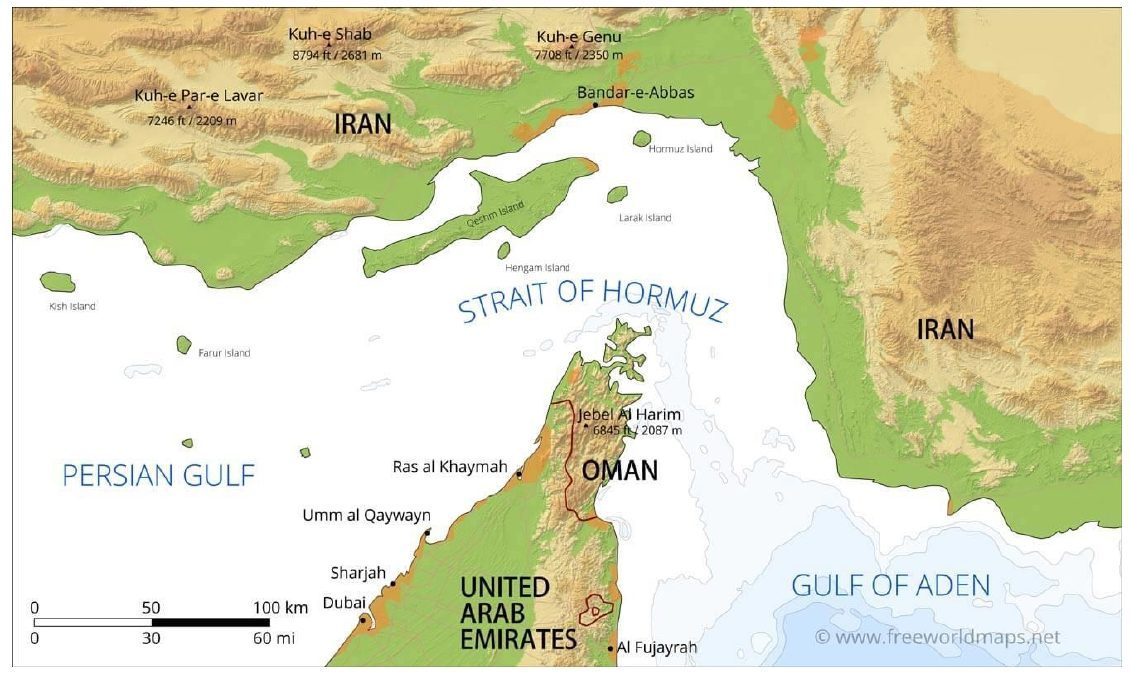
In Dubai in the UAE, the Jebel Ali Free Trade Zone has emerged as one of the most successful Free Trade Zones in the world. The Jebel Ali Free Trade Zone is established in the space between Jebel Ali Deep-Sea Port, Dubai International Airport and Al-Maktoum International Airport, while also integrated with the Dubai Metro Red Line. While exempting investors from corporate and personal income taxes, the Jebel Ali Free Trade Zone handles most of the world’s logistics and non-oil trade.
In the Caribbean, the Colón Free Trade Zone in Panama took advantage of the surrounding container ports and Panama’s strategic location to establish the Free Trade Zone proximate to the Panama Canal as the Atlantic entrance from the Caribbean Coast. The strategic location that aids seamless logistics flow from the other parts of the world through the Caribbean to Latin America, North America, South America and Europe has rendered the Colón Free Trade Zone the largest in the Western Hemisphere. Situated on 1,000 hectares, the Colón Free Trade Zone holds about 2,500 multinational corporations engaged in light assembling and distribution of different products and goods like jewellery, electronics, pharmaceuticals and textiles for most of the markets in Latin America, North America, South America, Asia and Europe. Over the past 40 years, it is not only the Colón Free Trade Zone that has become a success, but also several other Free Trade Zones in China. In China, Shenzhen which is located near northern Hong Kong in China’s Guangdong Province, was previously a fishing village for those living near the Pearl River Delta, Mirs Bay, the South China Sea and Lingdingyang Bay. However, because of its strategic location near Hong Kong, the Shenzhen area quickly emerged as a major city handling different forms of trade and tourism activities.
When the Chinese government responded to such opportunities by creating the Shenzhen Free Trade Zone, it immediately became the most successful Free Trade Zone. It became the gateway for foreign trade and investment, generating RMB 3.68 trillion per annum. Besides hosting several high-tech and innovation companies, Shenzhen Free Trade Zone introduced a special permit for a 5-day stay within the zone for tourism purposes. In Africa, Kenya’s Turkana region shares similar tourism features and values with Uganda’s Karamoja region and Kidepo National Park. For Rwanda’s Virunga National Park that crosses into the DRC and Uganda in the form of Mgahinga Gorilla National Park, the Greater Virunga Transboundary Collaboration was created to enhance the effective protection and management of the region’s flora and fauna.
On a common border, the Kenyans have the Maasai Mara National Reserve and the Tanzanians on the other side of the same border have the Serengeti National Park, but still the ordinary Africans are waiting for the time when the Free Trade Zone would be created to offer unique tourist permits that integrate tourism with the wider core business activities in the designated Free Trade Zones. In South Africa, the Kruger National Park crosses into Mozambique in the name of Limpopo National Park and then into Zimbabwe in the form of Gonarezhou National Park. In response to the needs of the three countries, the Greater Limpopo Transfrontier Park and the Giriyondo Tourist Access Facility have been created.
During Mugabe’s era, it is the same stretch of bushes that Emmerson Mnangagwa-the current Zimbabwean president, used to escape into Mozambique and then South Africa when cornered by Mugabe’s boys on 8 November 2017 (News24, 2017). Though Emmerson Mnangagwa is now the Zimbabwean president, Africans are still patiently waiting for the required Free Trade Zone that integrates leisure, entertainment and tourism with the core manufacturing business activities to be created in such a strategic region.
If it is not a Free Trade Zone which is being created, the government, depending on the situation, can establish Export Processing Zones (EPZs). Export Processing Zones connote an industrial estate which is established by the government to specifically encourage the manufacturing of goods for international markets. Special economic zoning is the future of Africa. And the future of Africa is special economic zoning. EPZs seek to improve export volumes as well as foreign exchange earnings from exports. In turn, the government also improves its balance of payments.
Compared with Free Trade Zones, which are often established just near facilities like airports, border crossing centres and seaports, Export Processing Zones are often established anywhere in the country that has abundant land and access to critical road, rail, ICT and energy infrastructure. While increasing export volumes, Export Processing Zones also often catalyze the economic growth of the country through direct and indirect ways. The direct ways arise from the surge in export volumes, foreign exchange earnings, employment creation, productivity boosts and economic growth. The indirect economic contributions arise from the demand for housing that may arise around the factories for the workers. This increases the population around the industrial parks to catalyze the increase in the demand for different services like healthcare, education, food, accommodation and other products and commercial services. It is from such changes that SEZs catalyse economic productivity and growth.
Export Processing Zones
Export Processing Zones are often characterized by features encompassing the establishment of manufacturing-focused factories, duty-free imports for all inputs, tax holidays, convenient customs and labour regulations and export-oriented production. Quite often, most Export Processing Zones focus on improving things for which the country has the best comparative advantage. Unless the manufacturers are using the industrial zones as the third-country points for just assembling some of the products, the best special economic zones for most African countries would be the Export Processing Zones that aim to improve agro-processing. Through such initiatives, most African governments would solve the problems of having to export the less value-creating and revenue-generating unfinished raw materials.
Besides improving export volumes and earnings, Export Processing Zones also aim to improve the pace of industrialization, as well as technology and skills transfer. They also introduce a range of different import-substitution industries. Most of the Special Economic Zones in Africa take the form of Export Processing Zones and not the Free Trade Zones that are often established near airports or seaports. In the world, it is the Katunayake Export Processing Zone, established by the Sri Lanka government in 1978, which has gained wide recognition as one of the most successful Export Processing Zones. Though it was an Export Processing Zone, the Katunayake Export Processing Zone was still erected near the airport and several rail, road and seaport facilities to facilitate the ease of movement into and out of the Export Processing Zone. Occupying 512 acres, the Katunayake Export Processing Zone holds factories and industries operating in different areas like electronics, apparel, rubber-based products and food and beverage manufacturing. It was accompanied by the establishment of state-of-the-art infrastructure, better roads, ICT support, 24/7 security, special telecom lines and direct special power lines as well as specialized government units for managing the industrial zones.
Though Export Processing Zones aim to improve exports while also improving industrialization, they still differ from the industrial parks or the industrial zones. Industrial parks are areas designated for the development of only manufacturing plants that improve the speed of the country’s manufacturing capabilities and industrialization. Industrial parks improve exports, but the major focus is usually on just the improvement of industrialization and manufacturing. In turn, the manufactured products are also sold locally, as the excess is exported to the other international markets. Most well-developed industrial parks are often characterized by the usage of shared infrastructure, reliable internal roads, ICT, electricity and water supplies.
Besides increasing exports, industrial zones often reduce manufacturing costs because of shared facilities and infrastructure. This improves the cost competitiveness of the firms operating from the industrial zones. The best successful case of an industrial park is the case of Suzhou Industrial Park in China. Suzhou Industrial Park is unique for the reason that it recognizes that the success of the industrial zone does not just arise from the establishment of factories in the zone and then promoting it to investors. Instead it also recognizes that in the surroundings, the industrial zones must be blended with good residential apartments, schools, hospitals, shopping malls, entertainment parks and other amenities. This increases the attractiveness of the industrial zones to attract the best investors.
In Africa, this contrasts with the cases where the usage of special economic zoning is assumed to be just the establishment of industrial zones in the middle of slums. It is often assumed in Africa that once the industrial zones are created, the investors will just come in because of tax holidays, exemptions from customs duties and free land. Even if the industrial zone is situated in the middle of slums with no proper access roads, electricity and water, it is often assumed in Africa that the investors will come in just because the economic zone is being called the industrial zone. Development of a successful industrial zone may require the creation of its own unique ancillary smart city or town having its own connected rail, roads, ICT, clean water, proper sanitation, residential apartments, an R&D hub or research and innovation centre, shopping malls and recreational facilities.
Manufacturing firms that come into the industrial zones are important global players that have seen the best in different global markets. For that reason, they are unlikely to come into the industrial zones that have frequent internet blackouts due to the increasing introduction of different smart factory concepts. Besides frequent power blackouts from Eskom, the Coega Special Economic Zone in Gqeberha in South Africa, is surrounded by some slums like Motherwell, Wells Estate and Markman that do not reflect well on Coega as an economic point for disruptive global business players’ operations (Chongsheng, 2024). Quite often, the players in the industrial zones are not prepared to deal with the uninhabitable surrounding environments. Players in the industrial zones are not prepared to deal with frequent power blackouts that are common in most African countries. Frequent labour complaints and riots paralyzing economic activities for months, like those that have occurred in the recent illegal immigration protests in South Africa or the election protests in Tanzania, are things that the foreign industrialists in the industrial zones are unprepared to deal with.
Countries exhibiting such symptoms often experience the quite rapid exodus of most industrialists from the designated industrial zones even if the industrial zones had offered free land. When Suzhou Industrial Park was established from the cooperation of China and Singapore in 1994, its management quickly recognized the importance of not just establishing the industrial zone, but also integrating the industrial zone with the other amenities. Integrating modern housing and apartments as well as international schools with international curricula, hospitals, shopping malls and other amenities, Suzhou Industrial Park quickly transformed from vast farmland into a modern industrial park.
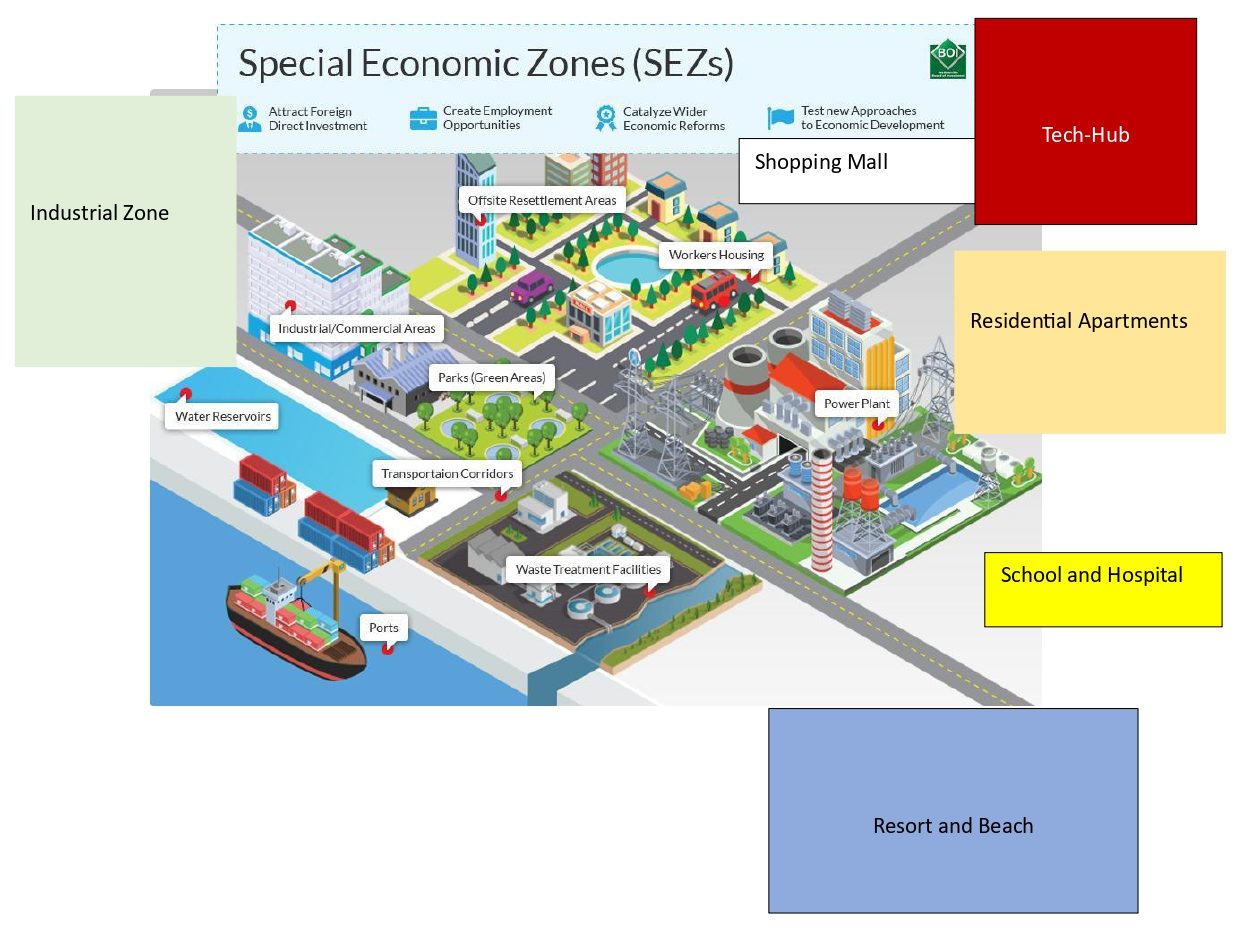
Figure 1: SEZs as Integrated with Other Amenities
Source: Okanga, B. (2026). SEZ (Special Economic Zoning): Redefining Africa’s New Economic Game. London: Elicitor.
It attracted top global manufacturers in the areas of biomedical technologies, artificial intelligence and nanotechnology. If special economic zoning is not taking the form of industrial parks, it can be in the form of Free Ports. Just like Free Trade Zones (FTZs), Free Ports are also industrial parks that are established near big seaports or airports for manufacturing enterprises to operate under special customs duties and permits. However, Free Ports are often much bigger and encourage heavy manufacturing as compared to Free Trade Zones, which just do light assembling and processing.
While established on very large areas of land, Free Ports often engage in large-scale, heavy-duty manufacturing not only for re-export, but also for the domestic market. Free Ports’ manufacturing activities are often integrated with various logistics-handling activities, finance, trade, warehousing, tourism, distribution and international shipping. Due to their larger nature, Free Ports often attract very big multinational corporations. The convergence of several disruptive multinational corporations influences the easy creation of the required regional economic hubs. If this occurs, it creates more employment opportunities, while also boosting economic productivity, export earnings, the balance of payments, and economic growth and development of the region.
The best case of a Free Port is depicted in the Port of Singapore case, which has emerged as the world’s major transshipment hub and maritime centre. Handling about 44.66 million containers in 2025, the Port of Singapore is not only integrated with the other highly automated terminals like Jurong, Tuas Mega Port and Pasir Panjang, but also linked with over 600 ports in 120 countries. The Port of Singapore is one of the radical inventions that revolutionized the Singaporean economy and economic growth. Realizing the values of special economic zoning as gleanable from the success stories of the Port of Singapore, the United Kingdom government created the Teesside Freeport as the biggest Free Port in the UK. Sitting on 4,500 acres, Teesside Freeport’s operations integrate with Teesport, the Port of Middlesbrough, Teesworks and the Port of Hartlepool. Teesside Freeport offers suspended import VAT, customs duty deferral, streamlined planning processes, a renewable energy hub and a manufacturing hub aimed at creating more than 18,000 jobs.
However, in contrast with the practices in the other countries, Australia does not use Free Ports or Free Trade Zones. Instead, the Australian government has created Section 79 Warehouses that operate near major shipping hubs and ports like Brisbane Port, Melbourne Port or Botany Port. Companies operating in these Section 79 Warehouses gain from tax and customs duty suspension. The businesses operating in the Section 79 Warehouses can also import, process, repackage, store and re-export products from their warehouses without paying customs duties. Compared with the other forms of special economic zoning, Science and Technology Parks are often created to attract different tech companies. They also aim to improve the integration and liaison between different tech companies as they work on different research and innovation projects.
The motive of establishing Science and Technology Parks is usually to improve research, innovation, technological advancements and commercialization of new technologies. Science and Technology Parks are characterized by systems that improve strong linkages between tech companies, universities and research agencies. The Technology Parks also often hold high-tech research laboratories, high-tech industries and incubation centres. Though the operators in the Science and Technology Parks can explore the other areas, most of the tech companies in the park often focus on research and innovation in areas like biotechnology, artificial intelligence, robotics, renewable energy, information technology and nanotechnology. The aims of most Science and Technology Parks are usually to improve technology transfer and skills development for the high-tech industries.
Besides inspiring innovation and inventions, Science Parks aim to improve the liaison between tech companies, government, research and innovation houses and industries to enhance the faster commercialization of new inventions and technologies. Established in 1951, Stanford Research Park is one of the best Science and Technology Parks in the United States. It brings together over 150 companies that aim to not only commercialize their different inventions, but also share and exchange views on the development of new innovations. It offers the technology platform where the companies operating in the park can easily find support from amongst the actors in the park using the principles of improved collaboration and information exchange and sharing within the park. Just like the Research Triangle Park in North Carolina and Kendall Square in Massachusetts, Stanford Research Park seeks to improve the collaboration between universities, researchers, inventors, industries and different tech companies in the high-tech areas like nanotechnology, artificial intelligence, biotechnology, renewable energy, advanced manufacturing and pharmaceuticals.
From these Science and Technology Parks, it was Stanford Research Park that Xerox used to invent the Ethernet and the Personal Computer Mouse that revolutionized the nature of the modern computing. While improving local-area networking, Ethernet created the digital foundation for the modern digital infrastructure. From the Research Triangle Park in North Carolina, scientists from RTI International developed Taxol, which emerged as one of the most widely adopted anti-cancer drugs and chemotherapy medications that revolutionized the field of oncology.
Again from the Stanford Research Park, Hewlett-Packard developed the first portable electronic calculators that displaced the early bulky computers, while also revolutionizing the entire game of scientific analysis and mathematical computations. While operating from the Research Triangle Park in North Carolina, IBM developed bar-code and UPC scanning systems that forever changed and improved the efficiency of logistics and inventory management as well as retail business management. These successful innovation stories insinuate how the creation of Science and Technology Parks can inspire the exploration of novel inventions. Even without capital, empirical facts from the Silicon Valley imply that research and technology parks inspire inventors to think, imagine and emerge with the best technology ideas. It offers the platform for just thinking.
Though Africa is yet to scale up the development of its Science and Technology Parks, some of the cases are depicted in Egypt’s Smart Village and Kigali Innovation City in Rwanda. Egypt’s Smart Village is created to offer corporate parks having well-developed fibre-optic networks, corporate headquarters and ministries. Because of its tax breaks and state-of-the-art infrastructure, Egypt’s Smart Village has been able to quickly attract a significant number of foreign direct investments. Besides the Uganda Kiira Motors case, new Science and Technology Parks are sprouting up in different parts of Africa.
Kenya has established its Konza Technopolis or its Silicon Savannah, while Rwanda has also created its Kigali Innovation City that hosts a range of different universities, ICT and biotechnology companies with the motive of inspiring inventions that improve economic productivity, innovation and export earnings. Just like Rwanda, Mozambique is also doing the same, while the DRC, South Sudan, Malawi and the Central African Republic remain spectators. In Africa, a good story of how the collaboration between universities, research agencies, government and development agencies can introduce new inventions offering the previously unimagined values is reflected in Uganda’s Kiira Motors’ story.
Kiira Motors was purely an academic innovation idea that emerged from the fuzzy interface between Makerere University students and the Ugandan government. The arrangement was not the kind of the Science and Technology Park arrangement, but it still led to the invention of a series of electric and solar buses. Having already signed a contract for the supply of 450 electric buses to South Africa, Kiira Motors’ story implies that Africa can be able to unlock the best from its potential. If more Science and Technology Parks are created to develop and nurture not only electric car technology development, but also the other unexplored novel technologies, Africa may be able to discover something that it did not previously know about its potential.
Recognizing the values of novel science and technology inventions, the Mozambican government has created Maluana Science and Technology Park, while Nigeria created its Lion Science Park at the University of Nigeria and Angola introduced its Luanda Science and Technology Park. In other words, several African countries are increasingly recognizing the creation of Science and Technology Parks as the best technology platforms where highly talented Africans can be offered the opportunities to explore their potential while also creating and delivering the desired tangible values to society.
Science and Technology Parks are increasingly being recognized as technology platforms through which new and old technology companies can interface with each other and with the government and development agencies to research, explore and introduce novel technological concepts that transform the socio-economic systems of the modern societies for the better. Other economic, policy and political variables were important, but it is still industrial zoning and the establishment of Science and Technology Parks that transformed the Japanese and Chinese economies. Recognizing the values of Science and Technology Parks and their role in minimizing overcrowding of cities, Japan created Tsukuba Science City. Tsukuba Science City was not for foreign direct investments’ attraction, but as the platform for inspiring the success of local innovations, inventions and commercialization of all the emerging new inventions. For that reason, Tsukuba Science City brought together several public research institutions, private researchers and innovators, its National Institute for Advanced Industrial Science and Technology, the Japan Aerospace Exploration Agency, universities and over 20,000 researchers and technology innovation companies that were selected and taken into the Science and Technology Park.
Instead of offering tax exemptions for all the emerging technology startups, the creation of Science and Technology Parks provides the opportunities for the government to select and take some of its best local technology talents into the Science and Technology Park. In China, Zhongguancun Science Park which has emerged as the modern top-of-the-range technology park, was previously known as “Electronics Street,” where different emerging technology firms and inventors fidgeted with the development of different technology concepts. When the Chinese government intervened to restructure Electronics Street into a more structured Science and Technology Park, Zhongguancun Science Park transformed in a way that played more revolutionary economic roles that reshaped the contemporary Chinese economy.
The high level of collaboration between technology firms, universities, product developers, scientists and the government that offered different forms of financial support in terms of interest-free and deferred-payment loans, not only scaled up, but also speeded up the pace of innovation. It improved lead time, which is the time between innovation and the time that the final results are delivered to the market. This improved most Chinese companies’ first-mover advantage. It also spurred economic productivity and growth. Combined with the fact that China has 179 Science and Technology Parks, it is not questionable that China’s economy became the leading economic revolutionary force of the world. Insights from the Nebraska Food Innovation Center in the United States signify that this enables the government to identify and nurture a set of its best technology talents and scientists that can also in turn inspire others to create novel socio-economic values that revolutionize the overall socio-economic terrain of the country.
In contrast with the Science and Technology Parks, the Eco-Industrial Parks are often created to support and promote businesses that develop and use good environmentally sustainable business practices. In effect, the businesses permitted into the Eco-Industrial Parks often deal in waste recycling, renewable energy, green manufacturing and water recycling businesses. For these businesses to contribute and enhance environmentally sustainable business practices, the government often offers tax exemptions, customs duty exemptions for imported raw materials and other government financial support for the businesses engaged in the development of eco-friendly enterprises. By operating from the Eco-Industrial Parks, the businesses not only gain from information sharing and exchange, but also from the invention of technologies that improve operational efficiency.
The concept of Eco-Industrial Parks emerged from the constant quests of different developed-country governments to mitigate the risks of global warming. To ensure balanced development between the developed and the underdeveloped regions, Enterprise Zones are often part of the strategy where the government uses special economic zoning to establish industries in the underdeveloped geographical areas of the country. To spur improved development like in the underdeveloped Turkana areas in Kenya, Nigeria’s underdeveloped areas like Yobe, Zamfara, Kebbi and Jigawa, or in the underdeveloped areas in the Northern Cape of South Africa or even in the areas like Nakasongola, Karamoja, Kitgum or Masindi in Uganda, the government can use Enterprise Zones. Through Enterprise Zone establishment, the government creates a new industrial establishment and the related residential systems that catalyze the development of the areas.
To encourage investment in the Enterprise Zones established in different underdeveloped areas, the government often offers tax incentives, investment support and better business regulations and policies. However, unless the underdeveloped areas offer a lot of other unexploited opportunities, it can sometimes be difficult to attract the desired number of investors into the Enterprise Zones established in the underdeveloped areas of the country. But if successful, Enterprise Zones are often the best development economics instruments for enhancing balanced development, equity, resource redistribution and decentralized development across the country. When the UK government wanted to improve the economic development in its underdeveloped areas, it created about 29 Enterprise Zones in the underdeveloped areas like the Food Enterprise Zone in Worcestershire, Newquay AeroHub in Cornwall and the other Food Enterprise Zone in Hereford. To stimulate the economic growth of the underdeveloped areas, Enterprise Zones need not necessarily be for the core manufacturing industries. Instead they can even be established for special agricultural production like dairy cattle production or fish farming and processing.
Enterprise zoning just offers the structured economic system for supporting the businesses in the underdeveloped areas to also grow and contribute to national development goals. To enhance development equity, the United States government introduced different Enterprise Zones in most of its underdeveloped areas like Nebraska, Colorado, Illinois and Mississippi. However, to deal with the problems of having to make Special Economic Zones a success, most of the governments are increasingly coming up with the concept of Comprehensive Special Economic Zoning. Using Comprehensive Special Economic Zoning, the creation of the industrial park is accompanied by a partnership with housing developers to construct residential apartments, office parks, sports facilities, entertainment facilities and other essential amenities. As the case of the Norfolk Food Enterprise Park in Norwich implies, the idea is to make the economic zone have some good level of economic attractiveness and nearby markets, so that investors can easily develop an interest in investing in the designated Special Economic Zones.
To create Special Economic Zones that turn out to become more successful, insights from the Strategic Framework in Figure 2 suggest that the government will need to first start by doing analysis and developing the SEZs’ policy. This must be accompanied by Site Analysis and Feasibility Studies. It is from site analysis and feasibility studies that the government can be able to make a decision on the SEZ to use or not to use. Depending on whether the government aims to develop repackaging zones, cotton, coffee or cassava agricultural production zones, dairy production zones, beef production zones, manufacturing hubs, technology development parks or idea incubation centres, some of the Special Economic Zones that can be used encompass Free Trade Zones (FTZs), Export Processing Zones (EPZs), Industrial Parks (Industrial Zones), Free Ports, Science and Technology Parks, Eco-Industrial Parks, Enterprise Zones and Comprehensive Special Economic Zones.
Irrespective of the kind of the selected Special Economic Zone, it is essential to put in place a system for effective management of the SEZs’ incentives and benefits administration and SEZs’ investment promotion. As different activities unfold in the designated SEZs, the measurement of SEZs’ success/failure must be accomplished using the appropriate metrics or indicators. Some of the metrics or indicators may examine:
- Number of investors joining the SEZs in a given period of time.
- Revenue flowing from each SEZ.
- GDP’s contribution from each SEZ.
- Employment creation.
- Export earnings.
- Government revenue.
- Infrastructure conditions in SEZs.
Such analysis aids the assessment of the areas that need to be improved to minimize the risks of SEZs’ failure.
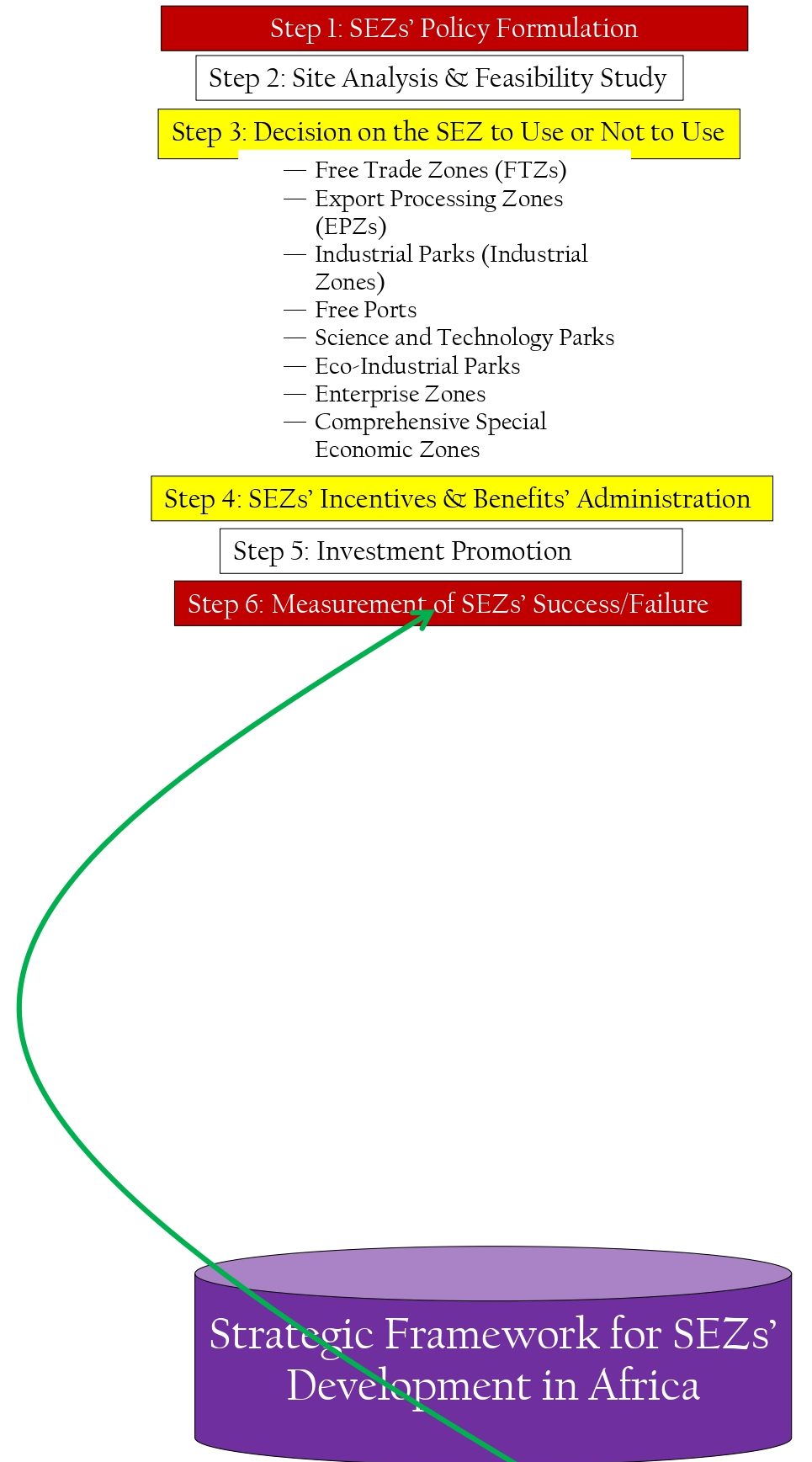
Figure 2: Strategic Framework for SEZs’ Development in Africa
Source: Okanga, B. (2026). SEZ (Special Economic Zoning): Redefining Africa’s New Economic Game. London: Elicitor.
However, for special economic zoning to catalyze economic growth and development, African governments will need to focus on first attracting and retaining small-scale investors if the special economic zone is failing to attract the desired large-scale investors.
Small-Scale Investors as SEZs’ Promoters
Going into the future, special economic zoning will remain the stimulant of Africa’s economic growth for a very long time. But it will not be the kinds of special economic zones that attract big foreign direct investments. Instead it will be the kinds of special economic zones that will aim to attract medium-scale investors. Attraction of medium-scale investors will create the investment conditions that will stimulate the interests of the other lucrative big foreign direct investors to consider investing in the designated special economic zones. Even if the special benefits offered by different special economic zones in Africa are often quite unique for any foreign investors to resist, most of the foreign investors are often still hesitant to invest in the relatively unknown foreign markets. For most foreign direct investors, the costs of going into the unknown foreign markets far exceed simple benefits like tax exemptions or the offer of free land.
Costs of the acquisition and relocation of new equipment are often disruptive. Foreign direct investment in new markets comes with disruptive change. Even when the foreign direct investor is to consider investing in a particular special economic zone, the costs of disrupting the existing business operations are often deterring. For that reason, most foreign direct investors will only consider investing in the designated special economic zones not because the special economic zones are offering tax exemptions and free land. No. It is instead if the investment in the designated special economic zones comes with the improved access to the other larger regional markets that the foreign direct investors will consider doing the business. If the foreign direct investment into a particular special economic zone comes with the access to the other unrelated business opportunities, then foreign direct investors would consider the decision to invest. Few foreign direct investors do not so. But in most instances, most foreign direct investors invest in a particular SEZ for the sake of benefiting from the other economic benefits. Access to other raw materials in the same region, access to new markets and access to new business opportunities are all part of the economic clustering that improves the attractiveness of the designated special economic zones. Hence, if special economic zones are being marketed, it is not only the benefits in the zones that need to be marketed.
Shenzhen Free Trade Zone in China became very successful not because of the benefits in the zone, but because of its direct linkage with Hong Kong. Most of the time, most of the special economic zones across the world are also offering such economic packages. Hence, the African government’s capability to introduce additional clusters to the benefits already outlined in the designated SEZs will influence the investors’ decision to invest or not to invest (Young, 2024). That explains why most of special economic zones in the United Arab Emirates’ major cities like Abu Dhabi and Dubai are easily taken up because Dubai is one of the major strategic economic hubs of the world. A foreign direct investor establishing a plant in a Dubai-based special economic zone is able to easily access the other Middle East markets and even the other global markets. It is from Dubai that most of the businesses and consumers around the world source their different products.
In the African context, a foreign direct investor entering the special economic zone in Kinshasa needs to be able to easily access the other business opportunities in Nairobi, Kampala, Dar es Salaam, Kigali and the oil-rich South Sudan without the hurdles of having to again comply with this or that regulation. Those marketing the special economic zones situated in Kampala in Uganda, will need to tell the investor not only the economic benefits in the designated special economic zones, but also the clusters of the other economic benefits that the investment generates. How will investing in the SEZs in Nigeria enable the foreign direct investor to gain from the opportunities in Senegal, Ivory Coast, Ghana or Cameroon? How will investing in the SEZs in Tanzania enable the investing foreign direct investors to gain from the economic benefits and opportunities in Uganda, DRC, Kenya, Zambia or Malawi? How will investing in Rwanda enable the foreign direct investor to gain from the other economic benefits in the DRC, Uganda or South Sudan? Hence, whether African countries like it or not, somehow SEZs’ marketing in Africa will have to be an integrated exercise. For foreign direct investments, it is no longer the question of “we are trying to woo foreign direct investors to invest in our country”. No. It is instead now a regional thing.
African countries like Burundi that do not have such capabilities and advantages will have to first start the SEZs game by opening up the investment doors for the ordinary small-scale investors. Around the world, there are multitudes of small-scale investors moving around with $50,000, $100,000 or $200,000 in their pockets. These are the small-scale foreign direct investors and they are often the most ignored forms of foreign direct investors. When governments in most of the developing countries talk about attracting foreign direct investors into special economic zones, they are not talking about the small-scale investors moving around the world with $50,000, $100,000, $200,000 or even nothing in their pockets, but just business ideas. Instead they are talking about big businesses and the disruptive and revolutionary ones earning $500 million in total revenue per annum. Unfortunately, such foreign direct investors are never there. They are quite scarce and only take interest in a country for exceptional reasons. Hence, the success of SEZs as the stimulants of economic growth in Africa will arise not from targeting large-scale foreign direct investors, but by focusing on the attraction of multitudes of small-scale foreign direct investors. Unlike the large-scale investors that are difficult to get, there are often multitudes of small-scale investors that are willing and desperate to invest in the designated special economic zones. However, they are often not the target.
Targeting several small-scale investors will enable the developing countries to accumulate multitudes of small-scale business operators that in turn transform the economy. When Vietnam could not get enough big foreign direct investors to revitalize its economy, it instead drafted the DFI Strategy that targeted the not-so-big foreign investors. This strategy enabled Vietnam to attract a lot of medium-scale foreign direct investors from Japan and China to create the economic foundation that revitalized its textile and electronics manufacturing industries (Nguyen, 2026a). The Vietnamese government recognized that the flow of a few thousand dollars from each of the small-scale foreign direct investment would significantly change and improve the balance of payments.
Successes of small-scale foreign investors in the Chinese market were also used as the basis for marketing and promoting the increasing attractiveness of the Vietnamese market. With time, the Vietnamese government abandoned the focus on small-scale foreign direct investors as the influx of big foreign direct investors increased (Nguyen, 2026b). Yet as costs in China started increasing vis-à-vis the increasing tariffs and protectionism against the Chinese products in foreign markets like the United States and the European Union, Vietnam had already built the economic powerhouse that enabled it to absorb some of the big Chinese manufacturers who were opting to manufacture from Vietnam and then export to the United States and bypass the restrictions in the U.S. market. Gradually, the targeting of smaller FDIs repositioned the Vietnamese economy as one of the major manufacturing hubs in Asia. The Vietnamese government recognized that though the smaller FDIs were small, they still integrated into the bigger supply chains of the bigger Vietnamese companies.
Through such integration, the local Vietnamese businesses were able to learn and adopt some of the best skills and technology. This enabled the Vietnamese government to develop and build a more vibrant textile and electronics manufacturing industry. Just like Vietnam, Estonia also had to adopt the DFI policy that encourages the attraction of smaller technology start-ups from the other European countries. Even without being in Estonia, the government introduced the online company registration system, e-residency visa, Start-up Visa, zero corporate income tax and a range of other business incentives (Sinani & Meyer, 2004). In Africa, it is Rwanda which has been quite innovative in its FDI strategy to remove the requirement for high minimum capital investments for so many sectors, as Botswana has adopted the FDI strategy encouraging investment from small FDIs in the tourism sector and services that support mining.
Faced with the challenges of how to transform its textile manufacturing sector, Mauritius adopted the FDI strategy encouraging investment from smaller FDIs in its textile manufacturing sector. This strategy enabled Mauritius to transform its manufacturing sector to spur the increment of export earnings (Sannegadu et al., 2021). Usage of several small-scale foreign direct investors will not immediately transform the economy, but will build and improve the positive rating of the economy. It will create the brand image that improves the marketing and promotion of the SEZs located in that country. When foreign direct investors aim to invest not even in a SEZ, but in a particular country, they will not hear what the government officials are telling them. Instead they talk and listen to what the other business players in that country are saying.
No matter the scale of operations, small, medium-scale or large, it is often the businesses already operating in that market that become the unappointed business ambassadors for that country. At whatever level, businesses will always interact with each other, talk and discuss about the investment conditions and opportunities in different markets. Through such interactions, foreign direct investors will always do their research and make up their minds. By the time they begin talking and discussing investment opportunities with the host country governments, they will have already made up their minds. That explains why even if there are uncertainties in countries like Sudan or South Sudan, some foreign direct investors will still go and invest there because of the opportunities that they will have spotted. Hence, improving the competitiveness of the designated SEZs may require the investment in the conditions that encourage small- and medium-scale foreign direct investors to thrive. If the small- and medium-scale foreign direct investors are thriving, it becomes easier for the big disruptive foreign business players to confidently come in.
Unfortunately, most of the African countries often focus on the big foreign direct investors with the hope of bringing in millions of dollars into the country at the same time. By targeting the small-scale foreign direct investors that have just $50,000, $100,000 or $200,000 in their pockets, some African governments forget that they can be able to attract and accumulate a lot of foreign exchange. They forget that they can also be able to accumulate the desired millions of dollars. By targeting just the big foreign direct investors and ignoring the small players, most African governments forget that when Elon Musk—the current richest person in the world—arrived in the United States, he had only $2,000, a suitcase of books and a backpack.
But a few years later, using even the money that he borrowed from the U.S venture capitalists, the later success stories imply that sometimes foreign direct investors may not need to show financial capabilities, but just business ideas to implement what they aim to implement. Unfortunately, in his native Africa, some governments have been asking for $5 million as the requirement for a business permit. Besides Elon Musk’s case, most African governments forget that when Jan Koum—the WhatsApp founder—arrived in the United States from Ukraine, he had nothing. At the age of 16, he worked as a house cleaner while attending college only to emerge with the WhatsApp business concept from which he earned $19 billion from nowhere after selling it to Meta (Facebook). Arriving in the United States from Turkey, Hamdi Ulukaya—the Chobani Yogurt founder—had no money but just the yogurt manufacturing plant’s idea.
The idea was later funded using loan money borrowed from the American financial institutions to develop Chobani into one of the most revolutionary yogurt manufacturing firms. If that happens in Africa, even the best thinkers will ask questions on “How can an investor come and use our money to start a business? How can a foreign investor come without money? A foreign investor is supposed to bring in money. And if you don’t have money, you cannot be a foreign investor”. Likewise, Shahid Khan came into the United States from Pakistan with just $500, only to do odd jobs that aided the purchase of the Jacksonville Jaguars. But here in Africa where a full truck of sweet potatoes is sold at only $6, one is saying $5 million is the requirement for a business permit even for an ordinary African business in an African market. As we wait for the second coming of Jesus Christ, Jesus needs to come down briefly before waiting to come back for the second time.
Do Won Chang—the founder of Forever 21, a clothing store—came from South Korea into the United States without money only to generate and use the American money to start Forever 21. If that was in Africa, questions would be asked about how a foreign investor could come all the way from South Korea without money to start doing just the fashion business which should be done by the local African population. In other words, most Africans are still asking questions about whether it is not such thinking which has caused the African economy to lag behind. In some African markets, local African or foreign investors have been chased away from their businesses after having their merchandise burned and destroyed for doing businesses that the same black Africans feel that they shouldn’t be doing in a free African market economy.
In Africa, no African business should be restricted or prevented from doing any legal business that he or she desires because it is the success of the African small businesses that will attract the much-sought large foreign direct investors. If the local African businesses are happy and thriving, this also markets and promotes the African market to the rest of the world. African businesses must first be able to thrive, succeed and tell their success stories before foreign direct investors can pick an interest. Just as Aliko Dangote—the Nigerian business magnate— says, Africans will need to first tell their successful business stories before the foreign investors can pick an interest in the African markets. India and China’s economic growth only gained momentum and interest from the foreign direct investors after it became indisputably clear that the local ordinary Chinese and Indian businessmen in China and India respectively were making money. When it became apparent that the ordinary local Chinese and Indian businesses were making money from the local markets, foreign direct investors came rushing and were willing to meet any conditions in order to also make money in China or India. With the growing population, the constantly improving infrastructure, the improving standard and condition of living and political stability, Africa is reaching that point.
Citation: Okanga, B. (2026). SEZ (Special Economic Zoning): Redefining Africa’s New Economic Game. London: Elicitor.
Further readings
Alexander-Hill, W. (2026). A Chinese legacy: Special economic zones with Eurasian characteristics. Forbes. https://www.forbes.com/sites/wesleyhill/2026/06/17/a-chinese-legacy-special-economic-zones-with-eurasian-characteristics/
Alsharif, A. A., & Brenner, T. (2026). Special economic zones and innovation in developing and emerging economies: A cross-country analysis. Journal of Evolutionary Economics, 36, 30. https://doi.org/10.1007/s00191-026-00949-6
Asiimwe, S. (2022). Impacts of special economic zones on Uganda’s economic performance. Private Sector Foundation Uganda. https://www.theigc.org/sites/default/files/2022/09/Asiimwe_Impacts-of-special-economic-zones-on-Ugandas-economic-performance.pdf
Chongsheng, Y. (2024). SEZ development in South Africa: A case study of Coega SEZ. In Countries and Regions: Dynamic Interconnectivity (pp. 303–338). Springer Nature Singapore.
Dorozynski, T., & Świerkocki, J. (2023a). Have special economic zones contributed to regional disparities in Poland? Acta Universitatis Lodziensis. Folia Sociologica, 73–87. https://www.ceeol.com/search/article-detail?id=1198593
Fagerberg, J., Srholec, M., & Verspagen, B. (2009). Innovation and economic development (Working Paper No. 32). United Nations University–MERIT, Maastricht. https://doi.org/10.1016/S0169-7218(10)02004-6
Huld, A. (2026). China’s special economic zones explained: Which one is right for your business? China Briefing. https://www.china-briefing.com/news/chinas-economic-zones/
Hussinger, K., & Palladini, L. (2026). Do China’s special economic zones increase incentives to invest in R&D? Industry and Innovation, 33(5), 539–565. https://doi.org/10.1080/13662716.2025.2503283
Michalek, J. (2023). Analysis of the Impact of Special Economic Zones on Macroeconomic Indicators in Poland. Forum Scientiae Oeconomia, 11(3), 69–86. https://doi.org/10.23762/FSO_VOL11_NO3_4
News24. (2017). Mnangagwa reveals 30km walk while escaping Mugabe’s ‘hunting dogs’. Johannesburg: News24. https://www.news24.com/africa/zimbabwe/mnangagwa-reveals-30km-walk-while-escaping-mugabes-hunting-dogs-20171222\
Nguyen, M. T. (2026b). The impact of foreign direct investment on local economic growth in Vietnam: A case study of Thai Nguyen province (1993–2024). Edelweiss Applied Science and Technology, 10(4), 501–511.
Nguyen, P. T. (2026a). Poverty dynamics under changing measurement frameworks: The role of foreign direct investment in Vietnam. International Journal of Financial Studies, 14(3), 52. https://doi.org/10.3390/ijfs14030052
Sannegadu, R., Henrico, A., & van Staden, L. (2021). Factors influencing the internationalization of small-sized textile firms in a Small Island Developing State: A Mauritian study. Island Studies Journal, 16(2), 298–322.
Sinani, E., & Meyer, K. E. (2004). Spillovers of technology transfer from FDI: The case of Estonia. Journal of Comparative Economics, 32(3), 445–466.
Tao, Y., Yuan, Y., & Meng, L. (2016). Chinese special economic zones: Lessons for Africa. African Development Bank. Africa Economic Brief. https://www.afdb.org/sites/default/files/documents/publications/africa_economic_brief_-_chinese_special_economic_zones-lessons_for_africa.pdf
Young, J. (2024). Why special economic zones succeed (and why some fail). Global Africa Network. https://www.globalafricanetwork.com/featured/why-special-economic-zones-succeed-and-why-some-fail/
Zeng, D. Z. (2021). The past, present, and future of special economic zones and their impact. Journal of International Economic Law. Advance online publication. https://doi.org/10.1093/jiel/jgab014