By
Pule Aaron Motsoetla, Prof. JP van der Westhuizen and Dr J Wesonga
Faculty of Management Sciences; Vaal University of Technology, South Africa
Published, 29 November 2025
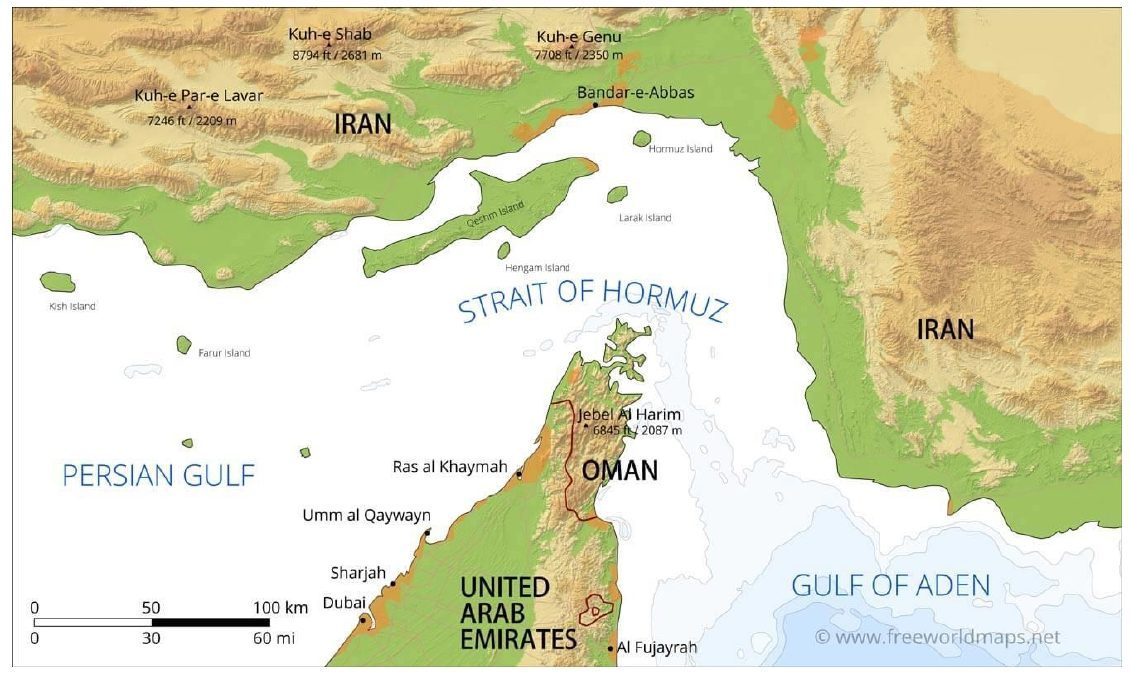
Significant strides have been achieved in the quest to support the growth of African businesses. But still, a lot of policy practices, whether governmental or non-governmental, are still the major impediments of business development and growth in Africa. Yet as Africa relaxes on the need for the prioritization of business support, global economic trends indicate the problems of Africa will not arise from Israel’s strikes on Iran or the failure of Russia to defeat Ukraine. Instead, the problems of Africa will arise from its own failure. Not even failure because it cannot fail. But reluctance to conceptualize and introduce novel economic policies that support its surging population growth (United Nations Population Fund, 2025). Compared to the other regions of the world, it is Africa which is expected to experience the fastest population growth at least from 2025 to 2100. The global population has so far reached 8.2 Billion (8,231,613,070) in 2025. Of these 8.2 billion people, 1.48 billion are living in Africa. For the past 25 years, Africa and especially sub-Saharan Africa that includes mainly countries in the East, Southern and West Africa, have been experiencing spiraling population growth. And it is still expected to experience significant population growth at least up to 2100. By the year 2000, which is 25 years ago, the United Nations Population Fund (UNFPA) (2025) indicates Africa to have had a population of 831 million Africans. This population increased to 1.48 billion in 2025. And it is expected to reach 2.5 billion by 2050 and 3.8 billion of the world’s 10.2 billion population by 2100. Leave alone the periods between 2050 and 2100, in the periods between 2025–2030, 2030–2035 and 2035–2050, Africa must brace itself for a surging rate of unemployment, poverty, conflicts and youth violence and gangsterism (Roberts, 2017). In all these, if you don’t like migration, it is better to book a space on the much-hyped Elon Musk’s Starship straight to another planet, Mars or Jupiter. Because right here on Earth, and especially in Africa, economic hardship instigated by population explosion will fuel migration from relatively poor African countries and even other countries from Asia in which resources are exhausted to the regions or countries perceived as economically better off. Combined with the failure to resolve the increasingly uninhabitable hotspots of political conflict like South Sudan, Sudan, Eastern Democratic Republic of Congo and the Sahel region that includes Central African Republic, Burkina Faso, Mali, Cameroon and Niger, African countries perceived as well off or relatively stable must put in place the required resources, systems and structures to deal with the increasing migration pressure (United Nations Population Fund, 2025).
Compounded by religious extremism’s instigated violence causing the displacement of multitudes of communities in Somalia and North Eastern Nigeria, African countries that pride themselves as doing well and relatively stable must brace themselves to deal with a spate of all forms of forced, illegal, voluntary or economic hardship or poverty-instigated migrations. So far in West Africa, it is Cote d’Ivoire or Ivory Coast that holds the largest immigrant population of 2.5 million, which is 9.7% of its 31.17 million population. Nigeria takes the second position with 1.3 million immigrants’ population. The Gambia takes about 215,406 immigrants. In West Africa, most immigrants into the other West African countries are drawn mainly from the relatively unstable countries like Mali, Guinea and Burkina Faso. Given the turbulence in South Sudan, Sudan, Eastern DRC and Somalia, Uganda hosts the largest immigrant population of 1.7 million. Ethiopia follows by hosting 1.1 million immigrants. While also sharing the same position with Ethiopia, Kenya hosts 1.1 million immigrants. In Southern Africa, it is South Africa that hosts the largest population of 2.9 million documented immigrants, though there are also thousands of undocumented immigrants. DRC takes the second place with 952,871 immigrants. Angola takes the third position with 656,434 immigrants. These increasing patterns of intra-Africa migration indicate the quest of the surging African population to re-organise itself to adapt to economic pressure and hard conditions of living. Unless African governments are able to analyse and re-modify their approaches for dealing with these issues, the undesirable consequences of this surging Africa’s population will soon be realized in the surging scale and spate of deadly youth violence, crimes and conflicts.
These threats that are rendering Africa’s population more vulnerable are reflected in the August 2024 Gen Z’s protests that almost ended President Ruto’s Government. There were other peaceful means of settling some of the undesirable stipulations in the 2024 Finance Bill. However, the pre-existing dissatisfactions of the youth who feel that the government is “doing nothing” to address their needs quickly created the conditions that turned the Gen Z protests into a more deadly riot. In South Africa, the stronger belief by the local youth that the increasing immigration into South Africa is the cause of unemployment and poverty has led to the creation of Operation Dudula, as a xenophobic organisation that seeks to take the law into their hands by directly hunting and attacking foreigners. Also preoccupied with the thinking that “the government is not doing much to respond to their needs”, the recent Tanzanian election also easily spiralled into violence instigated by youth-driven protests. Even if the youths could somehow be right, the solution to the surging African youth population will not be solved by protests and change of governments. Without investing in industrialization to create more jobs for the increasing youth population, even the new governments created by the successful African youth revolution will still be dislodged and overthrown by the other new youth-led revolutions. As criminality increases because of the surging African youth population, some of the approaches for dealing with such issues may not just require increasing investment in community policing and law enforcement. It may not even require increasing investment in education as most African politicians often reluctantly say. Instead, effective response to the surging population will require increasing the investment in business development as part of the proactive strategies for dealing with the spiraling African population growth. Before even the conditions get out of hand, governments across Africa will have to increase investments in small and medium-scale business development. Of course, not all the created new businesses will be successful, but still support for the creation of small and medium-scale business development will improve the scale of self-employment amongst the youths. Psychologically, it will deal with the problems of hopelessness and keep the youths busy.
But the focus of governmental support to small businesses should not just be about creating small businesses that keep the youth busy. It should seek to create multitudes of small and medium-scale businesses that grow to have real impacts in the medium and long run to create employment opportunities for other youths, while also aiding the generation of the required government revenues. Dealing with the surging youth population will no longer just require symbolic support or tokenism to impress a particular political support base. Instead, it will require carefully conceptualized and planned approaches for dealing with youth unemployment, economic hardships, poverty and destitution like it is a problem that will swallow Africa if it is not addressed. Unfortunately, even as the growing youth population is increasingly becoming a problem, most governments are still acting as usual. This is not only common with the existing governments. But even with the opposition like Zambia’s Hakainde Hichilema, who while using his UPND (United Party for National Development), came in promising magic for youth unemployment, only to start exhibiting weaknesses and failure, a few months after winning the elections and taking over government (Gondwe, 2025). They are still acting as if things will solve themselves by themselves. There is a wrong assumption that things will always stay as they are and somehow get to organically solve themselves without governmental interventions. Instead of discerning the best ways through which youths can be engaged in various economic and income-generating projects, some government officials still think it is just usage of deceptive rhetorics like “we shall endeavour to create employment for the youths”, without actually doing so or being seen to be doing so, that will address the modern economic dynamics in the constantly exploding Africa’s population growth. Using the same and the same education system that has failed, most African governments, and even opposition figures are often heard repeating themselves, like “we shall increase investment in education to skill our people” or “we have allocated enough budget for bursaries to enable our children attain the best education.” Quite often, the population is swerved by such rhetorics, but still education that has consistently failed to achieve the best for Africa cannot be the best education. Education that has left Africans lost in the wilderness as China and India thrived from converting nothing into billion US Dollars’ worth of something cannot be the best. Tackling the modern surging economic hardship, unemployment and poverty problems of Africa requires the complete overhaul of the current education system. It requires the complete overhaul of the education system by not copying and pasting concepts from the other countries into the African education system. It does not require education overhaul by removing and replacing the old theoretical education system with another version of theoretical education disguised as a radical curriculum change. Instead, as part of the quests of creating a vibrant African business environment that encourages self-dreaming, soul-searching, talent discovery and conversion of dreams into realities that create self-employment, overhauling the current education system will require evaluating the current African problems for African governments to emerge with the African education system that solves African problems in the African way. Instead of copying and pasting concepts from the other countries or continents, it requires careful analysis of how the existing African economic, political and social problems can be designed using the uniquely designed African education system.
From as early as nursery, African education system ought to have children exposed to an array of practical problem-solving techniques. As the children advance through primary and later secondary education system, it is only the African education system that will take out theories and focus on practicals that will win. The winning African education system is the African education system that will recognise that to become a vehicle mechanic, a child needs to spend more years in the vehicle repairing garage than in the laboratory doing mathematics, physics and chemistry calculations. With the increasing advancement of artificial intelligence, deep learning and machine learning technologies, the winning African education will be the African education that will recognise that to become a good doctor or scientist, during early years, children need to be exposed to a lot of computerized human organs’ simulations as compared to spending time reading some almost irrelevant voluminous biology, physics and chemistry textbooks. To become a civil engineer specializing in the construction of houses, roads or bridges, the winners in the African education system will only be those recognising that a child needs to spend more practical time at the construction sites than in classrooms calculating complex mathematical and physics issues that may even never be applied in real-world situations. It is the African education system that will start its child education with practicals and finish with theories in the later stages of secondary and university education that will win. The day Africa will recognise that William Armstrong, the inventor of the modern revolutionary hydroelectric power, was a lawyer is the day that they will stop going to classroom to study anything of interest. Though forced by his father to go through formal education and become a solicitor and then barrister, William Armstrong spent most of his early years in his future father-in-law’s metal welding and fabrication workshop. With a keen interest in mechanical and electrical engineering work, William Armstrong would take a lot of time off legal practice to explore various technical workshop-related activities (Plester, 2024). It was during this curious exploration that he tumbled upon the idea for an electric dynamo. With hydroelectric power concept emerging from William Armstrong, a lawyer and someone who has never sat in any physics or electrical engineering class, to become a more revolutionary concept, it’s disappointing that Africa still thinks inventions will come from wasting time calculating and passing some complex mathematics and physics calculations during exams. Usage of 100% practical education enables the education system to create values as the candidate pursues and acquires new knowledge. At an early stage, it eliminates uncertainties, improves hope and enables one to realize the values of education or the profession being pursued. It renders the education system interesting and even self-financing.
In turn, all these make education meaningful to eradicate risks of defection that lead to idleness, hopelessness, unemployment and poverty. Even if usage of such practical education system requires the change and transformation of the existing education infrastructure, governments would still just make a once-off investment. Why would the government need to give handouts to a candidate making and selling furniture as he or she explores the best ways of making the best furniture? Why would the government give handouts to an emerging veterinary doctor who is learning by visiting and working in various model farms? African education system needs to recognise that there is a complete disconnect between the taught theories and the actual real-world processes of vehicle manufacturing, construction, medical operations or agricultural production. The earlier African education system realizes that, the better. It is better for motivating the change of education system to encourage specialization. Depending on the interest, passion and talents of the child, education system should be practically modelled along what the child likes most. If the child is a footballer, there is it. If acting like a nurse at an early stage, so let it be. If acting like a pastor, then the seminary or Bible school is the solution. If more interested in caring for the sick or to understand the functions of various human body parts, so let it be. If interested in animals, then let it be if it takes the route of a tour operator or a veterinary doctor. When Mark Zuckerberg, the modern Facebook (Meta) founder, was fond of playing with computers at a very early age, his father, Edward Zuckerberg, a dentist, hired David Newman as the home-based Mark’s personal computer programming and coding tutor (Bellis, 2025). As he advanced with a more practical education system, Mark developed “Zucknet”, which was a computerized communication system used in his father’s dental surgery.
By the time Mark Zuckerberg was joining Harvard University, not even the Professors could tell him anything about computer programming and coding. As he opted to study psychology instead of computer programming, he still continued pursuing private practical education and training in computer coding and programming (Richter, 2019). Even if all the African governments are aware of the outcomes of all these as reflected in the creation of Meta, the modern global revolutionary business, it is unfortunate that most African education system still thinks the power to create a complex technology company like Meta resides in sitting in the classroom to calculate and pass some complex mathematics and physics calculations. Addressing the current youth unemployment, economic hardships and poverty will require the modern African governments to convince the World Bank to increase the funding for Industrialization Programmes in Africa. Africa must also adopt more practical Education Programmes, while also increasing the investment in vocational educational programmes and reskilling of graduates who cannot be absorbed into the other areas.
Citation: Motsoetla, P.A., van der Westhuizen, J.P., & Wesonga, J. (2026). Africa’s Surging Population Growth, Its Economic Policy and The Future. London: Elicitor. https://cloudanalytika.com/africas-surging-population-growth-its-economic-policy-and-the-future/
References
Bellis, M. (2025). The history of Facebook and how it was invented. ThoughtCo. https://www.thoughtco.com/who-invented-facebook-1991791
Gondwe, K. (2025). Stone-throwing anger unnerves Zambia’s ‘fix-it’ president. London: BBC. https://www.bbc.com/news/articles/cg4nz5yngxgo
Plester, J. (2024). William Armstrong: Victorian who built first hydroelectric-powered house. The Guardian. https://www.theguardian.com/environment/article/2024/jun/27/william-armstrong-victorian-engineer-first-hydroelectric-house
Richter, F. (2019). How Facebook grew from 0 to 2.3 billion users in 15 years. World Economic Forum. https://www.weforum.org/stories/2019/02/how-facebook-grew-from-0-to-2-3-billion-users-in-15-years/
Roberts, M. (2017). The implications of Africa’s population growth. Mercator. https://www.mercatornet.com/the-implications-of-africas-population-growth
United Nations Population Fund. (2025). Population and development in Africa. UNPF. https://www.unfpa.org/resources/population-and-development-africa