By
Jennifer Davis Adesegha, Pule Aaron Motsoetla and Sello Solomon Tlabakwe
London, England
Abstract
Innovating is the actual practical process of converting innovative ideas into tangible goods, value-creating services, business processes or business models. However, as artificial intelligence and machine learning technologies become more advanced and integrated into new product development, the process of new product development has not only become simplified, cost-effective and more efficient, but also difficult, complex and changed at the same time. Given the use of a range of different AI and machine learning tools for new product prototyping, testing, manufacturing and commercialization, AI technological changes are not only revolutionizing businesses, but also demanding new complex knowledge, technology, resources and management approaches. Sometimes, some businesses do not have such unique capabilities and resources to generate and convert innovation ideas into better tangible innovation value-creating outcomes. Using integrative review as a qualitative research method, it is such complexities that this study tackles by offering a critical analysis of how the increasing integration of AI and machine learning technologies into new product development is shifting the process of new product development from the often more daunting manual approaches to the use of more automated and almost simplified processes. To generate new ideas, findings revealed that it is just a matter of using AI and machine learning tools like Pecan or Crayon, which offer almost general information and predictive analysis on any business activity that the business aims to find out. For product design, some of the commonly used new AI tools for product design like ChatGPT, Uizard, Adobe-Sensei, DesignerGPT and Attention-Insight were found to enable innovators generate an array of designs from which the business can select the best, with even further support from AI. To improve the use of AI and machine learning technologies during the new product development processes, the study uses different case studies to elucidate how different AI and machine learning technologies are used during the chronological innovation processes of ideation, designing, testing, implementing and commercialization. From such insights, the contemporary managers can easily discern where each AI and machine learning tools and technologies are required during the different stages of the new product innovation processes.
Keywords: Innovation; Artificial Intelligence; Machine Learning; New Product Development
INTRODUCTION
In the changing modern world of artificial intelligence and machine learning, it is only the businesses that are able to optimize AI in the way that creates and delivers the desired differential values that will thrive. While diffusing threats, innovation offers infinite possibilities and business success. AI and machine learning technologies are enabling businesses invent and do some of the weirdest things. And it is in the doing such weirdest things that some businesses get opportunities to market and promote themselves. Using AI to the do the weirdest things not only creates better unique values, but also inspires customers to be inquisitive to find out the unique values created and delivered by the weird usage of artificial intelligence. As depicted in the emergence of Alibaba’s keyless and cashless hotels as integrated with robotic waiters and higher degree of automation, it is often not the good breakfast or lunch offered by the Alibaba Future Hotels that will attract new customers, but also the quests to explore and experience the unique AI-based hotel services. Increasingly, AI as integrated with machine learning and even the other deep learning technologies are easing the overall innovation process and success. Innovation exercises that used to take years are increasingly taking lesser time and resources. This reduces lead time and time to market. In turn this, improves the business’ overall first-mover advantages. Being able to get to market when the other rivals are still procrastinating how to do it, improves a business’ competitiveness. It improves a business’ ability to tap and gain from the unique initial market opportunities before rivals are able to do so. In the overall context of innovation, artificial intelligence is a product of computer coding and programming in which computers are programmed to use logic in the accomplishment of real-world, human-like tasks and activities that should have been accomplished by humans. It is a process through which computers are programmed to mimic humans in the ways of reasoning and the accomplishment of the allocated tasks.
Though machine learning is used interchangeably with the concept of artificial intelligence, machine learning is just one of the approaches for enhancing the effectiveness of artificial intelligence. As one of the branches or approaches of artificial intelligence, machine learning uses equations, algorithms as well as data analysis and modelling techniques to gather, analyse and explore patterns in data that can be used for making the required business decisions. Through machine learning technologies, businesses are able to use a variety of AI and machine learning tools to gather, analyse, interpret and make relevant business decisions. Due to the improving efficacy of artificial intelligence and machine learning, most of the contemporary organisations are increasingly adopting AI and machine learning not only to accomplish various business activities, but also governmental and social activities like healthcare, education, cybersecurity and construction.
AI and machine learning are emerging as the most revolutionary technologies of the 21st century due to their capabilities to improve process automation. AI and machine learning leverage process automation to reduce costs, bolster operational efficiency and minimise waste, whilst also improving a firm’s profitability. Artificial intelligence and machine learning technologies are the future of the world. Such industrial 4.0 digital technologies improve organisational productivity. Improved productivity arises from automation that creates extra time that employees use for accomplishing other tasks. This enables employees to multitask and bolster the overall level of organisational productivity. Improved productivity improves a firm’s marginal revenue and profits per unit of the produced output. AI and machine learning not only improve the gathering and analysis of customer information for the business to develop better services, but also the quality of customer services. Through usage of the required codes, programming and algorithms, AI and machine learning enable the business automate and introduce self-service. Though poor understanding of the functionality of the machines by customers can slow down activities, automation and self-service still improve the quality of customer services. If combined with superior product quality, this catalyses the quality of customer services to improve customer satisfaction, retention and loyalty. In turn, this catalyses a firm’s improved competitiveness. Through its predictive analysis functions, AI and machine learning improve the speed of data-driven decision-making. AI and machine learning enable the business stay ahead of the competition trends and changes in market dynamics.
Using predictive analysis, AI and machine learning enable a business programme computers to gather, analyse and make interpretations on the dimensions that the market trends are most likely to undertake in the future. Insights from such analysis enable businesses take actions to make the necessary structural, process or strategy changes that are essential bolstering their adaptability to the unfolding market and industry trends. Ideas leading to the creation of the increasingly revolutionary artificial intelligence and machine learning technologies were extracted from Greek mythology. Greek mythology contained ideas reflecting fictions for the creation of artificial human-like creatures that could think and accomplish activities like humans. Though the value of such fictions was recognised by philosophers like Plato, the artificial intelligence idea was never translated into viable tangible outcomes that humans could use until Alan Turing’s study in the 1950s.
During Turing’s study, he conducted an experiment that became dubbed the imitation game. The imitation game revealed computer machines exhibiting intelligence behaviours analogous to human behaviour. From such analysis, Turing discovered that machines were capable of being shaped to think and act like humans. While presenting his findings in a book titled Computing Machinery & Intelligence, Turing introduced what became known as the Turing Test to assert that, in the future, computer machines would be able to think and act like humans. Though such ideas influenced the creation of Game AI, a machine learning software by Arthur Samuel in 1952, it was only in 1956 that the first concept of artificial intelligence emerged from various studies.
John McCarthy coined the term artificial intelligence to refer to machines that could think and act like humans at the Dartmouth Conference. Thereafter, the first Artificial Intelligence Lab was created to further the study and experiments on artificial intelligence and machine learning. The AI Research Lab was created and established at MIT (Massachusetts Institute of Technology) after John McCarthy and Marvin Minsky created the Artificial Intelligence Project as part of the Research Laboratory for Electronics and the Computation Centre. As the idea for using artificial intelligence diffused in America, General Motors Manufacturing acquired its first Unimate robot, which was created by Devol in 1960. Subsequently, further research and innovation led to the invention of the first chatbots that later influenced the development and evolution of computer programmes like Alexa and Siri which were designed to stimulate conversation with human users over the internet. To test the capabilities of artificial intelligence, a chess game was organised in 1997 between Gary Kasparov, the World Chess Champion and IBM Deep Blue. It was IBM Deep Blue-the computer machine that won.
However, in the 1980s, interest in the research for artificial intelligence, as well as the funding of such studies declined due to the acute limitations of AI-supported machines to accomplish non-predesigned activities. This became evident when working in warehouses, robots were just programmed to pick and take boxes from one point to another. But if the boxes fell down, it was not within the predefined parameters of the activities that would require the robot to bend and pick up the box. This limitation affected the researchers’ interests in AI research and funding until the advancement of computer research and studies on human brain led to the introduction of neural networks and deep learning. Outcomes of such studies would enable AI-supported machines to deviate from the predesigned tasks if required for enhancing error correction and efficient task accomplishment. It is this breakthrough leading to the introduction of AI for the accomplishment of more complex activities that reignited the researchers’ interests in the research and funding of artificial intelligence. As a result of such breakthroughs, various AI and machine learning technologies like chatbots, robotics, cloud-based AI solutions and AI for predictive analysis emerged. Due to the business values generated by AI, this improved the advancement in AI technologies inspired businesses like Google to introduce Google Translate, which is an algorithm that translates various languages. As Tesla created self-driving cars using computer vision and Netflix used AI algorithms to recommend movies to users, ChatGPT was introduced to use Large Language Models (LLM) to generate responses to various questions. Just like Procter & Gamble, Amazon and Nestlé also adopted AI for not only enhancing the effectiveness of market research but also innovation. In effect, as reflected below, a typical case of how AI is used to support innovation is reflected in Nestlé’s story on artificial intelligence and data science to support innovation.
From these insights, it is evident that artificial intelligence and machine learning are increasingly playing significant roles that influence the efficacy and efficiency of the innovating process of ideation, designing, implementation and commercialization of different innovation ideas.
Ideation
Innovation idea generation is the first phase of the innovation process. It is the process of evaluating, exploring, identifying and refining the product, service, process, position and paradigm innovation ideas that must be pursued by the organisation. Innovation idea search and generation processes are often limited to a particular focus or area. But still, it must be accomplished with an open mind. This is because the innovation idea search and generation process aimed at developing a particular product or business process can instead offer a clue or insight for the development of another disruptive product. Innovation idea search and generation may involve extensive analysis of the unfolding industry and market trends, meditation, brainstorming, reverse engineering, learning and imitation, cloning and experimentation. As the business uses a combination of such strategies, the advancement of artificial intelligence and machine learning technologies has introduced new tools and software that aid the effective accomplishment of the processes of innovation idea search and generation.
Using the traditional market analysis, PESTEL (Political, Economic, Social, Technological, Ecological and Legal Trends) analysis would be used to evaluate the unfolding trends that offer opportunities or threats that the business must counter to thrive against all volatilities. If PESTEL analysis were being conducted, a market survey would also be accomplished to evaluate and understand the changes in market trends. Through market surveys, the business designs questions that aim to elicit the opinions of the consumers about their impressiveness or unimpressiveness with a particular feature, attribute and quality of the product. During the innovation process, it is such insights that offer ideas of the innovation that a business must pursue. Market survey processes may not only be used to evaluate the degree of customer satisfaction or dissatisfaction with a particular product, but also with the business processes, branding strategies or models being used. Sometimes, to understand customer perceptions about everything that the business does, the market survey process may take a holistic approach to ask questions that elicit the opinions of customers about everything that the business does.
Such a holistic approach can elicit more detailed insights indicating whether it is the product, process, position, service or paradigm innovation ideas that the business must focus on pursuing and implementing to bolster its effective market performance. As businesses accomplish such activities, the introduction of artificial intelligence and several machine learning tools have augmented or enhanced the capabilities of business executives to accomplish the required analysis and extract the desired innovation insights or ideas. During brainstorming, AI eases the processes by gathering and analysing patterns of the unfolding data to accurately highlight the changes in industry trends, customer preferences and demands, and competitors’ actions vis-à-vis the kind of product that the business aims to develop. This introduces new insights that enable business executives to acquire new ideas on how the existing products, services, business processes, marketing position strategies, and models must be modified for the business to respond to the unfolding trends.
After limiting the scope of analysis, AI and machine learning algorithms often gather and analyse insights not only from written texts but also videos, audio information and data from various social media sites, websites and other online platforms. Depending on the innovation idea that the business is searching for, outcomes of such analysis can reveal a completely new product that the consumers are preferring, but without actions from competitors or the business itself to provide such products or services. During the same analysis, the business can also spot new ways of how the consumers prefer to access, purchase and pay for some of the services or products. Such insights would offer innovation ideas that can be adopted for process innovation. Such new ideas would offer new insights on the new processes that must be created for the business to create and deliver the desired services to the consumers.
If that is not the case, details from market and industry analysis can also reveal new ways or products that disruptive startups are adopting to bolster effective market performance. Such information will suggest that as the business introduces new products to counter the disruptive products from the existing established businesses or startups, it must also evaluate the ways of modifying its business models, paradigms and ways of thinking to create values that disrupt the disruptors. It is also through the use of AI and machine learning algorithms that businesses are able to evaluate and identify the emerging new disruptors that must be countered. Such outcomes do not only influence ideas for new product innovation but also strategy innovations that must be applied for the business to counter the emerging disruptors. This analysis can inform the executives’ decisions on whether they must prepare for mergers and acquisitions aimed at assimilating potential disruptors, develop new business models or promotional strategies to counter the emerging disruptors. Businesses may get bogged down with a lot of ideas. With several ideas looking attractive, AI and machine learning apply algorithms that enable thorough analysis, ranking and comparison of ideas to indicate the best ideas that the business must pursue. This eliminates costs and saves time to bolster the overall efficiency of the innovation idea implementation process.
If all the ideas are promising for the business to pursue, AI tools like Hype Innovation permit the profiling and ranking of innovation ideas from the most important to the least important. Innovations like the development of a new product enables the business acquire funds and revenues that can be used for developing more effective operational processes. That implies that instead of investing in machinery and equipment that bolster manufacturing or operational efficiency, the business must start by developing the product preferred by all the customers. If the competition between ideas arises not from product and process innovation ideas, but from just product innovation ideas, AI still aids the prioritisation of the innovation project that the business must choose.
For instance, if one innovation idea would lead to the creation of a product that serves several market segments and the other idea leads only to the production of a product serving just one market segment, say the rich, AI would use ranking and prioritisation according to market demand across all segments. It could also use the expected revenues, to indicate results requiring the prioritisation of the innovation idea serving all segments. Even if the business does not solicit data from the general public by using questionnaires, AI and machine learning can still gather and analyse data on the emerging trends to inform management of the best innovation ideas to pursue.
Using AI and machine learning tools like Pecan, businesses are able to gather data and analyse it by asking Pecan to respond to questions about how much sales will be generated 30 days after the introduction of product X and compared to Y. Through predictive analysis, Pecan enables businesses explore the impact of new product introductions on the retention or defection of the existing customers. For new innovation ideas giving rise to the production of complementary products, Pecan permits business executives to ask direct questions on whether the introduction of one new product would bolster the improved market performance of the other.
For the case of substitute products offered by competitors, Pecan permits predictive analysis of whether the introduction of a new product would disadvantage the market performance of the other products. Pecan enables businesses conduct analysis to predict changes in demand, customer retention rates and the potential returns on investment for the implementation of a particular innovation idea. Quite often, Pecan may gather data from the other sources, but it can also import data from other systems like Oracle, Amazon S3 and Salesforce. Using such an approach, Pecan enhances high-level integrations with the other systems. Unlike Pecan, which offers almost general information and predictive analysis on any business activity that the business aims to find out, Crayon gathers and analyses data from various sites to offer competitive intelligence on the designated businesses. Depending on the issued AI instructions and the scope of analysis, Crayon gathers metrics and data from websites, news sites, social media platforms and other online platforms to offer critical insights into the present and future behaviours and actions of competitors that may undermine or even create opportunities for the business to thrive. Using the traditional market analysis tool, Porter’s “Four Corners” of Industry Analysis suggests discerning the new innovative ideas to pursue requires the business to analyse four corners that include the assumptions, motives, strategies and capabilities of the competitors to take actions that they aspire to undertake. These highlight the current behaviours of the competitors to inform the business of the potential innovation ideas to pursue if they are to disadvantage rivals.
While using Crayon, the business avoids the higher costs and complexities required for accomplishing such analysis. This improves the speed of decision-making as well as the flexibility and agility of the business to diagnose and respond to the unfolding market situation. Contrasted with Crayon, which focuses on competitor analysis and intelligence gathering, Hotjar is the AI and machine learning tool that focuses on evaluating the level of customer experience, satisfaction and usage of the product. It mainly applies to the products advertised on the company website or the larger e-commerce platform. Using Hotjar, businesses are able to analyse and get real-time information on the list of products visited or browsed by a particular customer. It also provides the accurate information on the total number of consumers who visited the site, clicked, ordered and made a successful purchase of the product. From these sales data, business executives are able to evaluate and do sales forecasting before the adoption and implementation of a particular innovation idea. Through Hotjar, businesses are also able to identify and deal with dissatisfied customers in real-time. Businesses are able to interact in real-time as dissatisfied customers express their discontentment. This enables management identify and deal with a situation before it goes out of hand, only to become costly to reverse.
Hotjar enables the business conduct surveys and interviews quickly with customers to discern what customers like or dislike about the product. It is from such analysis that the business is able to discern the innovation idea to pursue to improve the attractiveness and the overall effective market performance of the product. As some businesses use Hotjar, others often opt for the use of ChatGPT to accomplish competitor analysis, surveys and market trends analysis. This enables the business gain insights into the products being developed by competitors as well as the unfolding customer tastes and preferences. Through such analysis, the business can discern the accurate innovation idea that it must pursue to attain a competitive edge over rivals.
In addition to these AI and machine learning tools, the other software used for data mining, gathering and analysis to inform potential new innovation ideas to pursue include Quantilope, Appen, BrandWatch, Speak and Browse AI. It is the use of a combination of these AI and machine learning tools that have been pivotal for influencing Netflix’s effective market performance. Founded as a tech company using its online platforms to sell and rent out DVDs, as compared to Blockbuster’s brick-and-mortar approach, Netflix recognised the value of using data-driven AI to improve its effective understanding of customer needs. Through the usage of data-driven AI, Netflix has been able to not only anticipate, but also sense and take actions to respond to the likely changes in customer tastes and preferences before such changes become quite disruptive and difficult to counter. It is such a strategic innovative approach that has explained Netflix’s impressive market performance and phenomenal growth that saw its revenue increase from $1.36 billion to over $26 billion in just 13 years.
The early adoption of AI and machine learning in the early years of Netflix’s operations revealed the likelihood of the increasing change in customer tastes. In these changes, it was discernible that global consumers would not only demand more online rental movies but also live streaming of movies and films due to the advancement of internet technology. Using AI and machine learning, Netflix is able to extract and analyse large amounts of data on customers’ movie searches, preferences, movie viewership, movie viewing habits, the performance of each product, and the prevailing and likely changes in market trends. Through such analysis, it is still AI and machine learning algorithms that recommend and make specific suggestions to each consumer about the kinds of available movies and films. AI and machine learning also aid the evaluation of perceptions and feedback from its over 223 million subscribers on the kinds of movies and films that are preferred. This influences the innovation ideas that Netflix often comes up with, not only to create and deliver new products but also novel processes of creating and delivering such entertainment products/services to consumers. This higher level of interaction with consumers also bolsters Netflix’s capabilities to evaluate, understand and respond to areas of customer dissatisfaction. To excel in its business, Netflix uses a combination of AI and machine learning tools like deep learning models, collaborative filtering, content-based filtering and contextual bandits. Deep learning models, which also require the use of neural networks, enable Netflix capture, evaluate, interpret and respond to the emerging complex patterns in data structure. Collaborative filtering analyses the similarities between users and their viewing habits. It is such capabilities that enable Netflix to select and recommend movies according to customers’ frequent desires.
Content-based filtering evaluates the characteristics of the contents being streamed to discern areas of consumer satisfaction and dissatisfaction that must be improved. Contextual bandits enable Netflix engage in the personalisation that shows each individual consumer the images related to the kinds of films and movies that he or she constantly watches. It is such an approach that improves the personalisation of Netflix services for it to accurately respond to the unique individual needs of each customer. Though this bolsters a firm’s competitive advantage, Netflix still maintains that it is firms that balance the use of artificial intelligence with natural human aspects of operations that will be able to gain a competitive advantage. Just like Netflix, hotels like Hilton Hotels and Resorts, as well as Choice Hotels International are also increasingly using AI and machine learning technologies like AI-powered chatbots and virtual assistants to interact and answer customer queries in real-time. Through intensive interaction with customers, Hilton Hotels and Resorts have been able to integrate AI and machine learning further into their daily operations in order to create and deliver the desired value for the customers. Through interactive discussions with customers, Hilton Hotels introduced the online booking and check-in system as part of the process innovation ideas. For travellers who have been on long flights or are coming from very tiresome journeys, this eliminates the inconvenience of customers having to wait in queues before being attended to.
Yet, as customers are migrated to the online systems, AI and machine learning tools are still introduced to gather, analyse and interpret the required relevant customer data on their preferences and areas of dissatisfaction. This improves Hilton Hotel’s creativity to come up with more innovative ideas that can be adopted to address areas of customer dissatisfaction. To reduce operational costs and drive operational excellence and profitability, hotels like Hilton Hotel have also been introducing automated systems and processes to control lighting on and off depending on the needs of the customer. From the scanning of the innovation ecosystem to realise the need for energy saving, this has improved Hilton Hotel’s innovativeness. In turn, this improves energy conservation and the hotel’s ability to respond to the ecological needs of the world as part of the stakeholders in the business. Just like Hilton Hotels and Resorts, as well as Marriott International, Choice Hotels International also uses a range of AI and machine learning technologies like Hotjar, Connie, Quantilope, Appen, BrandWatch and ChatGPT to analyse and respond to customer preferences, send personalised promotions and discounts, and improve revenue management.
As all these hotels accomplish that, the end results are reflected in improved market understanding that informs management of the challenges, new trends and the innovative ideas that must be implemented for the business to respond to such challenges. It is through the integration of the required AI and machine learning technologies in the analysis for innovation idea generation that business executives are able to understand their business from using four perspectives that include customer perspective, competitors’ perspective, ecosystem trends and the internal business capabilities’ perspective. Usage of AI and machine learning in trend analysis may elicit the desired enormous data. However, still, it is not such an unstructured process. Instead, whilst using AI and machine learning, the analysis process must be well-structured with the defined scope of analysis. This enables business executives to emerge with information that offers critical insights on how the identified problem must be solved. For that reason, the four perspectives’ analysis requires the evaluation of the nature of industry and market trends and their impacts on the business according to four perspectives that include customer, competitors, ecosystem and internal business. It is from such structured information that the business can generate innovative ideas on how to improve its performance.
During the four perspectives analysis, the customer perspective enhances the capabilities of the business to use AI and machine learning tools to gain insight into what customers are thinking about the business’ products, competitors and the likely future preferences. It enables the business to assess the level of customer satisfaction to benchmark itself against rivals. This improves the degree of creativity to enhance the capabilities of the business to generate more novel ideas on how it can solve the identified areas of customer dissatisfaction. The competitors’ perspective can be obtained from the customer perspective, but it is still essential to conduct a specific AI-supported analysis on competitors’ behaviours. This improves the accuracy of the information elicited by AI and machine learning technologies. Such accurate information tends to be quite essential for businesses to discern how to innovatively respond to the unfolding market trends.
Using the competitor perspective, the business must direct AI and machine learning tools to gather and offer processed information on competitors’ current marketing approaches, new product innovations, performance of existing products, performance of emerging disruptive startups, and failed innovations and why. Such analysis must be integrated with the evaluation of the ecosystem perspective. The ecosystem perspective reveals the general unfolding political, economic, social, technological, ecological and legal trends that may negatively or positively impact the performance of the business. By extracting this critical information from the customer, competitor and ecosystem perspectives, business executives can assess their internal perspective.
The internal business perspective reflects the capabilities or incapabilities of the business to accomplish various activities within the identified customer, competitor and ecosystem perspectives to achieve the desired outcomes. Analysis of the internal business perspective often reveals strengths or weaknesses arising from the business’ existing products, services, processes, innovativeness, technology, machinery and equipment, skills, experience and competencies, business model, strategy, organisational structure, management, leadership, business thinking philosophy and organisational culture. By comparing the outcomes of the analysis of its internal business perspective, the business can assess the innovative ideas that must be pursued for the business to bolster the effective market performance of its products, improve operational efficiency, reduce costs, improve the effectiveness of its business model, or come up with new strategies to disadvantage rivals’ market positioning.
These innovative thinking and ideas, as augmented by AI and machine learning, tend to influence improved creativity and imagination as to what ought or ought not to constitute part of the design components of the new innovation.
Designing
Product designing is an imaginative stage that ensures the business does not only create products that meet customer needs, but also surpass customer expectations. Product designing is the creative process of imagining and re-imagining the core components of the product, as well as the features and attributes that would bolster its overall effectiveness. It is the process of imagining and evaluating what should or should not constitute part of the product. Deriving from the innovation ideas generated from the previous analysis, the product designing process ensures that the product is designed to respond to the unfolding market forces. Such unfolding market forces can be reflected in the changing customer tastes and preferences, rivals’ introduction of new disruptive products that increase the expected product standards, and changing regulatory and technological trends. In the design process, product designers immerse themselves in the process to ensure the product does not just counter such forces, but also introduces new features that disrupt the existing forces. It is product design that is the pivotal determinant of a business’s success.
Poorly designed products cause product failure, as contrasted with well-designed products. Hence, product design is not a once-off linear exercise, but an iterative non-linear process that may require doing it again and again. Product designing requires designing and re-designing to ensure the product meets the expected functional and quality specifications. As contrasted with customer-centric theory, it is product-centric theory that is used by most product designers. It is the fundamental argument in product-centric theory that when a product is well-designed and developed to surpass customer expectations, it can generally attract the attention of even customers who never intended to buy such a product.
From market analysis, product designers understand what the customer wants and what the customer does not want. However, the actual details of how or what should be done to meet such needs are often lacking. It is therefore upon the designer to imagine and think about what it takes in terms of the core functions of the product, as well as the required accompanying quality specifications, features, attributes and standards to meet or even exceed such expectations. From market analysis, sometimes the trends do not directly reveal what customers want. But from the analysis of the market forces and practices, it is the product designer’s role to ask questions like: If society is facing this problem and rivals cannot solve it, what can be done to eradicate such a problem? It is the product designer’s role to ask questions like: If the customer is to desire this product, what would it take for all the other customers to get hooked by the product? Product designing is an imagination process, since customers will never be straightforward about what they want and how they want the product delivered to them. It is the product designer’s role to imagine and figure out whether the product would be good for the market. In that process, the product designer often becomes the first customer to assess his or her concept design.
If they like it, it is also most likely that the other customers will like the product. If they do not like a particular aspect of the product, it is also most likely that most customers out there will also not like that particular aspect of the product. Hence, the overall process starts with the business and the product designers themselves. If internally, every employee is excited and impressed by the product, it is most likely that even the customers out there will be more impressed by the product. In the past, it was already obvious that customers and the entire world needed electric cars, but it was not clear to them what kind of electric cars they would desire.
It was not clear to them whether they needed a Cybertruck, Model S or a Roadster with leather seats, air-conditioning, a simple cost-saving one or the luxurious ones. It was the work of product designers to evaluate and integrate all the features and quality attributes that would leave customers impressed with the developed electric car model. Just like electric cars, the invention of the smartphone was not influenced by any direct customer input. Instead, as was evident from the market using button phones at the time that customers needed phones that were more user-friendly. Likewise, no customer survey had ever indicated that customers would like smartphones with cameras, internet connections, editing services and other features. It was from the product developers’ imaginations. From the analysis of how customers were behaving when using button phones, it became quite obvious to more insightful inventors and product designers that if button phones were eliminated to introduce smartphones with touchscreens, cameras, 5G internet connections, information-sharing features and others, it would not only meet customer needs for user-friendly phones. Instead the smartphones introduced by Apple in the form of the iPhone surpassed such expectations.
From the unfolding market forces, product designing is the strategic process of ensuring the business creates and delivers the best product. Product design process often flows along five steps encompassing research, defining, brainstorming, prototyping, testing and validation. Research is the process of analysing the market to improve the detailed understanding of the customer and even the product being developed. Part of the research aimed at understanding the product being developed is to evaluate the components used for making similar existing products. No product emerges from scratch.
Quite often, there are frames of reference in the existing similar products that can be used to understand how the product works. This enhances the detailed understanding and assessment of how the existing product can be tweaked or even completely re-engineered to create a new product. Such detailed insights improve the imagination of the product designer to be more creative and emerge with a product design reflecting the specifications, components, features, and attributes that must be created to respond to the unfolding market needs. Once the product designer has emerged with a potential design, it is often subjected to evaluation by fellow product designers and others to critique and get the best out of the product. This may require thorough discussions, analysis and brainstorming about the suitability or unsuitability of the product design. This aids the analysis and identification of the areas that must be improved to render the product more effective. This leads to the creation of the prototype.
The prototype is part of the innovation funnel that aids in narrowing down the larger ideas gathered about the product into a defined product design. The prototype begins the process of translating the innovation idea into the physical product that creates value for the customer and the business. Since AI and digital technologies have improved quite significantly, the creation of physical prototypes is often avoided for fear of wasting enormous financial resources. Instead, digital prototypes are often created so that product designers can test and validate any assumptions about the product design before developing the physical prototype.
The development of a digital prototype enables product designers evaluate and assess the areas requiring improvement. Even if this aids the improvement of the product design concept, a digital prototype cannot be compared to the actual physical prototype that gives the actual insights into how the product is most likely to perform. As businesses use such a product design process, the product design approach may take the form of original, system, adaptive, variant, interface, process design or a combination of all such design approaches.
The original product design approach uses creativity from the invention to design the product according to what the customer would prefer to have. Original product design often emerges from scientific research findings, technological advancements or unique innovation processes that combine and modify existing solutions to create a new more disruptive solution. The system product design approach treats a product as a system consisting of various subsystems that coherently work together for the product to offer the desired values for the customer and the business.
Such an approach ensures that for a product as a system to perform well, all its critical components must be well-designed and developed. When the early computer designers like Apple designed the Apple 1 and then the Macintosh, they realised that a properly functioning computer needed the motherboard, microprocessor, keyboard and a screen among others. This differs from the adaptive product design approach, where the fundamental concept of the product is unchanged, but its functionalities and manifestations are modified to create new solutions for existing problems.
The variant or engineering product design approach seeks to redesign, reduce and eliminate certain costly aspects of the product so as to either reduce costly aspects of the product or to bolster its overall effective performance. The interface product design approach connotes the process of designing and integrating product features that render it easy for users to use the product. It is the interface design that renders a product user-friendly. If the interface design is poor, even the product will not be user-friendly. This explains why given the complex buttons of Blackberry phones, the introduction of smartphones with more user-friendly touchscreens and other features led to the demise of Blackberry phones. Process-product design is the design that creates the protocol explaining how the product will function and operate to create and deliver the desired value for the customer.
Cases of using the original product design approach are reflected in the approaches that Kellogg’s used for the creation and introduction of its plant-based meat alternatives into the US market. For decades, Kellogg’s had operated and become known across the world for the design and production of breakfast cereals. However, given the changes in the global market forces indicating the growth of health-conscious consumers and vegetarians, Kellogg’s decided to respond to such trends by introducing its plant-based meat alternatives. Compared to Beyond Meat Inc, which entered the plant-based meat market earlier, Kellogg’s is still lagging behind as far as the technology and competencies for plant-based meat products are concerned. To fill such a gap, Kellogg’s introduced a competition dubbed “Tiger Tank” as part of crowdsourcing strategies. Among the ideas that emerged from the contestants was the “Leaf Jerky” idea that would lead to the creation of plant-based meat alternatives. In the quest to improve its diversification from just breakfast cereals into the frozen food market, as well as the market for noodles and cookies, Kellogg’s adopted the “Leaf Jerky” idea that was introduced by its brand manager. The product was designed and funded to be created and brought to the market. Though the extent to which Kellogg’s plant-based meat alternatives are performing better than pioneers like Beyond Meat Inc and Impossible Foods is yet to be established, such an approach reflects how the original product design approach can be used to create and introduce the product to market. Yet, as Kellogg’s used such an approach, another best practice in its innovation process is the importance of effective data utilisation and persistence.
As new products are introduced into the market, frequent data gathering, analysis and interpretation are essential for discerning how the product is doing. In the event that the prototype introduced into the market is failing, Kellogg’s emphasises the importance of persistence for the business to try and try again until the concept succeeds. This was reflected in the case of Joybol, a pre-packaged smoothies like drink that failed badly.
Despite the failure, Kellogg’s still gathered data on the causes of the product’s failure and integrated the insights into the new product development. When the later version was introduced, Joybol, which had previously failed, became an instant success. In that process, Kellogg’s suggests negative customer feedback should be used as the points for discontinuing the prototype testing. Instead, it should be used as the strong points for improving the quality and features of the product to ensure that it responds to the issues raised in the negative customer feedback. However, given the increasing advancement of artificial intelligence and machine learning, the accomplishment of product design activities has become much easier due to the usage of Generative AI.
Generative AI and Product Design
Generative AI is one of the AI tools that uses deep-learning techniques to reflect and create original new content, designs and images based on the instructions issued about the examples, data sets and patterns that need to be replicated. While using generative AI, it is just a matter of issuing instructions, inputting data and going through the iterative back-and-forth processes until the desired design is generated or created. In addition to creating product designs, generative AI can also create product layouts, prototypes, wireframes as well as the required design components and elements. To ensure effective product design, some of the commonly used AI tools for product design include ChatGPT, Uizard, Adobe Sensei, DesignerGPT and Attention Insight. ChatGPT is a language-based model that generates human-like responses in a conversational format. It is the commonly used AI tool for research and ideation before generating the best product design. While using the given instructions and data sets, Uizard is an AI tool that often automatically generates the potential product design. Adobe Sensei is used for automating more repetitive tasks and processes as well as for generating smart designs and content recommendations. It offers similar functions to DesignerGPT which is used for automating the product design processes.
Attention Insight enables the evaluation and testing of design concepts using AI-generated attention analytics. This enables the identification and correction of errors or changes and modifications of any features prior to taking the product for physical product development. AI uses automated design systems to generate multiple designs. This enables product designers to iterate and refine their ideas to generate the best product designs. It is also through such an approach that generative AI helps product designers ensure the product design meets quality specifications, manufacturability tests and the prescribed regulatory standards. During the product design processes, AI enhances the simulation and testing of the product design. This enables the diagnosis of how the product will perform under different conditions. It also enables the identification of the materials and properties that must be used in the product’s development to avoid instances of product failure. Product simulation and testing enable designers to identify and mitigate risks of product failure. It is through such initiatives that the usage of generative AI in product design and development saves a lot of money, waste and time. The usage of AI in product design and development also improves the overall efficiency of the required processes. This lowers costs to bolster a firm’s overall effective cost competitiveness. Generative AI also improves a firm’s competitiveness on the basis of improved differentiation.
Due to the capabilities of generative AI to improve creativity and precision in product design, it tends to aid the creation of more unique products. This creates differentiation values and unique selling propositions to bolster a firm’s overall competitiveness. Since it is generative AI that takes over the product design processes, it frees the product designer from a lot of work burden and overload. This enables product designers have enormous time to think, rethink and imagine as AI introduces various versions of product designs. It is through such initiatives that generative AI improves product designers’ creativity to bolster the capability of the firm to create and deliver some of the best products.
As generative AI automates various product design processes, it also improves productivity. Automation enables product designers focus on the accomplishment of multiple tasks at the same time. Because of the speed of product design using generative AI, product designers can also engage in the development of various product designs for various products. This improves productivity to create more product portfolios that improve revenue generation and faster returns on the invested capital. Such values of generative AI are reflected below in Tood Tuthill’s article on his aerospace engineering experience and how generative AI is transforming aircraft design and engineering. It is not only in aerospace engineering where the use of generative AI for product design is becoming quite common, but also in the global automotive industry. In the global automotive manufacturing industry, BMW-the car manufacturer is one of the players using generative AI to bolster the accuracy of their car design and manufacturing. Using generative AI that uses the existing data to generate an array of various designs, BMW has been able to experiment with its Coupe to use generative AI. Through the use of generative AI, BMW often generates various car designs that enable the comparison and contrasting between each other to discern the best design that can be adopted.
Such comparative analysis also enables the evaluation of any potential improvements that can be undertaken to ensure impressive features and quality attributes are integrated for BMW cars to respond to the unfolding customer needs. During the design stage, BMW uses generative AI to encourage the design of vehicles that take into consideration size, weight and safety. It also evaluates the kinds of aesthetic features and attributes that must be integrated to enable the car respond to the complex needs and demands of contemporary consumers. In that regard, BMW uses AI to provide features like voice assistants that offer advice to drivers about the traffic situation or jam ahead, weather, speed and maintenance. Through the usage of generative AI, BMW has been able to experience improved product innovation. This is because AI aids faster product design, prototyping and testing to bolster the speed of the new product’s market introduction. Since AI operates using the existing customer data, it tends to be quite essential for improving the degree of BMW cars’ customisation. Given the improved efficiency, reduced costs and better customisation of the car design and development process, the use of generative AI has been quite instrumental for bolstering BMW’s competitiveness.
Just like BMW, Nestlé, Carlsberg and Danone are also using Cambri’s AI to evaluate consumer perceptions about the newly introduced prototypes. This enables businesses to understand the strengths and weaknesses of the new product to be developed. By identifying and working on the product’s weaknesses, it avoids wastage of time and resources that would have occurred if the product were to fail. In effect, AI usage in product design eliminates the risks of product failure. Once the design and testing of product designs and prototypes are completed and validated, implementation becomes the process of translating the innovation idea and its associated designs into the actual value-creating goods and services.
Implementation
Implementation converts the innovation idea which is tested as valid into the tangible product or value-creating activities for the business. In most cases, implementation is considered to involve the manufacturing and production of the tested and validated product design into value-creating products or services. However, in the context of innovation, implementation is not just about the final process of producing the product, but can also be the actual process of adopting and implementing new organisational or business processes or even business models. For product innovation, implementation requires the business to put in place the required manufacturing facility, structure and workflow processes. This renders it easier for the business to easily convert product innovation ideas into the desired tangible value-creating goods or services.
For businesses that have been in operation, the creation of the desired manufacturing plant or facilities with the designated management structure and operational systems may not be a problem. Even if the new product to be produced requires a radical change and transformation of the manufacturing facilities, machinery, equipment and management structure, it will still be easier for the existing businesses to easily create and put such a system in place. When Toyota was venturing into the manufacturing of electric cars, it was not very difficult for it to easily understand and change some of its manufacturing facilities.
To accommodate the manufacturing of the electric car, Toyota had to strike a partnership agreement with Tesla for the development of an Electric RAV 4. This initiative was aimed at aiding Tesla in learning from Toyota’s low-cost production system as Toyota also learns the new processes for manufacturing an electric car. During such initiatives, Toyota, because it is an existing business with enormous financial resources, had to engage in the change and transformation of its manufacturing systems, equipment and machinery. Manufacturing electric cars does not use the same processes as the process for manufacturing gasoline cars. This implies Toyota had to change a lot in terms of the technology, equipment, machinery, processes and structure used in its manufacturing systems. The introduction of a new product is part of the continuous improvement process.
As the market conditions change to necessitate the introduction of new products, ideas, designing, testing and production of new products may in some cases necessitate the change and transformation of how the business operates. For a new startup, implementation requires the creation of the manufacturing structure and system for converting the new innovation ideas into the desired new products.
If the startup is a disruptor, this is often not the challenge because the initial testing and validation of the product design and prototypes can be used to convince investors about the potential capabilities of the product to generate the desired sales. This can enable the startup to develop bankable business proposals that can convince bankers or even venture capitalists to commit the required financial resources to the business. This renders it easy for the business to create the desired manufacturing or production system to create and bring the product to market. In most cases, securing funding from banks or venture capitalists may not be easy. Hence, the option is for the startup to try and use all the possible means to get its own capital that can be used for creating the manufacturing plant.
If the production plant is created and the first few products produced become instant successes, the business can generate some sales and also convince banks to provide the required additional funding. The key success factors for implementing innovative ideas encompass manufacturing facilities, equipment, machinery, skills, leadership, management, financial resources, defined processes, input supplies, work systems and supportive organisational culture. With the manufacturing facility, equipment, machinery and skills put in place, innovation leadership becomes a critical component for ensuring the successful implementation of innovative ideas. Successful implementation of innovation ideas requires tactical leadership that understands the dynamics of new innovation idea implementation. In some cases, employees may go for some months without salaries just because a lot of money has been used up for doing other activities.
In such circumstances, innovation leaders must be creative and tactical enough to ensure that they are able to get employees working as they search for a solution. If that is not the case, innovation idea implementation can also be affected by a lack of resources. That will require tactical innovation leadership to search and mobilise the required resources. For completely new innovations being introduced by startups, innovation leaders must be quite inspiring to get not only the employees but also the investors, customers, bankers and even competitors to share their views and vision about the success of the new product.
During the initial years, this can prove quite challenging for ensuring the success of the new product. In addition to innovation leadership, skills comprise another key success factor in implementing innovation ideas. For new products, the required critical skills could only be possessed by the employees who worked quite closely with the inventors and developers of the product. That implies the implementation of new innovation ideas must be accompanied by training and development, as well as scouting and recruitment of new talent from various parts of the world. Though some US businesses explore creating entities in China to benefit from the highly skilled scientists, some tech companies also often opt for the recruitment of the most talented individuals from India.
Depending on the resources available at the disposal of the business, such skills and competencies development strategies are often integrated with strategic partnerships, strategic alliances as well as mergers and acquisitions for the business to access unique skills and technologies. To gain from the unique skills and competencies for plant-based food manufacturing, Taco Bell-the new plant-based protein food manufacturer in 2021, announced its strategic collaboration with Beyond Meat Inc. Likewise, PepsiCo also entered into a joint venture with Beyond Meat Inc. under the PLANet Partnership to develop and market plant-based drinks and snacks.
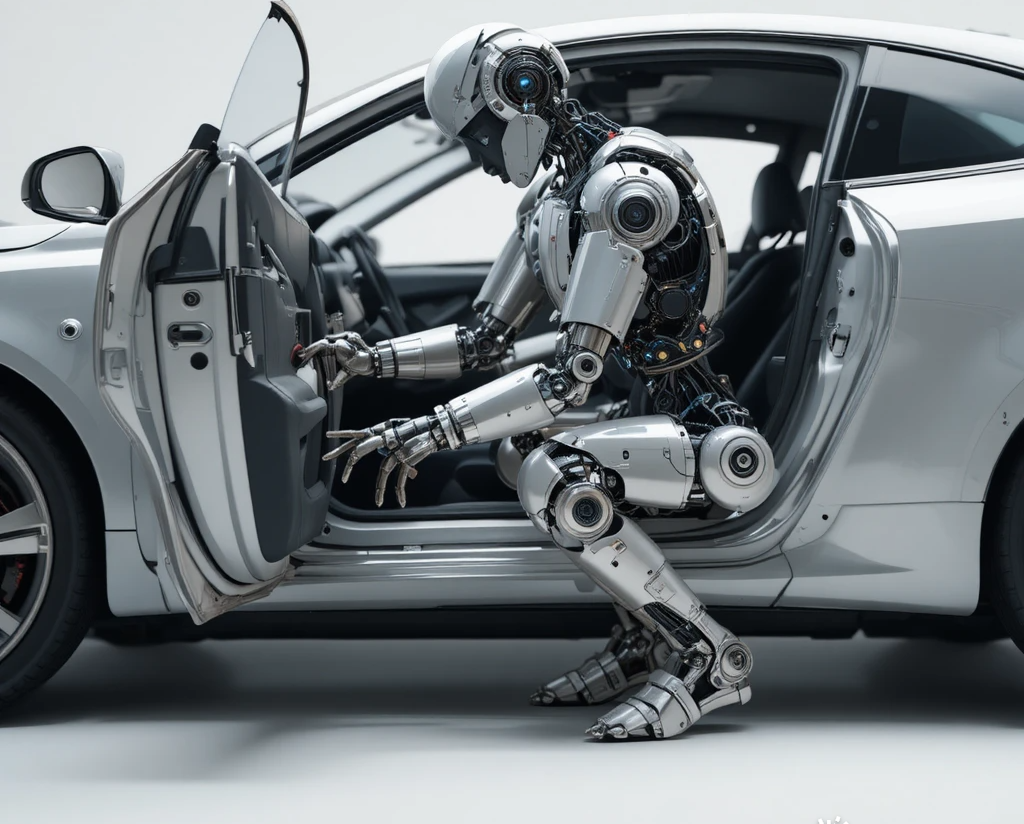
As these illustrate the strategies for closing skills gaps, new innovation idea implementation would also require the development and establishment of an effective supply chain system. All product innovations require inputs. As the business ventures into large-scale production of different products, it will also require larger amounts of inputs. This would require the creation and development of an effective supply chain system. Effective supply chain management will not only ensure the required quality control systems are put in place but also that the manufacturing plant has in place the right equipment, machinery, work processes, systems and subsystems. To improve the efficiency and cost-effectiveness of the manufacturing processes aimed at converting product innovation ideas into tangible value-creating products, most of the high-performing manufacturing enterprises are increasingly adopting a combination of various AI and machine learning technologies. These AI technologies encompass machine learning, natural language processing, robotics and computer vision.
Machine learning algorithms enable manufacturing systems learn automatically from the unfolding manufacturing processes and experience to improve the efficiency and cost-effectiveness of the manufacturing processes. Machine learning enhances the effectiveness of predictive maintenance, quality control, demand forecasting and supply chain optimisation. Natural Language Processing enables manufacturing systems learn, understand, interpret and respond to natural human language. This aids effective real-time monitoring and evaluation of the unfolding product manufacturing processes. It is through such real-time monitoring that businesses are able to identify and intervene to correct errors detected from the manufacturing processes. Robotics deal with the automation of the repetitive manufacturing processes to eliminate boredom, costs, errors and the costs of defects that arise from the deployment of humans in the accomplishment of such tasks. But still, robotics tend to be used in collaboration with humans in the modern manufacturing settings to bolster the overall improved efficiency of the manufacturing processes.
Computer vision utilises human intelligence and vision to process images and videos that aid mapping and evaluation of the entire manufacturing processes and value chain system. This aids the diagnosis and intervention in the areas affecting quality, costs, safety, health as well as the efficiency of the manufacturing processes. Yet, as businesses use such AI technologies in the manufacturing processes that convert product innovation ideas into tangible value-creating products, others have been using Manufacturing Execution Systems, the Internet of Things, AI for predictive maintenance, AI for quality control and inspection, and AI for supply chain optimisation. Manufacturing Execution Systems and the Internet of Things are used for gathering and analysing data about the overall manufacturing processes. This enables the identification of the areas of challenges and the improvement initiatives that must be adopted.
AI for predictive maintenance is used for evaluating the performance of all manufacturing machinery and equipment. This enables the use of a proactive approach that identifies and responds early to the identified machine problems. Because management does not wait for machines and equipment to fail, this tends to eliminate redundancies, waste and costs to bolster the overall improved efficiency of the manufacturing processes. AI for quality control and inspection is used for analysing the quality of inputs from the source, the unfinished products or raw materials, and the finished products that are ready for shipment to the market. This aids the effective integration of quality analysis and control throughout the manufacturing value chain system.
AI for quality control and inspection uses automated systems that aid the identification of whether the product will have quality issues even before the commencement of the manufacturing processes. AI for supply chain optimisation is used for improving the linkage between the supply chain system and the manufacturing enterprise to enhance the effectiveness of demand forecasting and inventory management. This enables the manufacturing enterprise produce and deliver only the quantity of the product that is desired by the market at a given point in time. Such an approach which is typical of the JIT (Just-In-Time) Production system, eliminates waste and costs to enlarge the manufacturing enterprise’s operating profit margin.
However, innovation idea generation and implementation do not only lead to the implementation of innovation ideas for the creation of tangible products but also the introduction of new service concepts. In contrast to the implementation of tangible production innovation ideas that require the investment in manufacturing machinery, for service innovation, the business may just have to invest in the establishment of the equipment, technology and resources for the creation and delivery of such services. For service innovation, immediately after testing and validating the innovation idea, the process of implementing and introducing service innovation into the market tends to be intertwined. The overall nature, processes and strategies required for the implementation of service innovation ideas is reflected in the conceptualisation, designing and implementation of Facebook as a service innovation concept.
Facebook’s Service Innovation
Contrary to the general perception that Facebook was the first social networking operator in the global social networking site industry, the ideas for social networking sites were already being used by businesses that were created and abandoned because of market failure. Some of the earlier businesses that tried the business of creating and implementing the ideas of social networking sites/platforms include SixDegrees.com, LiveJournal, Friendster and MySpace. However, the modern business idea of social networking sites is credited to SixDegrees.com, which used recombinant innovation strategies to combine and recreate some features that existed at the time to create the social networking site.
While creating such a social networking site in 1997, SixDegrees.com combined features from the other websites to create a platform listing user profiles and friends. It provided features for users of the platform to easily browse and communicate with friends. SixDegrees.com generated 3.5 million users by 1999 before it was bought and shut down a year later by YouthStream Media Networks. As SixDegrees.com was shut down, LiveJournal was created by Brad Fitzpatrick, a 19-year-old who wanted to keep in touch with his high school friends after the completion of school. Though it started as a blogging site, LiveJournal subsequently morphed into a social networking site managed by WELL. LiveJournal registered about 5.5 million users by 2005. However, LiveJournal was then sold to Six Apart-a blogging software company. LiveJournal continued to grow until it had 14 million users in 2007. It is this impressive market performance that influenced the sale of LiveJournal to SUP Media, a Russian media company. As LiveJournal vanished into Russia, Friendster and MySpace emerged as new operators in the social networking market.
Friendster was established in 2002, and it immediately registered 3 million users in just a few months. However, in 2009, Friendster was acquired by MOL Global, Asia’s largest Internet company. Friendster continued to grow, mainly in Asia to register about 115 million users. Due to social collisions and technical difficulties, the increasing competition in the social networking space, and a rupture of trust between users and the site, Friendster was shut down in 2015. In addition to Friendster, MySpace was also created to engage as the other business engaged in the business of enhancing social networking. MySpace sought to distinguish itself from the previous operators by permitting users to customise their pages and make them public whilst also continuing to add more attractive features. However, due to innovative approaches from Facebook, as well as the advancement of Internet technology and the availability of broadband, MySpace was overtaken by Facebook in 2025.
With all these failures, Facebook, by the time it started, was aware of the factors that caused social networking sites to fail. With such insights in mind, Facebook first started as ZuckNet. But even so, Mark Zuckerberg still had a unique way of how he was brought up and nurtured as a computer programmer by his family. Perhaps because his father, Edward, was aware of the significant revolutionary roles that computers would play in the later years, or because he diagnosed his son Mark Zuckerberg’s interest in computers at an early age. Irrespective of the reasons, Edward, the father of Mark Zuckerberg, played a very significant role in arousing his son’s interest in computer operations and programming. He introduced Mark Zuckerberg to computer coding and programming at a very early age. As Mark Zuckerberg’s computer programming skills, as well as interest in coding increased, he hired David Newman as the computer coding and programming home tutor when Mark was just 11 years old.
Nowadays, he fondly refers to Mark Zuckerberg as a “Prodigy,” but it was the significant role that David played in shaping Mark Zuckerberg’s career and computer programming interest that not only influenced who Mark Zuckerberg would become in the future but also the kind of business he would do. From such family influence, Mark Zuckerberg already had a vision and direction of where and what kind of business he wanted to explore. A few years after intense training and tutoring by his father and Newman, Mark Zuckerberg created ZuckNet, which was a practical computer programme.
Ideas for the development of ZuckNet emerged from Mark Zuckerberg’s father, who was a dentist. He ran a dentist business from home, and therefore, to avoid shouting, which would make noise and inconvenience the other family members, he wanted a messaging system that the receptionist could use to contact him in case of any need.
Through his influence, of course, he gave Mark Zuckerberg the innovation assignment to come up with such a system. The young Mark Zuckerberg did not disappoint as he immediately came up with ZuckNet, which was an internal instant messaging system that the receptionist could use to contact his father. The successful creation and implementation of the ZuckNet innovation idea reinforced Mark Zuckerberg’s belief in the value and reality of computer programming for helping organisational problems. Despite such positive outcomes, Mark Zuckerberg continued exploring computer coding and programming. The effect was that while attending Phillips Exeter Academy, he created Synapse, which was another practical computer programme or software that used AI to learn about users’ music tastes and listening habits.
At the time, America Online (AOL) and Microsoft learned about Synapse and wanted to purchase it and offer Mark Zuckerberg a job. Mark Zuckerberg, however, refused the job offer and opted to continue focusing on exploring various aspects of computer programming and his formal high school and college education. Offers from AOL and Microsoft, which were some of the leading tech companies at the time, bolstered Mark Zuckerberg’s confidence and trust in himself, his spirit, and his capabilities.
No wonder, when the time came to join Harvard University, Mark Zuckerberg, as if already knowing where he was heading, did not opt to pursue the learning of more complex computer coding and programming at the University. Instead, he opted to study psychology. Since childhood, Mark Zuckerberg had already done enough computer coding and programming as part of his hobby. And perhaps he realised that he needed no more additional learning, since, from his experience, he had discovered that the best computer programming concepts can emerge by exploring and testing various ideas through self-study rather than a taught programme.
When he subsequently entered the social networking business, it was when everyone around the world started to discern why Mark Zuckerberg did not pursue a course in computer coding and programming, which he already knew very well, in preference for psychology. Psychology deals with the evaluation and understanding of people’s social behaviours as well as why people do what they do in the way they do. While pursuing psychology, it was at Harvard that Mark Zuckerberg explored how computer coding and programming could be used to create something that helps communities. To accomplish that, Mark Zuckerberg engaged in self-study as well as private computer science classes. In 2000, this led to the creation and introduction of Facemash, the first innovation product/service at Harvard. Facemash was a controversial social platform used only by Harvard students to rate and rank each other’s attractiveness according to Hot or Not. However, without permission to use student photos, Facemash aroused a lot of complaints from students. Though within a few hours it had generated 22,000 views, it was subsequently shut down as Mark Zuckerberg had to face the Harvard Administration Board for some disciplinary hearings and actions. He was, however, pardoned and excused after issuing an apology for the damage experienced by some students.
Following that experience, Mark Zuckerberg had already gained insights into some ethical issues that could arise to affect the branding and promotion of his innovation venture. In effect, he just tweaked Facemash into Facebook. Initially, just like Facemash, Facebook, which later became Meta, was also just a social networking platform meant only for Harvard students. Contrasted with Facemash, where profile photos were uploaded, for Facebook, the student users would create their profile, upload the photos they wanted, and share them. Users were also able to visualise their connections.
Capitalising on the publicity that had been created by the Facemash controversies, Facebook quickly picked up when students realised that it offered newer and better features. Within the first month, 50% of Harvard students had signed up. The growing success of the Facebook concept prompted ex-collaborators like Tyler Winklevoss, Cameron Winklevoss, and Divya Narendra, who had worked on the project to raise complaints that Facebook had stolen their ideas.
Though these reflected the non-persistent individuals who often abandon innovation if it is not producing immediate desired positive outcomes, Facebook still settled the claim. In 2008, Facebook allocated 1.2 million shares worth $300 million each for the three complainants. Facebook grew from across Harvard into the other North American universities and then to European and Australian universities. Given the instant success of Facebook, Mark Zuckerberg resigned from his Harvard studies to focus on developing Facebook as a multinational business.
In addition to establishing Facebook’s operational headquarters at Palo Alto, the impressive market performance of Facebook also attracted investors like Peter Thiel, PayPal co-founder, who injected $500,000 into Facebook, as Accel contributed $12.7 million, and Jim Breyer brought in $1 million as a venture capitalist. When Facebook exhausted all the student networks around the world, it subsequently opened its doors to all people around the world. Though its early focus on the global student population affected its branding due to the misperception that Facebook is a concept just meant for young people, Facebook’s subscription grew to 50 million people by 2007.
When Facebook became more innovative, introducing applications that enabled companies and businesses to create their own applications and games, 100,000 companies joined Facebook just in 2007. When Facebook was embraced by politicians like the Obama campaign in 2008 as the platform for mobilising and spreading information and even misinformation and disinformation as well, it further diffused. With time, Facebook not only got embraced as the platform for discovering lost friends. Instead it also became the medium that its users were using to sell and buy various items. Combined with its adoption as the platform for mobilising the masses for political protests, riots or any other form of campaigns, Facebook diffused across the globe to emerge as the biggest player in the global social networking business. By 2024, Facebook’s membership had reached 3.06 billion active users, with revenue of $134.9 billion and market capitalisation of $1.27 trillion. Though these insights are from the perspective of service innovation implementation, they still reflect the dynamics as well as the tactics and strategies required for translating innovation ideas from mere imagination into practical value-creating business concepts. Just like Facebook, Target, the US discount store, emerged from the retail business idea for a dry goods store which was established in Minneapolis. Due to the impressiveness of its discount store, the concept expanded from just a Minneapolis discount store to a major retail operator with 1,000 stores in the US market. To continue surviving and growing, Target has also introduced the e-commerce section to not only target the growing online consumers but also to disadvantage online rivals. However, as contrasted with the implementation of new product or service innovation ideas, the implementation of innovation ideas introducing new business processes or even models may take a different dimension.
Motorola’s Six Sigma
Just like product innovation, process innovation can also be motivated by the need for improving the existing business processes. In such situations, the prevailing problems can motivate the business to come up with new ideas for improving the existing business processes or for creating and introducing completely new business processes. Change and transformation of business processes are essential for improving the efficiency and cost-effectiveness of business processes. Efficiency in business processes influences the overall level of customer satisfaction or dissatisfaction with how services or products are created and delivered to customers. It also influences the business’ cost competitiveness.
If the business uses a more complex, costly process, it can also affect the cost of the final products or services that it creates and sells to the final customers. In that regard, business process innovation goes hand in hand with the processes for innovating and creating new products or improving the attractiveness and attributes of existing products. If customers are not dissatisfied with product quality or some aspects of its features, they can be discontented with the processes that are used for creating and delivering such products to the market. Besides inefficiencies affecting customer satisfaction, business processes can also induce quality problems that increase the rate and cost of defects.
Poor integration of the required quality control systems and standards can affect the capabilities of the business to produce and deliver the required quality products. Effective business process management influences effective quality management. In the event that the business is experiencing quality issues, business process innovation often requires critical analysis and invention of new processes or the improvement of the existing business processes. This enables the business to integrate the required quality control features to bolster the overall effectiveness of product quality management.
In that regard, as some of the inventors were busy introducing more revolutionary inventions from the days of the first industrial revolution, others were busy with the evaluation and invention of more disruptive business processes. One such revolutionary business process was the assembly manufacturing process introduced by Henry Ford for use in his Ford Motors. In a bid to reduce costs whilst also improving quality to bolster its competitiveness, Motorola invented and introduced the Six Sigma approach for process analysis and improvement. Six Sigma is a process analysis and improvement methodology that aims to analyse and reduce process variability and defects in the produced products. To achieve that, it emphasises that process variability should not lead to the production of more than 3.4 defects per million opportunities. This 3.4 defects per million opportunities is equal to six standard deviations or sigmas, which falls between the process mean and the nearest specification limit. This high standard enhances the production of defect-free products.
However, the invention of Six Sigma as a business process was not an organisational initiative, but an initiative that emerged from individual employee creativity. While employed as an engineer with Motorola in the 1980s, Bill Smith using personal initiative and creativity, began applying statistical process analysis. Through statistical process analysis, Bill Smith would identify and evaluate various manufacturing processes with the motive of identifying and minimising process variability.
With time, Bill Smith noticed that such analysis would significantly reduce wastes, defects and costs, whilst also improving the quality of the manufactured product. With these insights, Bill Smith developed a proposal and approached Bob Galvin-the Motorola’s CEO, with the ideas of exploring and improving the application of statistical process control that he came to dub as Six Sigma in the improvement of manufacturing processes. Bill Smith developed and improved the application of Six Sigma. He introduced levels of Six Sigma understanding, ranging from White, which just reflects the basic understanding, to Black Belt, depicting more advanced understanding of the application of Six Sigma in more complex organisational settings.
Bill Smith introduced training and programmes. The success of Six Sigma in reducing waste and costs, whilst also improving process efficiency and better product quality, prompted the likes of General Electric and Anheuser-Busch-the US-based breweries, to approach Motorola with the aim of understanding how it worked. From that time up to the early 2000s, the usage of Six Sigma was embraced by most businesses to the extent that a business was considered to be lagging behind if it was not using Six Sigma. Though Motorola’s market performance, leading to its demise was instigated by its rivals’ new product innovations, its Six Sigma process improvement methodology has still remained in use up to the present day. This illustrates how innovation disrupting the patterns of industry operations may not just arise from the implementation of product innovation ideas, but also from the implementation of process innovation ideas.
Besides Six Sigma, Deming’s Continuous Quality Improvement reflects the disruptive process management innovation that emerged from the implementation of process innovation ideas. While working at Western Electric Hawthorne Factory, Deming became interested in Walter Shewhart’s work of using statistical analysis methods to evaluate and improve manufacturing processes.
The use of statistical analysis methods intrigued Deming’s interest in exploring how such statistical methods could be used for evaluating and improving non-manufacturing processes. As an academic and consultant, Deming spent more time researching, writing and advising businesses and other organisations on how to use statistical methods to evaluate and improve operational processes. He considered statistical process analysis and improvement to be quite essential for reducing waste and costs, whilst also improving operational efficiency and product quality. Deming adopted Walter Shewhart’s invention of Plan-Do-Check-Act before reviewing and modifying it to Plan-Do-Study-Act. When Deming finished his internship at Western Electric Hawthorne Factory in 1926, he later joined the US Census Bureau in 1939. It was at the US Census Bureau that Deming was able to explore, experiment and develop the best statistical process analysis and control methodologies for use in manufacturing and non-manufacturing processes. With statistical process analysis improving productivity, quality, operational efficiency and competitiveness, whilst also lowering costs, Deming gained a reputation as a statistical process consultant and started training other industries and organisations to adopt and apply statistical process control techniques in their operations. Due to the growing reputation of Deming as a statistician and a process control analyst, Deming was posted to Japan after the Second World War to advise the Japanese government on the Japanese census. It was in Japan where he continued with further research and improvement of the concept of statistical process control. This led to the invention of Total Quality Management (TQM) as a new process improvement technique.
TQM, as a new process control technique, held the operational philosophy that to realise the best quality outcomes, all the employees at all levels must be engaged and involved in quality management. This eliminates the risks of defects to bolster the production of more defect-free products. Due to its enormous positive outcomes, TQM became a new process improvement technique that was embraced, adopted and implemented by various businesses across the world. It was also the ideas for process control and continuous improvement introduced by Deming that influenced the invention of the Toyota Production System by Toyota. Toyota Production System, which has explained Toyota’s undisrupted competitiveness in the global gasoline car manufacturing segment for decades, was invented to emphasise proactive analysis, identification and mitigation of waste, continuous improvement and the involvement of everyone in process analysis and quality management processes. Toyota Production System introduced unique process management techniques to the extent that though the other automobile makers have attempted to emulate it, they have still not been able to outwit Toyota. These statistical process control techniques have been used for decades. However, recent technological advancements have caused the invention of technology-based process management. While using such an approach, businesses are increasingly integrating the use of AI, machine learning, robotics, automation, additive manufacturing, cloud computing, the Internet of Things, 5G and 3D printing in various business and organisational operational processes. These have led to improved process efficiency, reduced costs, process optimisation, reduced time to market, better activity coordination, control and improved quality.
However, the use of AI and machine learning technologies is not only aimed at implementing new process innovation ideas but also product innovations. As the business introduces new AI-supported operations, it tends to improve the speed of new product idea conceptualisation, design, implementation and commercialization. Just like in North America and Europe, trends from Australia indicate that most businesses are increasingly adopting innovative new technologies that aid the conceptualization and introduction of new operational processes, whilst also improving the speed of new product idea conceptualisation, design, implementation and commercialisation. This is reflected in the innovative operational approaches being invented and implemented by BHP as one of the multinational corporations operating in Australia. To lower costs, improve its operational efficiency and competitiveness, BHP has introduced AI and machine learning-supported operations that conserve energy, reduce waste and reduce water usage. The effect is that BHP has been able to save three gigalitres of water and 118 gigawatt hours of energy. As a mining company, BHP has also adopted the use of machine learning for mineral exploration and discovery in the United States, Australia and Africa. Besides BHP, CSL, a global biotechnology company based in Australia, is also increasingly introducing the use of AI and machine learning to enhance its operations in three areas that encompass repetitive task reduction, productivity and adversarial tactics. As CSL takes such an approach, Wesfarmers is the other Australian company using a range of AI and machine learning technologies to enhance its operational efficiency, customer experience and productivity. Wesfarmers is also using AI and machine learning technologies to analyse, detect and mitigate scams and fraud, as well as the other security risks. Nonetheless, whether it is a product, service or a new business process which is finally developed, the completion of the process of innovation idea implementation often leads to the commercialization of the innovation outcomes.
Commercialization
Commercialization is the final stage of the innovation process. It deals with the process of bringing the completed or manufactured innovation product to market. Commercialization is the selling of innovation outcomes. This enables the business generate the desired returns to recoup the capital committed to research and innovation leading to the product’s development. Some of the methods for improving the commercialization of new innovations include discounts, free trials and testing, marketing and promotion, use of consumer groups, use of popular figures and celebrities, and market penetration strategy or even the use of market skimming strategy. Other strategies include partnerships with distributors, retailers and even competitors. Discounts enable consumers to be enticed to try the product. It is a form of pricing that enables the consumer to take the risk of trying the product without the risks of regretting the amount of money spent in case they do not like the product.
Quite often, discounting can be costly at the beginning, but with time, it often creates value that enables the business to recoup the funds spent on financing discounts. In some cases, discounts can be offered for promoting the newly introduced innovation products, whilst the business discerns how to recover such funds from the other sources or products. For instance, a discount leading to a significant reduction of the price of a new innovation can be recovered by slightly increasing the price of another popular product.
Though discount pricing is similar to the popular market penetration strategy, it still differs. While using market penetration, the business aims to make some little profits from the new innovation with the hope that if the market performance of the product gains traction, the business can increase the price to generate more revenue and profit. Market penetration serves the same purpose as discount pricing. Using discount pricing, it aims to attract more clients to try and test the product that they have never seen or even heard of before. It is through market penetration that businesses introducing new products aim to attract new customers, with the hope that the customers may become loyal after trying the product.
The overall motive of using market penetration strategy is not to charge lower prices forever but just to get the market used to the product before the business can increase prices to generate the desired revenues and profits from the product. Market skimming pricing is where the product is initially branded as of superior quality with superior value. In effect, upon its introduction into the market, the business uses market skimming prices to charge higher prices and lower the price with time as the product diffuses across the market. Such an approach enables the business recoup the costs of investment before lowering prices to render the product just a cash cow for the enterprise. Just like Mercedes-Benz and the likes of BMW and Land Rover do, while using market skimming pricing, the new product is branded for a particular class that desires superior value-creating goods.
The marketing and promotional messages must inspire businesses to strive and aspire to own the product. It is through psychological marketing and control and influence of customers’ minds that the business is able to increase the faster diffusion and sale of the product. Risks of the market skimming strategy can arise from the tendency to construe the product as more expensive and therefore less competitive compared to the rival products offering the same values for slightly lower prices.
If there is no possibility of most customers trying the product for lower or discounted prices, the option for improving the diffusion of a new product or service is through free trials and testing. Free trials and testing can enable a large number of consumers use and feel how using the product feels. For completely new products or services that have never been heard of before, free trials and testing enable consumers spread good words-of-mouth about the product if the consumers are impressed with the product.
Free trials and testing are often used by software developers and vendors to enable customers to try and use the product for some time before paying for subscriptions. The usage of free trials and testing implies businesses developing the new product must be patient and have adequate resources to finance activities during the periods when the product or service is initially offered for free to the market. In that process, the business can also accompany the use of free trials and testing with the use of marketing and promotion.
Marketing and promotion require the direct use of various media platforms to articulate the values of using the new product. It can take the form of audio messages or video messages that illustrate how to use the product as well as the values that such a product creates. By demonstrating how to use the product, the marketing and promotion message must also highlight how it is convenient and better to use the product compared to the existing rival products. For marketing and promotion to be effective in enhancing the faster diffusion of new products, it must have an effective strategic plan. The strategic marketing plan must have clearly defined goals and objectives, as well as the time duration within which such goals and objectives can be achieved.
Some of the goals and objectives of marketing and promotion must be to increase the sale, usage, adoption and profitability of the new product. To achieve that, the strategic plan must also outline the strategies that will be used. Such strategies may encompass the use of audio, video or print promotional messages to explain to the public about the value and importance of using the new product compared to the existing product. For such messages to reach the general market, the business can opt for the use of a combination of traditional and modern online media channels. The traditional media channels include television, newspapers and radios for certain defined target markets. The modern online media channels encompass company websites and various social media platforms. However, for the business to determine the kinds of media channels to use, it must evaluate its market to discern the segments that its new products target. Some other strategies that can be used encompass exhibitions where the use and value of using the new product are communicated to the public.
If that is not the case, the business can also use competitions. With competitions, the business advertises and invites the general public to enter and compete, of which the successful winners are offered the new product as the reward for winning the contest. Usage of such contests can be integrated with the use of consumer groups and networks to create platforms for creating excitement and euphoria around the new product. It is through the use of such consumer groups and networks that the business is able to create and increase the market’s awareness about the existence of the new product. The use of the existing consumer groups and networks is one of the cheapest approaches for promoting and marketing new products. Since the customers in the consumer groups or associations are already loyal customers and believers of the business’ products, they may tend to use good word-of-mouth that drives successful adoption and diffusion of new innovation into the market.
When Harley-Davidson was still quite popular among baby boomers, the company used such a group as one of the channels for marketing and promoting most of its bikes to the American market. In addition to using consumer groups and networks, businesses can also use popular figures and celebrities to promote and market new innovations.
The use of popular figures and celebrities for the promotion of new products and brands is common among clothing and fashion retailers. If the product fits well with the popular figures, it can promote the purchase and use of the new product amongst consumers. When Apple had just integrated selfies into its iPhone, it used popular figures and celebrities like Barack Obama and Beyoncé for marketing and promoting their products. The use of celebrities and popular figures improves the publicity of the product to arouse interest for the public to analyse and find out more about why a particular celebrity was using a particular brand or cited in a particular hotel or retail store. In the game of using celebrities to market most of its new products, Nike-the leading global maker of sportswear and equipment is a major player.
To arouse interest and increase promotion and sales of its new innovations, Nike has often used major influencers like Michael Jordan, LeBron James, Cristiano Ronaldo and Serena Williams, among others. Combined with the superior quality of its products, the use of influential athletes has been quite essential for influencing improved promotion and faster market diffusion of its brands. Just like Nike, Sephora-the maker of beauty products like skincare, haircare, makeup and fragrance, owes its success and the success of most of its major brands to the use of celebrities and influential figures. Apart from digitisation, the growth of Sephora’s revenue from $580 million to $3 billion in the period between 2016 and 2022 was also attributable to the use of influential figures as the strategy for marketing and promoting its new products. Other strategies include partnerships with distributors, retailers and even competitors. Distributors, wholesalers and retailers are the channels through which finished goods flow from the points-of-manufacture to the points-of-sale. Hence, partnerships with distributors, wholesalers and retailers are quite essential for improving the success of the new product’s launch into the market.
Once a proper partnership agreement is developed, the distributors, wholesalers and retailers become quite essential for promoting and marketing the sale of the new innovation to the final consumers. Quite often, businesses use such approaches for marketing and promoting the sale of their new innovations. However, in that process, the introduction of digital marketing and the use of AI and machine learning have also significantly changed how modern new products are developed and introduced to the market.
Digital Marketing and Artificial Intelligence
Given the growing size of the global online market, it is digital marketing and promotional techniques that most businesses are increasingly adopting as strategies for improving the diffusion of new innovations. Digital marketing enables a business reach multitudes of consumers about the new product that they aim to introduce to the market. Even if the business uses traditional marketing mediums like TVs, newspapers and radios, it is still digital marketing that businesses can use to become more creative and innovative in the way the product is presented and marketed to consumers.
Digital marketing refers to the strategic process of using the available digital technologies to create messages that aid the promotion and sale of the new product to the market. It improves the effectiveness of new products’ commercialisation because it enables businesses create images, audio and videos that augment the messages for marketing and promoting the product. Digital marketing aids the effective branding and improvement of the brand image of the product being introduced into the market.
Through digital marketing, businesses are able to create euphoria to improve the brand image of the product even before the consumers purchase and come into physical contact with the new product being promoted. When combined with the use of artificial intelligence, digital marketing enhances the overall efficiency of new products’ marketing and promotion. This is because AI-enhanced digital marketing systems do not only promote the product to the market but also gather, analyse and offer new insights that the business must respond to. As the business markets its products to the market, AI enables the extraction of new insights reflecting what customers feel about the product.
Such new insights enable the business to take the initiative of modifying or even recreating the product to respond to some of the serious issues being raised by the consumers. Such modifications improve the competitiveness and sustainability of the newly launched product, which could have failed if changes had not been made. However, achieving such outcomes would require the utilisation of a combination of digital marketing technologies that include affiliate, content, e-mail, mobile, pay-per-click, marketing analytics, social media marketing and search engine optimisation. These digital marketing tools do not only aid the marketing and promotion of new products but also the extraction of new insights that improve how the product must be made, as well as how and where it must be sold.
To enhance the effectiveness of its digital marketing, Airbnb adopted the strategy that permitted users of its services to create and share their content with the world. This has enabled the creation of organic connections that improve the level of customers’ connections with the videos and information being created and shared. Since most of the positive perceptions are from customers who have experienced Airbnb services, it tends to convince the general market to consider trying the product. Just like Airbnb, Spotify has also created algorithms that enable the curation of personal playlists for customers. It evaluates the kinds of music and programmes that the customer prefers and directs advertisements for such similar programmes to those customers.
Nonetheless, affiliate marketing connotes the process through which the business collaborates or liaises with influential social media figures to aid the marketing and promotion of the product in exchange for compensation. Given the growing popularity of social media platforms like TikTok, Facebook, Instagram, YouTube, LinkedIn, WhatsApp and blogs, affiliate marketing has become quite essential for influencing increased sales. Because of the popularity of social media influencers, affiliate marketing tends to be quite essential for highlighting the availability of the product.
The appearance of social media influencers with the product often generates immediate attention. This lures the general public to begin asking questions about the product. It is such high inquisitiveness about the product that improves the marketing and promotion of the product. It lures most consumers to consider trying the product. It is often at that point that they get hooked if the product is good enough. In contrast to affiliate marketing, content marketing uses a storytelling approach to market the product. It focuses on telling stories reflecting the experiences of the people who have used the product as well as the positive results that they have so far attained. If the customer and the general public believe in such stories, this storytelling approach leads to the building and improvement of trust and confidence that customers have in the business. It is through such inspiring stories that the business convinces several people to try the product.
Content marketing is mainly used for marketing and promoting herbal medicine or new medical drugs. Through such approach, the business brings forward the successful users of the product to tell their stories about the value and importance of using the product. As the users tell their stories about how to use the product, this also inspires other customers to consider trying the product.
Even if the customer does not buy, the use of the storytelling approach often creates points for conversations that improve the marketing and promotion of the product. If used for a long time, content marketing leads to the generation of more inspiring stories. This attracts people to the site where the products are advertised to further improve the marketing and promotion of an array of new products that are presented on such websites. Unlike content marketing, businesses using e-mail marketing to promote new products may tend to create and send more inspiring messages to multitudes of customers at the same time. Though phishing, spamming and scamming have affected customers’ confidence and trust in e-mail marketing, the use of e-mail marketing still offers key information that enables customers find out about the product using their own ways.
Contrasted with content and e-mail marketing, marketing analytics focuses on gathering and analysing the generated online data to discern the nature and patterns of customer behaviours, needs and preferences. It does not just evaluate why there are more clicks or purchases of certain products compared to others, but also examines the state of site visits. Using AI, marketing analytics evaluates the state of site visits to discern why a particular site is performing better than others. Such information enables management to discern how the product can be improved, as well as how it can be marketed to improve its overall effective performance. Mobile marketing is similar to e-mail marketing on the basis that mobile marketing uses a one-on-one marketing approach. E-mail marketing uses one-on-one e-mails which can be read on cellphones. However, mobile marketing is a marketing approach that focuses on creating and sending targeted marketing and promotional messages to multitudes of interconnected modern cellphones, smartphones, tablets, laptops, computers and the other electronic devices.
Sometimes, mobile marketing can strive to reach multitudes of the population with personalised messages, and that can be very important for arousing interest among the general public to try and find out about a new product that they have never heard of nor used. Unlike mobile marketing, pay-per-click refers to the marketing and promotion approach where the business only pays for the marketing cost when a customer clicks on the advertisement.
Except for its pay-per-click model, it is similar to SEO (Search Engine Optimisation). In the process of launching such a campaign for the market introduction of a new product, the business can decide to limit the advertisement only to the market where the product is relevant, or the advertisement can be opened to the whole world. Though similar to SEO, the difference still arises from the fact that SEO uses keywords, content indexing and good link structure to ensure the business and its new product ranks highly in Google search results across the world. Just like mobile marketing, social media marketing is the utilisation of the existing social media platforms like Twitter, Facebook, Instagram, WhatsApp and TikTok to create audio, video or graphics that market and promote the new product. Given the growing number of consumers joining the internet and various social media platforms, social media is increasingly becoming quite essential for reaching multitudes of consumers spread in different parts of the world. Following the improvement of artificial intelligence and machine learning technologies, the efficiency of digital marketing use has been enhanced to improve the overall effectiveness of new product marketing and promotion.
Artificial intelligence and machine learning algorithms improve the automation, customization and enhancement of a higher level of customer interactions. In the process of facilitating the marketing and promotion of new products, AI and machine learning also gather, analyse and provide insightful interpretation and information about the overall state of the new product’s market performance. Through such functions, AI not only enhances the effectiveness of predictive analysis, but also content creation and personalisation, search engine optimization and the usage of chatbots to enhance the effective provision of 24/7 customer services. Even in situations where the customer is not expecting any information about the released new products, AI generates and approaches such customers with personalised information about the product. This improves the overall efficiency and effectiveness of new product marketing and promotion. During digital marketing, artificial intelligence and machine learning offer essential insights that improve social media listening, automation and audience segmentation and personalisation. Social media listening refers to the AI technology that evaluates the unfolding social media trends to discern new insights that the business must respond to. In the process of also offering competitive intelligence, AI enhances the effectiveness of digital marketing using technologies like machine learning, natural language processing, semantic search, named entity recognition and neural networks, as well as sentiment analysis. Commercialisation does not just deal with the marketing, promotion and sale of newly invented products or services, but also with new businesses and models.
Citation: Jennifer Davis Adesegha, Pule Aaron Motsoetla & Sello Solomon Tlabakwe. (2026). Innovating in the Era of Artificial Intelligence And Machine Learning Technologies. Elicitor: London.
Further Readings
Adams, M., & Johnson, K. (2021). The role of AI in modern digital marketing: Trends and tools. Journal of Digital Marketing Research, 15(1), 45-60. https://doi.org/10.1016/j.jdmr.2021.02.005
Anandkumar, A., & colleagues. (2025). Accelerating scientific discovery with AI: Innovations in product design and simulation. Journal of Artificial Intelligence Research, 68(4), 123-145.
Baptista, E. (2024, July 9). China leads the world in adoption of generative AI, survey shows. Reuters. Retrieved from https://en.wikipedia.org/wiki/Generative_artificial_intelligence
Chen, X., & Lee, Y. (2022). Understanding consumer response to free trials in new product marketing. Journal of Consumer Marketing, 37(5), 412-426. https://doi.org/10.1108/JCM-03-2022-0536
DeepMind. (2023). Open Source Graph Network for Materials Exploration (GNoME): AI-driven discovery of new materials for product design. Nature Materials Science, 8(11), 987-995.
Edwards, B. (2024, December 6). Google launches Gemini—a powerful AI model it says can surpass GPT-4. The Wall Street Journal. Retrieved from https://en.wikipedia.org/wiki/Generative_artificial_intelligence
Gibson, M., & Grigoryan, G. (2020). Generate:Biomedicines emerges from stealth mode with AI and big data aimed at COVID-19. Generate:Biomedicines. Retrieved from https://en.wikipedia.org/wiki/Generate%3ABiomedicines
Gupta, R., & Sharma, A. (2020). AI-enhanced marketing strategies: The evolution of digital promotion. Journal of Business Research, 72(4), 34-48. https://doi.org/10.1016/j.jbusres.2020.02.003
Harris, R., & Patel, D. (2023). Examining the success of market skimming pricing strategies. Pricing Strategy & Practice, 28(1), 56-67. https://doi.org/10.1057/s41262-023-00243
Harris, S., & Zhang, L. (2024). The role of mobile marketing in promoting new digital products. Journal of Retailing and Consumer Services, 36(3), 208-221. https://doi.org/10.1016/j.jretconser.2024.02.003
Hemsoth, N. (2021, March 30). Neocortex Supercomputer to Put Cerebras CS-1 to the Test. The Next Platform. Retrieved from https://en.wikipedia.org/wiki/Cerebras
Huang, H. (2023, August 23). How ChatGPT turned generative AI into an ‘anything tool’. Ars Technica. Retrieved from https://en.wikipedia.org/wiki/Generative_artificial_intelligence
Lee, H., & Kumar, P. (2024). The impact of AI on e-commerce and digital advertising. International Journal of Online Marketing, 12(2), 75-88. https://doi.org/10.1080/14719112.2024.093749
Lock, S. (2022, December 5). What is AI chatbot phenomenon ChatGPT and could it replace humans?. The Guardian. Retrieved from https://en.wikipedia.org/wiki/Generative_artificial_intelligence
Metz, C. (2024, February 8). Google Releases Gemini, an A.I.-Driven Chatbot and Voice Assistant. The New York Times. Retrieved from https://en.wikipedia.org/wiki/Generative_artificial_intelligence
Nuñez, M. (2024). Anthropic unveils Claude 3, surpassing GPT-4 and Gemini Ultra in benchmark tests. The Verge. Retrieved from https://en.wikipedia.org/wiki/Generative_artificial_intelligence
Park, J., & O’Connor, M. (2025). Effective use of affiliate marketing in the digital age. Journal of Interactive Marketing, 21(2), 150-162. https://doi.org/10.1016/j.jima.2024.12.004
Ray, T. (2020). Glaxo’s biology research with novel Cerebras machine shows hardware may change how AI is done. The Wall Street Journal. Retrieved from https://en.wikipedia.org/wiki/Cerebras
Rus, D., & colleagues. (2021). Computational design and fabrication: Leveraging AI and machine learning in robotics and product development. IEEE Transactions on Robotics, 37(3), 567-580.
Shah, A. (2020, May 6). National Lab taps AI machine with massive chip to fight coronavirus. The Wall Street Journal. Retrieved from https://en.wikipedia.org/wiki/Cerebras
Smith, J., & Brown, L. (2023). Penetration pricing strategies in competitive markets. Journal of Marketing Strategy, 34(2), 123-135. https://doi.org/10.1016/j.jom.2023.02.004
Thompson, A., & Nguyen, S. (2022). The integration of artificial intelligence in customer engagement strategies. Marketing Science, 29(3), 201-215. https://doi.org/10.1287/mksc.2022.0935
Thompson, M., & Ellis, D. (2024). Content marketing in the digital era: Storytelling and consumer engagement. Marketing Intelligence & Planning, 42(3), 405-419. https://doi.org/10.1108/MIP-09-2023-0534
Vogue Business. (2025, March 7). Why fashion should think carefully about using generative AI: Implications for product design and sustainability. Vogue Business. Retrieved from https://www.voguebusiness.com/story/sustainability/why-fashion-should-think-carefully-about-using-generative-ai
Financial Times. (2024, December 10). AI and the R&D revolution: Transforming product design and development processes. Financial Times. Retrieved from https://www.ft.com/content/648046c1-7fcd-43fb-819b-841f104396d9
Lorem ipsum dolor sit amet, consectetur adipiscing elit. Ut elit tellus, luctus nec ullamcorper mattis, pulvinar dapibus leo.